EasyManua.ls Logo

Honeywell Eclipse - User Manual

Honeywell Eclipse
4 pages
Print Icon
To Next Page IconTo Next Page
Loading...
CONTENTS
SAFETY
Please read and keep in a safe place
Please read through these instructions carefully before
installing or operating. Following the installation, pass the instructions
on to the operator. This unit must be installed and commissioned
in accordance with the regulations and standards in force. These
instructions can also be found at www.docuthek.com.
Explanation of symbols
1
,
2
,
3
,
a
,
b
,
c
= Action
= Instruction
Liability
We will not be held liable for damage resulting from non-observance
of the instructions and non-compliant use.
Safety instructions
Information that is relevant for safety is indicated in the instructions
as follows:
DANGER
Indicates potentially fatal situations.
WARNING
Indicates possible danger to life and limb.
CAUTION
Indicates possible material damage.
All interventions may only be carried out by qualified gas techni-
cians. Electrical interventions may only be carried out by qualified
electricians.
Conversion, spare parts
All technical changes are prohibited. Only use OEM spare parts.
Disclaimer Notice
In accordance with the manufacture’s policy of continual product
improvement, the product presented in this brochure is subject to
change without notice or obligation.
The material in this manual is believed adequate for the intended
use of the product. If the product is used for purposes other than
those specified herein, confirmation of validity and suitability must
be obtained. Honeywell-Eclipse warrants that the product itself does
not infringe upon any United States patents. No further warranty is
expressed or implied.
EN – www.docuthek.com
Installing flame monitoring equipment on
Eclipse burners
Safety ........................................1
Product description..............................2
Installation .....................................2
Wiring ........................................3
Troublelshooting ................................3
OPERATING INSTRUCTIONS
Version · Edition 12.20 · 32-00267-01 · EN
Question and Answer IconNeed help?

Do you have a question about the Honeywell Eclipse and is the answer not in the manual?

Summary

Safety

Explanation of Symbols

Defines symbols used for instructions and actions within the manual.

Liability and Warranty

Disclaims manufacturer liability for damages from improper use or non-compliance.

Safety Instructions Notation

Explains notation for DANGER, WARNING, CAUTION to highlight safety risks.

Product Description

Thermocouples

Describes heat-actuated detectors that generate a millivolt signal when heated.

Photocells

Explains light-sensitive cells used for flame detection in dark chambers.

Lead Sulfide (PbS)

Details lead sulfide cells sensitive to infrared radiation, with potential for false signals.

Flame Rods

Describes flame rods operating on rectification principle for gas burners.

Ultraviolet (UV) Scanners

Covers UV scanners detecting ultraviolet radiation, less susceptible to false signals.

Installation

Flame Rod Installation

Provides step-by-step instructions for installing flame rods correctly.

UV Scanner Installation

Details mounting UV scanners using adapters and ensuring proper alignment.

Wiring

Electrical Wiring Compliances

Emphasizes adherence to local codes and standards for electrical wiring.

Handling Flame Supervisory Components

Advises caution when handling components due to high voltage hazards.

Wiring Splices

Provides guidelines for making reliable wiring splices to prevent leakage or grounding.

Grounding

Details proper grounding procedures for flame relays and UV scanners.

Spark Interference

Offers solutions to reduce interference from spark ignition systems.

Troubleshooting

Overview

This document provides operating instructions for installing flame monitoring equipment on Eclipse burners, focusing on safety, product description, installation, wiring, and troubleshooting. It emphasizes the importance of adhering to safety guidelines and manufacturer recommendations to ensure the safe and efficient operation of combustion equipment.

Safety and General Guidelines

The manual begins with a strong emphasis on safety, urging users to read and keep the instructions in a safe place. It highlights that the unit must be installed and commissioned according to current regulations and standards. The document uses specific symbols to denote actions and provides clear warnings for potentially fatal situations (DANGER), possible danger to life and limb (WARNING), and potential material damage (CAUTION). It strictly states that all interventions must be performed by qualified gas technicians for mechanical aspects and qualified electricians for electrical work. The document also prohibits technical changes and stresses the use of only OEM spare parts. A disclaimer notice indicates that the product is subject to continuous improvement and changes without prior notice, and that the material in the manual is believed adequate for its intended use. Any use for purposes other than those specified requires confirmation of validity and suitability. Honeywell-Eclipse warrants that the product does not infringe upon any United States patents, with no further warranty expressed or implied.

The manual also addresses liability, stating that Honeywell's liability for its product is limited to providing replacement parts, and it will not be liable for any other injury, loss, damage, or expenses arising from the sale, installation, use, inability to use, or repair/replacement of its products. Any operation, adjustment, or assembly procedures not recommended or authorized in the manual will void the warranty.

Product Description and Usage Features

The document describes various types of flame detectors and their suitability for Eclipse burners:

  • Thermocouples (Heat-Actuated Detectors): These generate a millivolt signal when heated, used to actuate fuel shutoff valves. However, they are not allowed on industrial combustion equipment covered by NFPA Standard 86 and have limited acceptance under European standard EN 746-2. They are typically used on small listed combustion appliances, and Eclipse does not recommend their use on its burners.
  • Photocells: These light-sensitive cells send a signal when they detect a flame. They require dark chambers and bright flames and may not detect the translucent blue flame of some gas burners. Eclipse does not recommend their use for flame detection on its burners.
  • Lead Sulfide (PbS) Cells: Sensitive to infrared radiation, these cells close a circuit to the automatic fuel shutoff valve when sufficient radiation is present. While some controllers detect flickering infrared radiation from the flame and ignore steady-state radiation from refractories, issues like vibration and swirling contaminants can still cause false signals. Eclipse does not recommend the use of Lead Sulfide for flame detection on its burners.
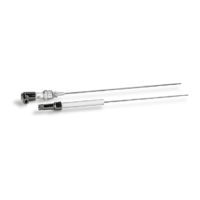
  • Flame Rods: These operate on the rectification principle, using the flame's ability to conduct electrical current. An AC voltage on the flame rod conducts current through the flame to a grounding surface, rectifying it to DC. A DC signal keeps automatic fuel shutoff valves open. If the flame rod shorts to ground, the DC signal is lost, and the shutoff valves close, making them fail-safe. Flame rods are generally recommended for gas burners, not oil burners, as soot or oil film can cause nuisance shutdowns. Proper operation requires maintaining a predetermined ratio of rod surface area to burner grounding area in contact with the flame, and users must observe the recommended flame rod lengths.
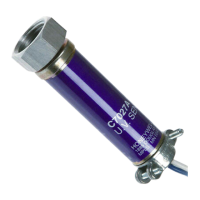
  • Ultraviolet (UV) Scanners: These pass electrical current pulses when detecting ultraviolet radiation, present in gas and oil flames. They are less susceptible to false signals from hot refractories than photocells or lead sulfide cells. UV scanners use a quartz or special glass tube that is transparent to UV radiation but can be damaged by rough handling. Soot, steam, and unburned hydrocarbons can absorb UV radiation, weakening the flame signal. Most tubes are designed to respond only to specific UV wavelengths from the flame, not sunlight. Eclipse recommends using solar-blind UV tubes. It is crucial not to mix UV scanner brands between manufacturers, as a scanner and its tube are matched to the controller and approved for use together. Only scanners specifically recommended for the controller should be used.

Installation Guidelines

The installation section provides detailed steps for both flame rods and UV scanners:

  • Flame Rod Installation:
    1. Verify the flame rod electrode length, ensuring it is not bent, kinked, or twisted.
    2. Inspect the rod insulator for cracks or chips.
    3. Screw the flame rod directly into the burner's threaded connection. Use reducing bushings if thread sizes differ, avoiding pipe couplings and nipples that might alter the insertion length.
    4. Avoid overtightening the rod to prevent insulator cracks.
    5. Ensure the flame electrode does not touch any burner parts.
  • UV Scanner Installation:
    1. Mount the scanner to the burner connection using an Eclipse Scanner Adapter, Heat Block Seal, or pipe fittings. Avoid using pipe or fittings smaller than the two thread connections to prevent weak flame signals.
    2. Install the scanner as close to the burner as temperature conditions allow to ensure the best field of view.
    3. Ensure the scanner mounting nut is snugly screwed onto the adapter thread, with the scanner nut gasket (if furnished) in place, to prevent tilting and incorrect sighting angles.
    4. Prevent the scanner from operating above the manufacturer's temperature limit, as it can overheat from ambient temperatures, heat conduction, or radiation from burner/furnace surfaces.
    5. For most installations, purge air blown into the scanner adapter can keep scanners cool. Eclipse UV scanner adapters and Heat Block Seals include tapped connections for purge lines, with an adjustable orifice cock to set the optimum flow rate.
    6. For preheated air burners, always use a Heat Block Seal (such as Eclipse's HBS) with a quartz lens and a non-metallic insulating nipple to reduce conducted heat. Cool purge air will likely be required.
    7. In extreme cases, a radiation shield or cooling air blown over the scanner may be necessary.

Wiring and Maintenance Features

The wiring section emphasizes that installation and troubleshooting of flame supervisory circuits must be performed by qualified electricians, technicians, or engineers experienced in this type of control equipment.

  • Electrical Wiring Compliances: All electrical wiring must comply with applicable local codes and standards (e.g., NFPA Standard 70, IEC60364, CSA C22, BS7671) and be acceptable to the local authority.
  • Handling Flame Supervisory Components: Exercise extreme caution due to high voltage and electrocution hazards.
  • Manufacturer's Recommendations: Follow the flame detector manufacturer's recommendations for wire gauges, insulation grades, and line lengths, as wire type and length can weaken signal strength due to capacitive coupling to ground. Use high-temperature insulation for wiring exposed to higher-than-normal temperatures.
  • Wiring Splices: Minimize splices between the detector and its relay, as each splice is a potential source of current leakage or grounding. Ensure bare wire ends are clean and not oxidized. Secure splices with twist or crimp connectors and tape to prevent exposed metal. Connectors and tape must be rated for the splice location's temperature.
  • Wires Through Boxes: Use caution to avoid cutting or nicking wires when pulling them through conduit or junction boxes.
  • Wires from Several Flame Detectors: Wires from multiple flame detectors can be run together in a common conduit, but not with high-voltage ignition wires. Some manufacturers permit detector lead wires with 120 VAC control wiring, but longer runs may require separate conduits. Long runs may also require shielding to prevent cross-interference and false signals. Ensure the flame sensor of a burner is connected to that burner's electrical circuit.
  • Grounding: Ensure the flame relay is properly grounded. UV scanners generally require grounding, often through the burner. If a scanner is mounted on a Heat Block Seal with a non-metallic nipple, there will be no ground connection to the burner. Avoid non-conducting pipe dope on scanner or adaptor threads.
  • Spark Interference: Electric spark ignition can produce strong ultraviolet radiation, which a UV scanner might detect, either by direct line of sight or reflections. Flame rod signals can also be affected by electrical interference and shared ground connections. The signal may become erratic.
    • To reduce spark interference: separate or shield detector wiring from ignition wiring, ensure proper grounding of the ignition transformer to the burner housing, reverse primary wires to the ignition transformer, check spark gap, clean/repair/replace faulty wiring and connectors, move the ignition transformer, block UV scanner sighting with an orifice adapter, or use a half-wave ignition transformer.

Troubleshooting

For troubleshooting, users are directed to refer to the product literature for the specific flame supervising equipment in use and to verify that the installation followed the recommendations in this operating instruction.

Honeywell Eclipse Specifications

General IconGeneral
Detection Range12m (40ft)
Humidity Range95% RH, non-condensing
MountingWall
Operating Temperature-10°C to +55°C (14°F to 131°F)
Tamper ProtectionFront and back tamper switch

Related product manuals