page 10 of 24 www.honeywellsafety.com
C Use
C1.
Inspection before climbing:
• Before each use, inspect the cable, the cable tension, the fall
arrester, the intermediate fixings and the karabiners for usability.
• The fall arrest system must not be used if defects have been
noted or in case of doubts as to its proper function. Before further
use an inspection by a competent person is needed or the
defective parts have to be replaced.
• Before and during use it should be planned how to effect a
rescue safely and effectively.
C2. Each user must secure themselves to a separate fall arrester.
C3.
The fall arrester, properly used
in
connection with
a
full body harness,
protects
its
user
during ascent and descent against
falls.
C4.
When working
in or
next
to the
ascent route
and
during jobs
and
actions
that are not a part
of
the
usual ascent and descent movements, the
climber must additionally secure themselves with
a
lanyard
in
accordance with
EN 354 or a
lanyard
for
safety harness
in
accordance
with
EN 358. (Securing with an anchor device). This is also applicable
for idle positions that are intended
to
be a break on the fall arrest
ladder. Only suitable anchor devices must be used for this. In
all
these situations, the lanyard must be held tight in order to prevent a
fall.
C5.
Important!
A fall arrester according to EN 353-1 shall be used only by persons
who:
• have been trained or are otherwise
competent
• are supervised directly by a trained or competent
person.
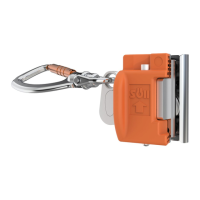
C6. Connection to the system:
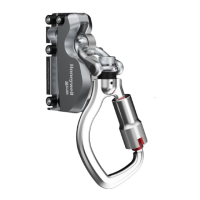
The guided type fall arrester that comes with the
Söll
Vi-Go
system
is a
cable -guided
fall
arrester with an integrated shock absorber, which
permits use without opening the
fall protection system
.
The unique design allows one-handed fixing on an 8 mm, 10 mm or
3/8" strong steel cable.
The
fall arrester has an „anti-inversion“
mechanism, which prevents the fall arrester from
being
incorrectly
attached to the
cable.


 To Next Page
 Loading...