EasyManua.ls Logo

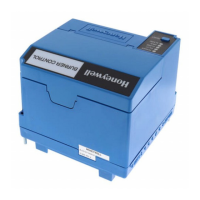
Honeywell RM7895C1020 - User Manual

Honeywell RM7895C1020
16 pages
Print Icon
To Next Page IconTo Next Page
Loading...
INSTALLATION INSTRUCTIONS
32-00156-03
SIL
3
Capable
Edition 03.20 · 32-00156-03 · EN
APPLICATION
The RM7895A,B,C,D/EC7895A,C; RM7896A,B,C,D are micro-
processor-based integrated burner controls for automatically
fired gas, oil, or combination fuel single burner applications.
They are intended to replace the R4795 and R7795 Primary
Controls. The RM7895A,B,C,D/EC7895A,C; RM7896A,B,C,D
systems consist of a relay module, subbase, amplifier, and
purge card. Options include: 2-line VFD (see document 65-
0090-6) or 4-line LCD (see document 32-00110-01) Key-
board Display Module, Personal Computer Interface, Data
ControlBus™ Module, remote display mounting, expanded
annunciator and Combustion System Manager® Software.
Functions provided by the RM7895A,B,C,D/EC7895A,C;
RM7896A,B,C,D include automatic burner sequencing, flame
supervision, system status indication, system or self-diagnos-
tics and troubleshooting. The RM7896 provides a postpurge
function.
This document covers the following 7800 Series Relay
Modules:
1000-Series 2000-Series
RM7895A1014 RM7895A2014
RM7895A1048 RM7895A2048
RM7895B1013 RM7895B2013
RM7896A1012 RM7896A2012
RM7895C1020 RM7895C2020
RM7895C1012 RM7895C2012
RM7895D1011 RM7895D2011
RM7896C1010 RM7896C2010
RM7896D1019 RM7896D2019
EC7895A1010 EC7895A2010
EC7895C1000 EC7895C2000
RM7895A,B,C,D/EC7895A,C;
RM7896A,C,D
7800 SERIES Relay Modules
This document provides installation and static checkout in-
structions. Other applicable publications are:
Publication
No.
Product
32-00110 S7800A2142 4-line LCD Keyboard Display
Module Product Data
32-00166 204729A/C KDM NEMA4 Covers for 4-line
LCD KDM
32-00235 R7824, R7847, R7848, R7849, R7861,
R7886 Flame Amplifiers for the 7800
SERIES Product Data
65-0084 Q7800A,B 22-Terminal Wiring Subbase
Product Data
65-0090 S7800A Keyboard Display Module Product
Data
65-0091 S7810A Data ControlBus™ Module
Product Data
65-0095 S7820 Remote Reset Module Product Data
65-0097 221729C Dust Cover Packing Instructions
65-0131 221818A Extension Cable Assembly
Product Data
65-0228 S7810B Multi-Drop Switch Module
Product Data
65-0229 7800 SERIES Relay Modules Checkout
and Troubleshooting Product Data.
65-0249 S7810M ModBus Module (For CE ,
Modbus module S7810M1029 only).
65-0295 50023821-001/2 KDM NEMA4 Covers for
classic 2-line VFD KDM
65-0089 ST7800A,C Plug-In Purge Timer
SPECIFICATIONS
Electrical Ratings (See Table 3):
Voltage and Frequency:
RM7895/RM7896: 120 Vac (+10/-15%), 50/60 Hz (±
10%).
EC7895A,C: 220-240 Vac (+10%/-15%), 50/60 Hz
(±10%)
Power Dissipation: 10W maximum.
Maximum Total Connected Load: 2000 VA.
Fusing Total Connected Load: 15A Fast Blow, type SC or equiv-
alent.
Question and Answer IconNeed help?

Do you have a question about the Honeywell RM7895C1020 and is the answer not in the manual?

Summary

Application Overview

Installation Instructions Overview

Product Specifications

Environmental and Operating Ratings

Details operating and storage temperature, humidity, and vibration limits.

Product Approvals and Certifications

Lists safety and regulatory approvals like UL, CSA, EAC, and FCC.

Installation

Installation Location Considerations

Guidance on suitable placement, avoiding moisture and vibration.

Wiring Subbase Mounting

Instructions for securely mounting the wiring subbase.

Subbase Wiring Information

Notes on different subbase models and their compatibility with relay modules.

Relay Module and Subbase Compatibility

Explains compatibility between 1000/2000 series modules and subbases.

Final Wiring and Pre-Test Checks

Static Checkout

Recommended Test Equipment

Lists essential tools like voltmeter and jumper wires for testing.

Static Checkout General Instructions

Guidelines for performing static checkout tests correctly and safely.

Mounting

Key Technical Features

Safety Shutdown Conditions

Lists conditions that trigger a safety shutdown or lockout of the relay module.

Operating Sequence Periods

Standby Period Operation

Describes the standby phase and its conditions for proceeding.

Prepurge Period Operation

Details the prepurge sequence, including airflow lockout and timing.

Pilot Flame Establishing Period (PFEP)

Covers PFEP, pilot valve, ignition, and flame proving requirements.

Main Flame Establishing Period (MFEP)

Explains MFEP, main valve energization, and flameout response.

Sequence of Operation

Initiate Sequence

Describes the initial state after power-up, including voltage checks.

Standby State

Explains conditions to transition from standby to prepurge.

Normal Start-Up Prepurge

Details normal prepurge timing and airflow interlock logic.

Ignition Trials

Covers pilot and main flame establishing periods and their conditions.

Run Period

Describes normal burner operation and conditions for ending the run.

Post Purge Sequence

Outlines the post purge phase for RM7896 models.

Settings and Adjustments

Selectable Site-Configurable Jumpers

Explains the function and configuration of site-specific jumpers JR1, JR2, JR3.

Safety and Security

Physical Device Protection

Advises on protecting the device from unauthorized access and tampering.

Modbus & DDL Interface Security

License Agreement

Summary

Application Overview

Installation Instructions Overview

Product Specifications

Environmental and Operating Ratings

Details operating and storage temperature, humidity, and vibration limits.

Product Approvals and Certifications

Lists safety and regulatory approvals like UL, CSA, EAC, and FCC.

Installation

Installation Location Considerations

Guidance on suitable placement, avoiding moisture and vibration.

Wiring Subbase Mounting

Instructions for securely mounting the wiring subbase.

Subbase Wiring Information

Notes on different subbase models and their compatibility with relay modules.

Relay Module and Subbase Compatibility

Explains compatibility between 1000/2000 series modules and subbases.

Final Wiring and Pre-Test Checks

Static Checkout

Recommended Test Equipment

Lists essential tools like voltmeter and jumper wires for testing.

Static Checkout General Instructions

Guidelines for performing static checkout tests correctly and safely.

Mounting

Key Technical Features

Safety Shutdown Conditions

Lists conditions that trigger a safety shutdown or lockout of the relay module.

Operating Sequence Periods

Standby Period Operation

Describes the standby phase and its conditions for proceeding.

Prepurge Period Operation

Details the prepurge sequence, including airflow lockout and timing.

Pilot Flame Establishing Period (PFEP)

Covers PFEP, pilot valve, ignition, and flame proving requirements.

Main Flame Establishing Period (MFEP)

Explains MFEP, main valve energization, and flameout response.

Sequence of Operation

Initiate Sequence

Describes the initial state after power-up, including voltage checks.

Standby State

Explains conditions to transition from standby to prepurge.

Normal Start-Up Prepurge

Details normal prepurge timing and airflow interlock logic.

Ignition Trials

Covers pilot and main flame establishing periods and their conditions.

Run Period

Describes normal burner operation and conditions for ending the run.

Post Purge Sequence

Outlines the post purge phase for RM7896 models.

Settings and Adjustments

Selectable Site-Configurable Jumpers

Explains the function and configuration of site-specific jumpers JR1, JR2, JR3.

Safety and Security

Physical Device Protection

Advises on protecting the device from unauthorized access and tampering.

Modbus & DDL Interface Security

License Agreement

Overview

The Honeywell RM7895A,B,C,D/EC7895A,C; RM7896A,C,D 7800 Series Relay Modules are microprocessor-based integrated burner controls designed for automatically fired gas, oil, or combination fuel single burner applications. These modules are intended as replacements for the R4795 and R7795 Primary Controls. The systems comprise a relay module, subbase, amplifier, and purge card, with the RM7896 models additionally providing a postpurge function.

Function Description

The core function of these relay modules is to provide automatic burner sequencing, flame supervision, system status indication, and system or self-diagnostics for troubleshooting. They manage the entire burner operation from initiation through shutdown.

The operating sequence begins with an INITIATE period when the relay module is powered or when voltage/frequency fluctuations are detected. This period ensures stable power conditions before proceeding. If conditions are not met, a hold condition is initiated, and prolonged issues lead to lockout. The INITIATE sequence also delays the burner motor starter to prevent erratic operation from intermittent AC line input.

Following INITIATE, the system enters the STANDBY period, awaiting a call for heat. Once a call for heat is present and all monitored circuits are in the correct state, the system transitions to the PREPURGE sequence. During PREPURGE, the burner motor output (terminal 4) is powered, and the Airflow Interlock input must close within a specified time. Failure to do so results in a recycle to PREPURGE or lockout, depending on the Airflow Switch jumper configuration.

After PREPURGE, the system proceeds to the IGNITION TRIALS, starting with the Pilot Flame Establishing Period (PFEP). During PFEP, the pilot valve and ignition transformer (terminals 8 and 10) are energized. Flame must be proven within the PFEP duration (ten seconds, or four seconds if Configuration Jumper JR1 is clipped) to continue the sequence. If flame is not proven, a safety shutdown occurs. Once flame is proven, the ignition (terminal 10) is de-energized. For specific models (RM7895C1020/2020 and RM7896C1036/2036), terminal 10 de-energizes within the first 8 seconds of PFEP if a flame signal is detected, and re-energizes if the signal is lost.

The Main Flame Establishing Period (MFEP) follows PFEP. With flame present, the main fuel valve (terminal 9) is powered. If a flameout occurs, the relay module locks out or recycles based on the JR2 jumper status and the Flame Failure Response Time (FFRT) of the amplifier. For EC7895C, RM7895C,D, and RM7896C,D models, MFEP lasts ten seconds, and the pilot valve (terminal 8) is de-energized after Ignition Trials.

Finally, the system enters the RUN period, where it remains until the controller input (terminal 6) opens, indicating that the demand is satisfied or a limit has opened. For EC7895C, RM7895C,D, and RM7896C,D, a delayed main valve is energized once RUN is entered.

For RM7896A,B,C,D models, a POST PURGE function is activated after demand is satisfied or a limit opens. During this period, the Ignition/Pilot valve, main valve, and delayed main valve (terminals 8, 9, and 21) are de-energized, while the blower motor (terminal 4) remains powered for 15 seconds.

Safety shutdowns (lockouts) can occur during various periods due to issues such as missing or bad purge cards, configuration jumper changes after 200 hours (Fault Code 110), AC line power errors, exceeding the INITIATE period, airflow switch failures, flame signal issues, internal system faults, or removal of the purge card.

Usage Features

The relay modules offer several features to enhance usability and system management:

  • Visual Indication: LEDs provide positive visual indication of the program sequence, including POWER, PILOT, FLAME, MAIN, and ALARM states, allowing for quick status checks.
  • Optional Display Modules: The system supports optional 2-line VFD or 4-line LCD Keyboard Display Modules (KDM), a Personal Computer Interface, and a Data ControlBus™ Module for enhanced monitoring and control. Remote display mounting and expanded annunciator options are also available.
  • Run/Test Switch: Located on the top side of the relay module (for RM/EC7895C,D; RM7896C,D only), this switch allows alteration of the burner sequence. In the TEST position, it can stop the PREPURGE timing or the PFEP timer for pilot turndown tests and other burner adjustments, enabling a fifteen-second flameout timer for pilot flame adjustment without nuisance safety shutdowns.
  • Site-Configurable Jumpers: Three site-configurable jumpers (JR1, JR2, JR3) allow customization of key operational parameters:
    • JR1: Pilot Flame Establishing Period (PFEP) duration (10 seconds intact, 4 seconds clipped).
    • JR2: Flame Failure Action (Recycle intact, Lockout clipped).
    • JR3: Airflow Switch (ILK) Failure (Recycle intact, Lockout clipped).
    • Important Note: Clipping and removing a jumper after 200 hours of operation causes a nonresettable Fault 110, requiring relay module replacement.
  • Subbase Compatibility: The modules are designed to be compatible with specific subbase models. Series 1000 relay modules are backward compatible with existing Q7800A1005/U, Q7800B1003/U, Q7800A2005/U, and Q7800B2003/U subbases. Series 2000 relay modules are compatible with Q7800A2005/U but not with legacy 1000 series subbases, which would result in an error code 101.

Maintenance Features

  • Diagnostics: The system incorporates self-diagnostics and troubleshooting capabilities, which are crucial for identifying and resolving operational issues.
  • Static Checkout Procedure: A detailed static checkout procedure is provided to verify correct wiring and proper operation of external controllers, limits, interlocks, actuators, valves, transformers, motors, and other devices before installing the relay module on the subbase. This involves using a voltmeter and jumper wires to test various circuits and connections.
  • Physical Protection: The device is designed for installation in secure environments. It is recommended to install it in an enclosed cabinet with access restricted to authorized personnel to prevent unauthorized changes to wiring or configuration. The Run/Test switch label/seal also serves as a physical protection measure to detect unauthorized access.
  • Modbus & DDL Interface Security: Critical device functionality via DDL and Modbus lines should be physically protected (installed outside public access) to prevent damage or tampering. These protocols do not inherently support security features, emphasizing the need for physical safeguards.

Honeywell RM7895C1020 Specifications

General IconGeneral
ModelRM7895C1020
SeriesRM7895
Voltage120 VAC
Control TypeMicroprocessor-based
Flame Signal AmplifierYes
Mounting TypeSurface mount
Terminal TypeScrew terminals
TypeFlame Safeguard Control
Frequency50/60Hz
Flame Rod or UV AmplifierUV Amplifier
Contact FormSPDT
Contact Rating5A @ 120VAC
Operating Temperature-40°C to 60°C
Weight2.0 lbs
ApprovalsUL, CSA

Related product manuals