EasyManua.ls Logo

Hover-1 PIONEER - User Manual

Hover-1 PIONEER
26 pages
Print Icon
To Next Page IconTo Next Page
Loading...
HOVER-I
ELECTRIC FOLDING SCOOTER
PIONEER
OPERATION MANUAL
HI-PNR
Question and Answer IconNeed help?

Do you have a question about the Hover-1 PIONEER and is the answer not in the manual?

Summary

Helmet Safety

Proper Helmet Fitting

Guidance on correct helmet fit to ensure rider safety.

Safety Warnings and Definitions

Understanding Warning and Caution Symbols

Explains the significance of WARNING and CAUTION symbols in the manual.

Component Wear Warning

Alerts users about potential wear and failure of scooter components.

Important Safety Precautions

General Operating Safety

Essential safety instructions for operating the PIONEER scooter.

Operational Safety Guidelines

Low Temperature Riding Advisory

Information on how low temperatures affect the scooter's performance.

Device Handling and Maintenance Safety

Safety instructions for device handling, avoiding liquids, and repairs.

User Responsibility and Information

User Responsibility for Operation

Users are responsible for consequences of improper operation or instruction violation.

Key Information Definitions

Defines NOTES, CAUTION, and WARNING symbols for user clarity.

Serial Number Management

Instructions to record the serial number for warranty and tracking purposes.

Introduction to the Hover-1 PIONEER

Manual Purpose and Scope

Outlines the manual's goal: safe operation and maintenance of the PIONEER scooter.

Package Contents

Lists all items included in the PIONEER scooter package.

Initial Safety Precautions

Basic safety advice, including common sense and awareness of local laws.

Safe Riding Practices

Traffic Laws and Pedestrian Interaction

Guidance on obeying traffic laws and respecting pedestrians while riding.

Riding in Low Visibility Conditions

Recommendations for safe riding during fog, dusk, or night.

Pre-Ride Safety Checklist

A checklist of essential checks before each ride.

Advanced Riding Safety Rules

Prohibited Modifications and Actions

Warns against modifying the scooter or engaging in dangerous riding behaviors.

Riding Surfaces and Obstacles

Advice on suitable terrain and how to handle uneven surfaces.

Braking and Operational Safety

Proper Brake Application

Emphasizes gradual braking to prevent injury and ensure safe stops.

Riding Environment Restrictions

Specifies where and under what conditions riding is not permitted.

Operational Risks and Hazards

Low Visibility Riding Gear

Suggests wearing bright, reflective clothing for better visibility.

Risks of Improper Scooter Use

Details dangers associated with stunts, off-road riding, and exceeding limits.

Care and Maintenance

General Cleaning and Care

Instructions for cleaning the device, avoiding extreme temperatures, and proper handling.

Water Damage Prevention

Warning against using water for cleaning to prevent permanent internal damage.

Warranty Voiding Conditions

Mentions that unauthorized disassembly voids the warranty.

Battery Specifications and Maintenance

Battery Specifications Details

Lists technical specifications of the rechargeable lithium-ion battery.

Battery Charging and Maintenance

Provides essential guidelines for charging and maintaining the battery.

Battery Handling and Safety

Battery Precautions and Hazards

Outlines safety measures for handling the battery and its substances.

Lithium-ion Battery Safety

Advises on handling lithium-ion batteries as hazardous materials.

Scooter Specifications and Parts

Technical Specifications Overview

Details key specifications like weight, speed, range, and dimensions.

Included Parts Identification

Lists and identifies all components provided with the scooter.

Pioneer Scooter Diagram

Features and Parts Identification

Labels and describes the various parts and features of the scooter.

LCD Display Guide

Understanding LCD Icons and Modes

Explains the meaning of icons, speed modes, and indicators on the LCD display.

Charging Your PIONEER

Device Charging Procedure

Step-by-step instructions for safely charging the scooter.

Charger Usage Advisory

Warning to use only the included charger to prevent device damage.

Preparing Your Scooter

Handlebar Assembly Instructions

Steps for attaching the handlebar kit to the steering column.

Pinch Point Safety Warnings

Highlights areas to avoid during folding/unfolding to prevent injury.

Operating Modes and Features

Folding and Unfolding Guide

Instructions for safely folding and unfolding the PIONEER scooter.

High Speed and Cruise Control

How to activate and use High Speed Mode and Cruise Control.

Kick to Start Operation

Explains the requirement to kick-start the scooter before motor activation.

Before Riding Checklist

Pre-Ride Inspection

Essential checks and preparations before operating the scooter.

Riding Your PIONEER

Operating the Scooter

Instructions on starting, accelerating, braking, and turning the scooter.

Riding Techniques and Maneuvering

Tips for handling the scooter, including weight shifts and uneven surfaces.

Performance Limitations

Weight and Speed Limits

Specifies the maximum supported weight and speed for safe operation.

Factors Affecting Riding Range

Details how terrain, weight, temperature, and riding style impact range.

Safety Alerts and Errors

Understanding Safety Alerts

Explains common safety alerts and error messages from the device.

Warranty Information

Troubleshooting Error Codes

Lists common error codes and their corresponding solutions or component issues.

Summary

Helmet Safety

Proper Helmet Fitting

Guidance on correct helmet fit to ensure rider safety.

Safety Warnings and Definitions

Understanding Warning and Caution Symbols

Explains the significance of WARNING and CAUTION symbols in the manual.

Component Wear Warning

Alerts users about potential wear and failure of scooter components.

Important Safety Precautions

General Operating Safety

Essential safety instructions for operating the PIONEER scooter.

Operational Safety Guidelines

Low Temperature Riding Advisory

Information on how low temperatures affect the scooter's performance.

Device Handling and Maintenance Safety

Safety instructions for device handling, avoiding liquids, and repairs.

User Responsibility and Information

User Responsibility for Operation

Users are responsible for consequences of improper operation or instruction violation.

Key Information Definitions

Defines NOTES, CAUTION, and WARNING symbols for user clarity.

Serial Number Management

Instructions to record the serial number for warranty and tracking purposes.

Introduction to the Hover-1 PIONEER

Manual Purpose and Scope

Outlines the manual's goal: safe operation and maintenance of the PIONEER scooter.

Package Contents

Lists all items included in the PIONEER scooter package.

Initial Safety Precautions

Basic safety advice, including common sense and awareness of local laws.

Safe Riding Practices

Traffic Laws and Pedestrian Interaction

Guidance on obeying traffic laws and respecting pedestrians while riding.

Riding in Low Visibility Conditions

Recommendations for safe riding during fog, dusk, or night.

Pre-Ride Safety Checklist

A checklist of essential checks before each ride.

Advanced Riding Safety Rules

Prohibited Modifications and Actions

Warns against modifying the scooter or engaging in dangerous riding behaviors.

Riding Surfaces and Obstacles

Advice on suitable terrain and how to handle uneven surfaces.

Braking and Operational Safety

Proper Brake Application

Emphasizes gradual braking to prevent injury and ensure safe stops.

Riding Environment Restrictions

Specifies where and under what conditions riding is not permitted.

Operational Risks and Hazards

Low Visibility Riding Gear

Suggests wearing bright, reflective clothing for better visibility.

Risks of Improper Scooter Use

Details dangers associated with stunts, off-road riding, and exceeding limits.

Care and Maintenance

General Cleaning and Care

Instructions for cleaning the device, avoiding extreme temperatures, and proper handling.

Water Damage Prevention

Warning against using water for cleaning to prevent permanent internal damage.

Warranty Voiding Conditions

Mentions that unauthorized disassembly voids the warranty.

Battery Specifications and Maintenance

Battery Specifications Details

Lists technical specifications of the rechargeable lithium-ion battery.

Battery Charging and Maintenance

Provides essential guidelines for charging and maintaining the battery.

Battery Handling and Safety

Battery Precautions and Hazards

Outlines safety measures for handling the battery and its substances.

Lithium-ion Battery Safety

Advises on handling lithium-ion batteries as hazardous materials.

Scooter Specifications and Parts

Technical Specifications Overview

Details key specifications like weight, speed, range, and dimensions.

Included Parts Identification

Lists and identifies all components provided with the scooter.

Pioneer Scooter Diagram

Features and Parts Identification

Labels and describes the various parts and features of the scooter.

LCD Display Guide

Understanding LCD Icons and Modes

Explains the meaning of icons, speed modes, and indicators on the LCD display.

Charging Your PIONEER

Device Charging Procedure

Step-by-step instructions for safely charging the scooter.

Charger Usage Advisory

Warning to use only the included charger to prevent device damage.

Preparing Your Scooter

Handlebar Assembly Instructions

Steps for attaching the handlebar kit to the steering column.

Pinch Point Safety Warnings

Highlights areas to avoid during folding/unfolding to prevent injury.

Operating Modes and Features

Folding and Unfolding Guide

Instructions for safely folding and unfolding the PIONEER scooter.

High Speed and Cruise Control

How to activate and use High Speed Mode and Cruise Control.

Kick to Start Operation

Explains the requirement to kick-start the scooter before motor activation.

Before Riding Checklist

Pre-Ride Inspection

Essential checks and preparations before operating the scooter.

Riding Your PIONEER

Operating the Scooter

Instructions on starting, accelerating, braking, and turning the scooter.

Riding Techniques and Maneuvering

Tips for handling the scooter, including weight shifts and uneven surfaces.

Performance Limitations

Weight and Speed Limits

Specifies the maximum supported weight and speed for safe operation.

Factors Affecting Riding Range

Details how terrain, weight, temperature, and riding style impact range.

Safety Alerts and Errors

Understanding Safety Alerts

Explains common safety alerts and error messages from the device.

Warranty Information

Troubleshooting Error Codes

Lists common error codes and their corresponding solutions or component issues.

Overview

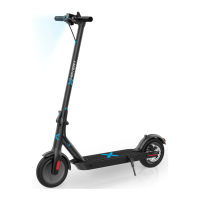
The Hover-1 Pioneer is an electric folding scooter designed for personal transportation. It is crucial to read the entire operation manual thoroughly before use to prevent damage to the device, property, serious bodily injury, or even death. The manual emphasizes the importance of wearing a properly fitted helmet that complies with CPSC or CE safety standards while riding.

Function Description:

The Hover-1 Pioneer is an electric folding scooter that serves as a personal transporter. It is designed for safe operation and maintenance, with strict testing applied to each unit. The scooter is equipped with a motor that activates after the rider kicks off the ground to reach at least 1.8 mph (3 km/h) and then presses the throttle. To slow down, the rider disengages the throttle and squeezes the brake handle to engage the rear disc brake, which is pressure-sensitive for varying stopping power. Turning is achieved by using the handlebar in the desired direction. The scooter can also be operated manually without the motor. It features a high-speed mode, activated by pressing the power button twice, and a cruise control function, activated by pressing the throttle twice quickly. The LCD display provides information such as current speed, battery level, and indicators for high-speed mode and cruise control.
Important Technical Specifications:

  • Model: H1-PNR
  • Net Weight: 26.7 lbs (12.1 kg)
  • Max Supported Weight: 264 lbs (120 kg)
  • Min Supported Weight: 44 lbs (20 kg)
  • Max Speed: Up to 14 mph (22.54 km/h)
  • Max Distance Range: Up to 16 miles (25.76 km)
  • Battery Type: Rechargeable lithium-ion battery
  • Motor Power: 300W Brushless Motor
  • Battery Voltage: 36V
  • Battery Capacity: 6 Ah
  • Power Requirement: AC 100-240V, 50/60 Hz
  • Charge Time: Up to 5 hours
  • Working Temperature: 32°F - 104°F (0°C - 40°C)
  • Charging Temperature: 32°F - 104°F (0°C - 40°C)
  • Storage Time: 1 year
  • Storage Temperature: -4°F - 104°F
  • Storage Humidity: 5% - 95%
  • Folding Size: 42in. x 16.5in. x 19.2in. (107cm x 42cm x 49cm)
  • Open Size: 42in. x 16.5in. x 44.8in. (107cm x 42cm x 114cm)
  • Tire Type: Inflated Rubber Tires
  • Tire Size: 8.5" Front & Rear
  • Brake Type: Handle Activated Rear Disk

Usage Features:

  • Safety First: Always wear a helmet. Obey all local traffic laws, including red and green lights, one-way streets, stop signs, and pedestrian crosswalks. Ride with traffic, not against it, and defensively. Give pedestrians the right-of-way.
  • Visibility: The scooter is not equipped with reflectors. It is not recommended to ride in low-visibility conditions. If riding in such conditions, ensure the LED light is on and wear bright, reflective clothing.
  • Pre-Ride Checklist: Before each ride, ensure the battery is fully charged, all parts function correctly, and appropriate safety gear is worn. Wear comfortable clothes and flat closed-toe shoes.
  • Folding and Unfolding: To unfold, press down on the folding clip and pull the steering column up. Raise the safety lock and push it into place until a "click" is heard, securing the steering column. To fold, release the folding clip. Exercise great care during these operations to avoid pinch points.
  • Kick to Start: For safety, the scooter will not accelerate from a standstill. Riders must kick off the ground to reach at least 1.8 mph (3 km/h) before pressing the throttle.
  • Speed Modes: The scooter has high-speed and low-speed modes. Press the power button once to switch between these modes.
  • Cruise Control: While riding, press the throttle twice quickly to activate cruise control. A beep will sound, and the cruise control indicator will light up on the LCD display. Press the throttle once or squeeze the brake handle to cancel.
  • Headlight: The headlight can be turned on/off by pressing the power button twice quickly.
  • Terrain: The scooter is designed for flat, even paved surfaces. Avoid riding on icy or slippery surfaces, potholes, cracks, uneven pavement, off-road terrain, or near puddles, mud, sand, stones, gravel, debris, or rough terrain. If encountering uneven pavement, lift the scooter over the obstruction.
  • Riding Posture: Bend knees when riding on bumpy or uneven pavement to absorb shock and maintain balance.
  • Weight Limits: Do not exceed the maximum or minimum weight limits.
  • Prohibited Actions: Do not attempt stunts or tricks, jump on or off the scooter, ride with pets, or operate under the influence of drugs/alcohol or when restless/sleepy. Do not carry anything while riding. Individuals with lack of balance, pregnant women, young children, and the elderly should not operate the scooter.
  • Stopping: Apply brakes gradually and allow sufficient room to stop. Avoid sudden or excessive force on the brakes.
  • Safety Alerts: The device will prompt users with safety alerts for system errors or illegal operations, such as low battery voltage, overheating, or blocked tires.

Maintenance Features:

  • Charging: Use only the supplied 1-pin charger (Model: THX-420150KV). Ensure the charging port is clean and dry. The charger indicator light will be RED during charging and turn GREEN when fully charged. Unplug the charger after charging.
  • Battery Care: The lithium-ion battery is built-in and should not be disassembled or separated from the device. Do not expose the battery to fire, direct sunlight, or excessive heat. Do not continue charging if the battery does not recharge within the specified time. Recycle or dispose of batteries properly according to local, state, and federal laws.
  • Storage: Store the Pioneer in a dry, ventilated environment. If not used for an extended period, recharge the battery every 2 months to maintain battery life. Avoid prolonged exposure to UV rays, rain, and elements, as this may damage enclosure materials.
  • Cleaning: Do not use abrasive cleaning solvents or water/liquids for cleaning, as this can cause permanent damage to internal components.
  • General Care: Keep the device away from heat sources, direct sunlight, humidity, water, and other liquids. Do not expose it to extremely high or low temperatures. Do not puncture or harm the exterior surface. Keep it free from dust and lint. Do not drop the device from high places.
  • Repairs: Repairs to electrical equipment should only be performed by the manufacturer. Unauthorized disassembly voids the warranty and may pose serious risks.
  • Warranty: Keep the serial number for warranty claims and proof of purchase. The manual lists error codes (E1-E9) indicating specific failures (motor hall, accelerator, motor blocking, mainboard MOS tube, controller/instrument communication, battery over-voltage, controller, brake) and the necessary replacement actions.

Hover-1 PIONEER Specifications

General IconGeneral
BrandHover-1
ModelPIONEER
CategoryScooter
LanguageEnglish

Related product manuals