22
Maintenance
Tires
Maintenance:
• Frequently check the tire ination pressure because all tires lose air slowly over
time. For extended storage, keep the weight of the model off the tires.
• Do not use unregulated air hoses to inate the inner tubes. An unregulated hose
can suddenly over inate model tires and cause them to burst.
• Replace worn tires.
CAUTION: Do not ride or sit on the model if a tire is under inated. This can
damage the tire and inner tube.
Inating the Tires:
• Use a hand or a foot pump to inate the tires.
• Service station meter-regulated air hoses are also acceptable.
• The maximum ination pressure is shown on the tire sidewall.
• If two ination pressures are on the tire sidewall, use the higher pressure for on-
road riding and the lower pressure for off-road riding.
• The lower pressure will provide better tire traction and a more comfortable ride.
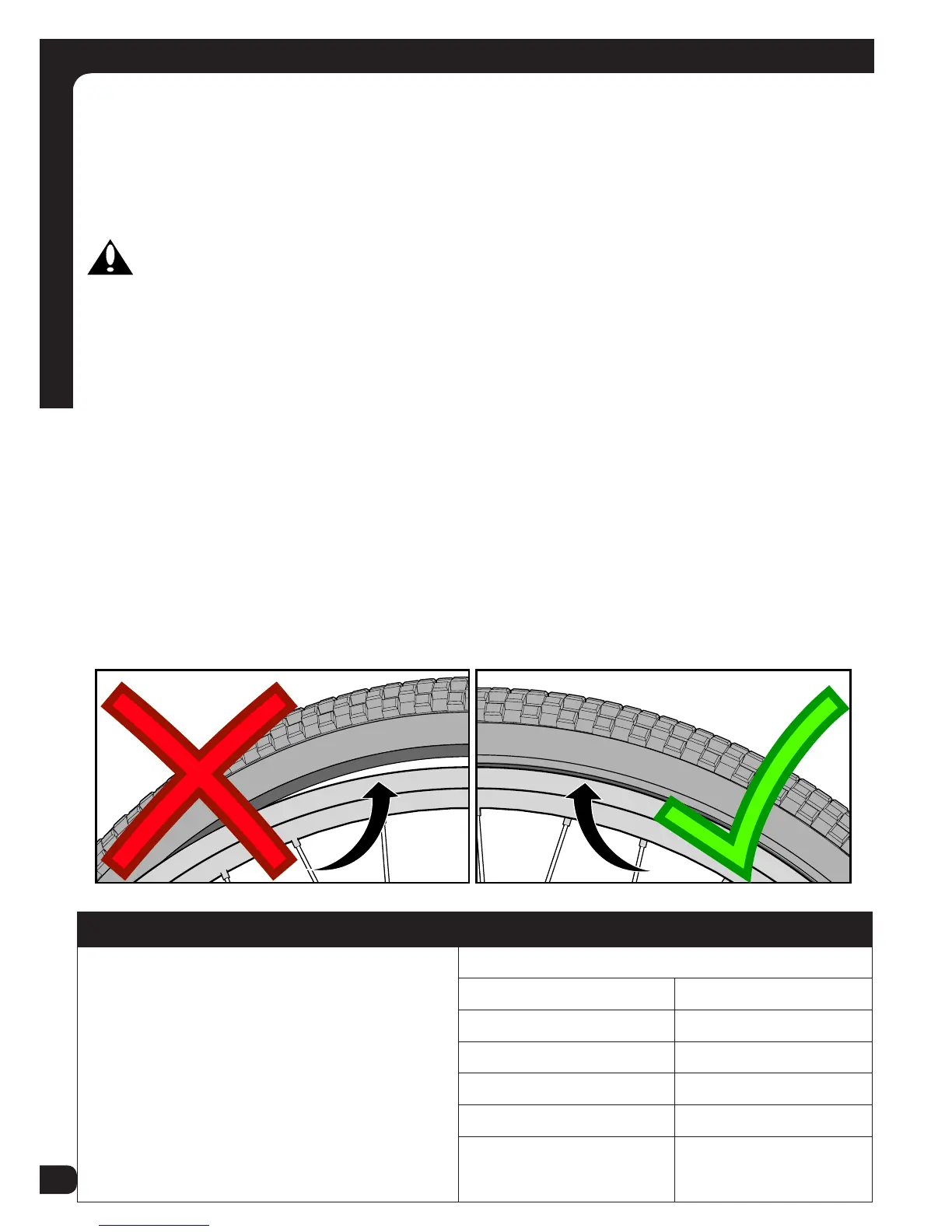
Before adding air to any tire, make sure the edge of the tire (the bead) is the same
distance from the rim, all around the rim, on both sides of the tire. If the tire does not
appear to be seated correctly, release air from the inner tube until you can push the
bead of the tire into the rim where necessary. Add air slowly and stop frequently to
check the tire seating and the pressure, until you reach the correct ination pressure.
Tire Pressure Table
Recommended Tire Pressure
(kilopascals):
Frequently check the tire ination
pressure because all tires lose air
slowly over time. For extended
storage, keep the weight of the product
off the tires.
Recommended tire pressure is marked
on the side of the tire. Conversion from
PSI to Kilopascals is shown here.
Tire Pressure: (PSI to Kpa Conversion)
PSI Kpa
20 140
30 210
40 275
50 345
60 415



 To Next Page