EasyManua.ls Logo

Husky HyPET - User Manual

Husky HyPET
20 pages
Print Icon
To Next Page IconTo Next Page
Loading...
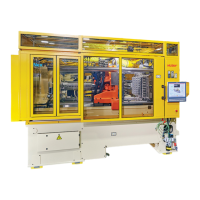
HyPET Injection Molding Machine
Operator Manual
Original Instructions
Question and Answer IconNeed help?

Do you have a question about the Husky HyPET and is the answer not in the manual?

Summary

Chapter 2 Safety Summary

Qualified Personnel

Stipulates that only fully trained and qualified personnel are permitted to operate the equipment.

Safety Guidelines

Provides essential safety practices and guidelines for personnel involved in equipment operation and maintenance.

Safety Hazards

Identifies and categorizes common safety hazards associated with injection molding equipment.

Mechanical Hazards

Details specific mechanical hazards like pinching, shearing, and crushing, including hose safety.

High Pressure Leak Hazards

Addresses hazards related to high-pressure hydraulic leaks, including spray and skin puncture risks.

Burn Hazards

Warns about burns from hot surfaces and molten material during operation and handling.

High Pressure Explosion Hazards

Highlights risks of explosion from pressure buildup in nozzles or feed throats with process materials.

Overview

The document describes the HyPET Injection Molding Machine, an industrial system designed exclusively for injection molding applications. It is accompanied by an Operator Manual (v 2.6 - April 2012) which provides comprehensive information for safe operation and maintenance.

Function Description:

The HyPET Injection Molding Machine is engineered for the precise and efficient production of plastic parts through injection molding. It processes approved materials within specified design guidelines. The machine is not intended for extruding metal or food compounds. Its operation involves various stages, including material preparation, heating, injection, and product handling. The system is designed to be operated and serviced by fully trained and qualified personnel who understand the inherent risks and necessary precautions associated with injection molding equipment.

Important Technical Specifications:

While specific numerical specifications are not detailed in the provided excerpts, the manual indicates that the machine's electrical requirements are specified on the electrical nameplate and in the electrical schematics. It draws high power and must be connected to a suitable power supply in compliance with local regulations. The average noise level in the operator's work area at idle is 85 dB(A), measured according to DIN 45 635-T1-Class 2, with peak noise levels varying based on processing conditions. The hydraulic system contains high-pressure accumulators, requiring careful handling during servicing. Cooling water hoses, especially those near the barrel, are exposed to high temperatures and require yearly replacement due to degradation.

Usage Features:

The machine incorporates a Human Machine Interface (HMI) for control and monitoring. Users can log on with a datakey or username and password, with access rights varying by user level. The HMI features a general layout with sidebar function keys, cycle mode keys, robot function keys, pump motor keys, a main screen, screen keys, manual function keys, and control keys. Common screen elements include alphanumeric and numeric touchpads, and various buttons. The HMI allows users to set the machine mode, generate on-demand and scheduled reports (with options for viewing, printing, and saving), graph data using common graphing tools, and assign reasons for operational changes. It also supports enabling/disabling booster cylinders (if equipped).

The operational sequence involves:

  • Starting the Machine: Inspecting the machine, powering up, logging on to the HMI, checking safety devices, hydraulic oil, and alarms, warming the hydraulic oil, checking machine and product handling functions, enabling mold-related functions, cycling the machine and product handling unit, and turning on heats (machine, mold, and nozzle tip heats, with specific procedures for different models like RS80/80 and P85/95E85 to P155/150E155). Soft start can be enabled, and temperature setpoints can be configured individually or globally for various heat zones.
  • Process Material Feed: Preparing the process material feed, including opening manual or auto-shutoffs and the magnet drawer (if equipped).
  • Injection Unit Preparation: Purging the injection unit before production, cleaning the injection nozzle tip, purge guard, and stationary platen.
  • Mold Preparation: Inspecting the mold and precharging the hot runner.
  • Production: Producing test parts, setting up SmartStart and SmartStop (for stopping on critical faults, after producing extra parts, after completing production, or at a specific day and time), and initiating normal or SmartStart production.

Maintenance Features:

The manual outlines a comprehensive maintenance schedule, including commissioning, preventive maintenance, and corrective maintenance. Key maintenance tasks include:

  • Draining the Air Regulator.
  • Cleaning: Nozzle tip, stationary platen, purge guard, machine, and HMI.
  • Checking Safety Devices: Emergency stop buttons, safety gates, mechanical safety devices (if equipped), automatic dump valve, purge guard, and CEN valve.
  • Checking Hydraulic Oil Level.
  • Purging the Injection Unit: Both manually and automatically.
  • Changing Resin Color.

Safety Features and Guidelines:

The machine incorporates numerous safety features and requires strict adherence to safety guidelines:

  • Qualified Personnel: Only fully trained and qualified personnel are permitted to operate or service the equipment.
  • Safety Guards and Interlocks: The machine must not be operated unless all guards are in place and no safety interlocks are bypassed, modified, or damaged.
  • Lockout/Tagout: Electrical, pneumatic, and hydraulic energy sources must be locked out and tagged before servicing. The hydraulic system must be depressurized using the manual dump valve.
  • Emergency Stop Buttons: Located throughout the machine for immediate shutdown.
  • Warning Device: An unspecified warning device is present.
  • Purge Guard: A dedicated guard for purging operations.
  • CEN Valve and Automatic/Manual Dump Valves: For hydraulic system control.
  • Electrical Cabinet Door Interlocks: (UL only) for safety during electrical maintenance.
  • Personal Protective Equipment (PPE): Required when working in areas with hot surfaces, molten material, or high-pressure hazards.
  • Safety Signs: Clearly mark hazardous areas; must not be altered and should be kept clean and visible.
  • Hazard Awareness: Personnel must be aware of mechanical hazards (pinching, shearing, crushing), high-pressure leaks (hydraulic oil spray can cause severe injury), burn hazards (hot surfaces, molten material), high-pressure explosion hazards (due to material degradation or insufficient pre-drying), electrical hazards (high power draw), noise hazards (hearing protection required if exceeding 85 dB(A)), gas, vapor, and dust emissions (exhaust system required), slip, trip, or fall hazards (do not walk, stand, climb, or sit on machine surfaces; use approved platforms), and lifting hazards (use suitable devices and designated points).

The manual emphasizes that unauthorized modifications are strictly prohibited and can void the warranty and compromise safety. Husky disclaims liability for injuries attributable to the employer's failure to properly train personnel.

Husky HyPET Specifications

General IconGeneral
BrandHusky
ModelHyPET
CategoryIndustrial Equipment
LanguageEnglish

Related product manuals