EasyManua.ls Logo

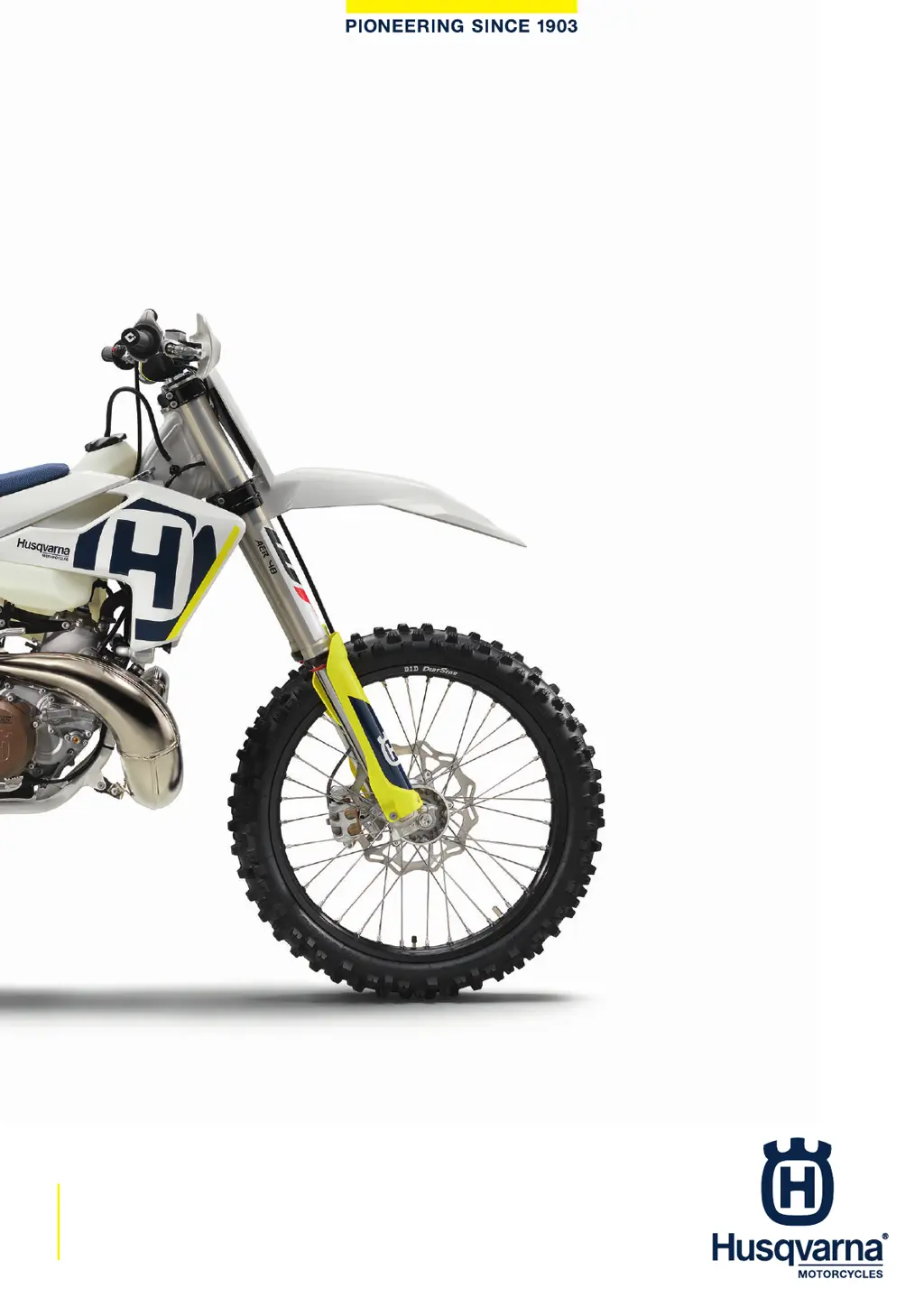
Husqvarna TX 300 - User Manual

Husqvarna TX 300
163 pages
Print Icon
To Next Page IconTo Next Page
Loading...
OWNER'S MANUAL 2018
TC 250
TX 300
Art. no. 3402165en

Table of Contents

Questions and Answers

  • C
    Carrie RiveraSep 10, 2025
    What to do if my Husqvarna Motorcycle engine has too little power?
    • K
      Kathleen JacksonSep 10, 2025
      If your Husqvarna Motorcycle engine has too little power, the issue could stem from a few sources. Check for an interrupted fuel feed by inspecting the fuel tank breather and cleaning the fuel tap. A very dirty air filter can also cause this, so clean the air filter and air filter box. Examine the exhaust system for leaks or deformation and consider changing the glass fiber yarn filling in the main silencer. Also, a fault in the ignition system could be the reason, or a damaged diaphragm or reed valve housing.
  • C
    Cassandra ClarkAug 23, 2025
    What to do if my Husqvarna TX 300 Motorcycle engine turns over but won't start?
    • J
      Jacob ReyesAug 23, 2025
      If the engine of your Husqvarna Motorcycle turns but doesn't start, consider these possibilities: Ensure you're following the correct start procedure. If the motorcycle has been out of use for a while, old fuel in the float chamber could be the issue; empty the carburetor float chamber. Check for any interruptions in the fuel feed, such as a blocked fuel tank breather or fuel tap, and inspect/set the carburetor components. A spark plug that's oily or wet should be cleaned, dried, or replaced. Adjust the plug gap to 0.60 mm (0.0236 in). Also, verify the ignition system and check the kill switch. Clean the connector and treat with contact spray if it's loose or oxidized. Finally, check/set the carburetor components if there is water in carburetor or jets blocked.
  • S
    Steven PattonAug 25, 2025
    Why does my Husqvarna Motorcycle have no power?
    • S
      Sandra WilliamsAug 25, 2025
      If your Husqvarna Motorcycle engine has too little power, consider the following: Check for any interruptions in the fuel feed by inspecting the fuel tank breather and cleaning the fuel tap; also, check/set the carburetor components. A very dirty air filter can restrict airflow, so clean the air filter and air filter box. Inspect the exhaust system for leaks, deformation, or insufficient glass fiber yarn filling in the main silencer; repair or replace components as needed. A fault in the ignition system could also be the culprit, necessitating a check. Lastly, inspect the diaphragm and reed valve housing for damage.
  • S
    Stephanie WoodsAug 27, 2025
    Why does my Husqvarna Motorcycle engine have no idle?
    • P
      pmaldonadoAug 27, 2025
      If the engine of your Husqvarna Motorcycle has no idle, it could be due to several reasons. The idling jet might be blocked, so check/set the carburetor components. Check the spark plug and change it if it is defective. Also, the adjusting screws on the carburetor might be distorted; in this case, adjust the idle speed. Finally, a defective ignition system could be the cause; check the primary and secondary windings of the ignition coil, as well as the spark plug connector.
  • T
    Teresa SanchezAug 27, 2025
    What causes my Husqvarna Motorcycle engine to overheat?
    • P
      Pamela KaneAug 27, 2025
      If your Husqvarna Motorcycle engine overheats, several factors could be responsible. First, check the coolant level and inspect the cooling system for leaks. Ensure there's adequate airflow, and switch off the engine when stationary. Clean the radiator fins if they're very dirty. If there's foam formation in the cooling system, drain and refill the coolant. Inspect the cylinder head and cylinder head gasket for damage. Finally, check for bent radiator hoses and replace if necessary.
  • F
    Frances CrosbyAug 29, 2025
    What to do if Husqvarna TX 300 Motorcycle engine does not speed up?
    • J
      Joe GilesAug 29, 2025
      If your Husqvarna Motorcycle engine does not speed up, it could be due to a few reasons. The carburetor might be running over because the float needle is dirty or worn, so check/set the carburetor components. Also, loose carburetor jets can cause this issue, so check/set the carburetor components. Finally, a fault in the ignition system could be the cause, necessitating a check.
  • M
    Michelle RodriguezSep 18, 2025
    Why is there water in the gear oil of my Husqvarna Motorcycle?
    • A
      Ashley KnightSep 18, 2025
      Water in the gear oil of your Husqvarna Motorcycle can be caused by a damaged shaft seal ring or water pump. You should check the shaft seal ring and water pump.
  • D
    Devin WilliamsSep 12, 2025
    What to do if my Husqvarna Motorcycle engine stalls or pops into the carburetor?
    • R
      Robert RogersSep 12, 2025
      If your Husqvarna Motorcycle engine stalls or pops into the carburetor, it might be due to a lack of fuel, so ensure the fuel tap is in the ON or RES position and refuel if necessary. Another cause could be the engine taking in bad air, so check the intake flange and carburetor for tightness. Lastly, a loose or oxidized connector or ignition coil can cause this issue, so clean the connector and treat it with contact spray.
  • D
    Daniel GarnerSep 8, 2025
    Why won't my Husqvarna Motorcycle engine crank with the electric starter (TX 300)?
    • B
      bradley98Sep 8, 2025
      If your Husqvarna TX 300 Motorcycle engine won't crank with the electric starter, there are several possible reasons. It could be due to an operating error during the start procedure. The battery might be discharged, requiring you to recharge it and check the charging voltage, closed current, and alternator. A blown main fuse could also be the cause, so replace it. Additionally, the starter relay or starter motor might be faulty, and each should be checked.
  • B
    bmooreSep 5, 2025
    Why does my Husqvarna Motorcycle engine overheat?
    • H
      holmesbenjaminSep 5, 2025
      Your Husqvarna Motorcycle engine may overheat due to several reasons. It could be caused by too little coolant in the cooling system, requiring you to check for leaks and verify the coolant level. Insufficient air stream, necessitating that you switch off the engine when stationary, or very dirty radiator fins, which means you should clean them. Foam formation in the cooling system may also be the problem, suggesting that you drain and refill the coolant. Other potential causes include a damaged cylinder head or cylinder head gasket, advising a check, or a bent radiator hose, which requires replacement.

Summary

Essential Safety Advice

Intended Use and Misuse Warnings

Specifies the intended use of the motorcycles and warns against dangers of misuse.

Risk Symbols and Safe Operation

Explains risk symbols and provides critical safety guidelines for operating the vehicle.

Protective Clothing and Work Rules

Emphasizes wearing protective gear and outlines rules for performing maintenance work.

Important Notes and Warranty Information

Manufacturer Warranty and Service Requirements

Details warranty conditions and the requirement for authorized workshop service.

Motorcycle Controls and Basic Operation

Handlebar Controls

Describes the clutch lever, hand brake lever, and throttle grip.

Preparing for Riding

First Use and Engine Break-in

Provides essential advice for initial use and the engine break-in period.

Riding Instructions and Safety

Pre-Ride Checks and Starting Procedures

Details essential pre-ride checks and safe engine starting methods.

Shifting, Braking, and Parking

Guides on proper gear shifting, brake application, and parking procedures.

Refueling Safety

Provides critical safety precautions and instructions for refueling the motorcycle.

Scheduled Maintenance and Service Intervals

Required and Recommended Service Work

Lists essential maintenance tasks and their recommended intervals for optimal upkeep.

Chassis Tuning and Suspension Adjustment

Basic Chassis and Rider Weight Settings

Explains how to adjust chassis settings based on rider weight for optimal handling.

Shock Absorber Adjustment

Provides detailed instructions for adjusting compression, rebound damping, and spring preload.

Fork Adjustment

Guides on adjusting fork compression, rebound damping, and air pressure.

Chassis Service and Component Maintenance

Brake System Maintenance and Checks

Wheels and Tires Maintenance

Electrical System Components

Cooling System Maintenance

Engine Tuning and Carburetor Adjustments

Carburetor Idle and Mixture Settings

Guidance on setting the carburetor idle speed and mixture.

Engine Service Procedures

Gear Oil Level Check and Change

Instructions for checking and changing the engine gear oil.

Motorcycle Storage and Preparation

Troubleshooting Common Motorcycle Issues

Engine Starting and Running Problems

Diagnoses common issues related to engine starting and idling.

Engine Performance and Overheating Issues

Troubleshooting for problems like power loss, stalling, and overheating.

Technical Specifications and Data

Husqvarna TX 300 Specifications

General IconGeneral
Displacement293.2 cc
Bore x Stroke72 mm x 72 mm
StarterElectric starter
Transmission6-speed
CoolingLiquid cooled
Rear SuspensionWP XACT Monoshock with linkage
Front BrakeDisc brake
Rear BrakeDisc brake
Ground Clearance370 mm
Seat Height950 mm
Engine Type2-stroke, single cylinder
Fuel Tank Capacity8.5 l
Front SuspensionWP XPLOR-USD, Ø 48 mm

Related product manuals