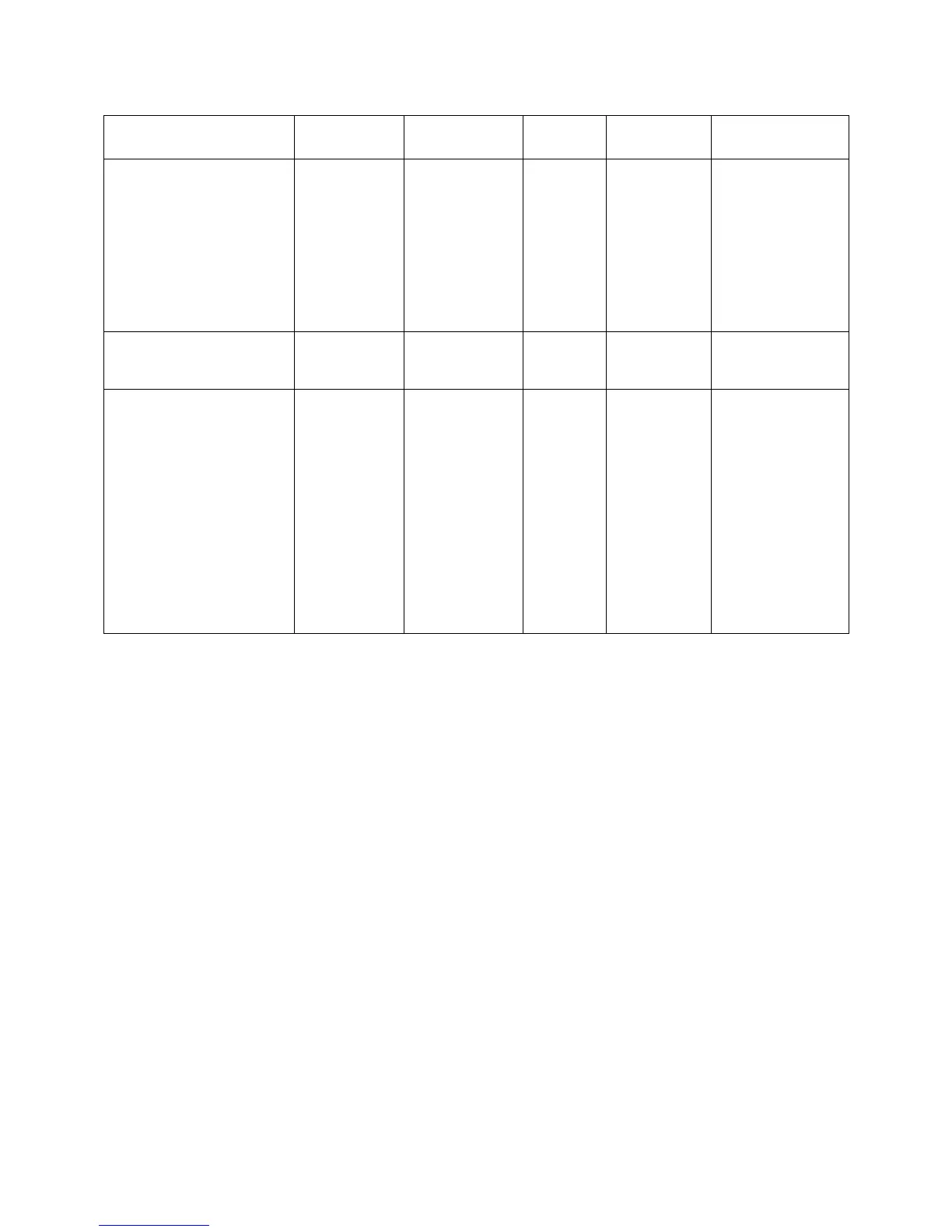
4.12: Hydro-Action
®
Plant Condition Chart
Sludge Volume Test
Characteristics
Black particles
In sludge.
Sludge does not
settle well.
Chunks of
floating material
above main
sludge layer.
Solids do not
separate
from liquids well.
Very little
settling usually
5-10 %.
Septic odor.
Very little
settling.
Sludge
particles
are
very small.
Same
as
organic
under
loading.
20-60%
particles.
Particles
resemble
small
pieces
of sponge.
Diffuser stones
may need to
be changed
to increase
dissolved O
2
level and
maintain
chocolate color.
If chocolate
color cannot
be maintained,
then the plant
will have to
be pumped.
(*3)
Look for
ways
to increase
organic
load.
Refrain
from
or reduce
the use of
toxic
substances.
(*2)
Reduce flow
of liquid to
designed GPD.
(*1)
*(1). Volumetric overloading (flow rate exceeds designed flow rate) could be caused by a
number of things. The most common are leaky toilets or faucets. Only sanitary waste (sinks,
tubs, washing machines, toilets, etc.) should be allowed in the Hydro-Action
®
plant. To check if
excess water is entering the plant, observe plant discharge point when house facilities are not in
use.
*(2). Find out if owner is using large amounts of chemicals such as unusual amounts of bleach,
disinfectants, photographic wastes, etc. Also check to see that water softener backwash is not
allowed in plant. This can cause a chemical imbalance and destroy needed bacteria. Backwash
should be routed to a separate disposal area. Any unusual types of waste not normally
associated with a household should be kept out.
*(3). When Hydro-Action
®
plant and pretreatment tank are being pumped, a qualified service
technician should oversee the job. Care should be taken not to damage internal components.
Plant and pretreatment tank should be washed and cleaned as they are being pumped. The
waste from the tanks should be disposed of in compliance with state and federal law. Hydro-
Action
®
recommends pumping the plant every 2 to 6 years; however, there is not a set time
because loading varies from household to household. Care should be taken when pumping
plant and pretreatment tank. Empty tanks can be hydraulically displaced (float tank) by ground
water. If soil is water-saturated tanks should not be completely emptied. Wasting sludge (solids)
can be accomplished without completely empty tanks.


 To Next Page