Need help?
Do you have a question about the ICM Controls ICM292 and is the answer not in the manual?
Steps to prevent electrostatic discharge damage to control board components during installation.
Instructions for safely disconnecting and removing the old control board before replacement.
Guidelines for properly grounding and connecting the new control board during installation.
Guidance for diagnosing flame not established, flame out, and flame out of sequence faults.
Understanding LED indicator patterns for diagnostic fault codes on the control board.
Explanation of component abbreviations and standard wire color codes used in diagrams.
Important considerations and notes for wiring installation and motor speed connections.
Detailed schematic illustrating the connections for the ICM292 ignition control board.
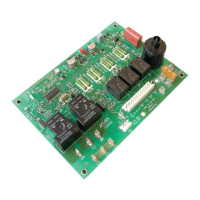
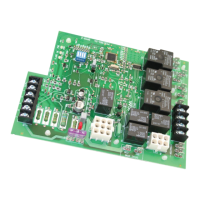
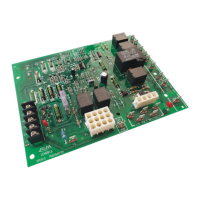
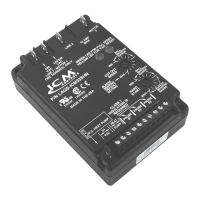
The ICM292 is a Direct Spark Ignition (DSI) control board, designed to manage the operation of gas-fired heating equipment. This microprocessor-based device plays a central role in ensuring the safe and efficient functioning of a furnace by controlling various components and monitoring critical parameters.
The primary function of the ICM292 is to orchestrate the ignition sequence and subsequent operation of a gas furnace. It controls the inducer motors, which are responsible for drawing combustion air into the furnace and expelling exhaust gases. The board also manages the operation of an air cleaner and humidifier, if these accessories are installed in the system. Crucially, it controls the spark ignitor, which generates the spark necessary to ignite the gas, and the gas valve, which regulates the flow of gas to the burner.
Beyond simple control, the ICM292 actively monitors several key aspects of the furnace's operation. It tracks the timing of various stages, such as pre-purge (the period before ignition to clear residual gases) and the trial for ignition (the duration during which the ignitor attempts to light the gas). The board also monitors system switches, including vent pressure switches and limit switches, which are vital safety components. Flame sensing is another critical function, where the board detects the presence or absence of a flame after ignition. This continuous monitoring allows the ICM292 to ensure safe operation and respond to any anomalies.
A core safety feature of the ICM292 is its 100% lockout safety mechanism. If the board detects a fault condition that prevents safe operation, it will enter a lockout state, preventing further attempts at ignition until the fault is addressed. This prevents potentially dangerous situations such as unignited gas accumulation. The board is versatile, compatible with both LP (liquid propane) and Natural Gas systems, making it suitable for a wide range of installations.
The ICM292 is designed with ease of troubleshooting in mind, featuring LED indicators that display the current status and fault codes. These LEDs provide valuable diagnostic information, allowing technicians to quickly identify the cause of a problem without needing specialized equipment. For instance, a green LED indicates power and normal operation, while a yellow LED provides information about flame status. Specific flash patterns of the green LED correspond to different fault conditions, such as ignition failure, pressure switch issues, or limit switch problems. This diagnostic capability significantly reduces the time and effort required for servicing.
The board's operation follows a defined sequence. When a call for heat (W signal) is received from the thermostat, the inducer draft motor engages. Once the vent pressure switch closes, indicating proper airflow, the ignition sequence begins, energizing the gas valve and spark ignitor. The blower motor engages at a heat speed after a flame is established and sensed. Upon satisfaction of the W call, the inducer motor turns off, followed by the blower motor according to the set heat blower off delay. The board also manages calls for fan-only operation (G signal) and cooling (Y signal), engaging the blower motor at appropriate speeds and disengaging it when the call is satisfied.
The ICM292 is a direct replacement for Rheem model 62-24140-04, simplifying the upgrade or repair process for existing systems. The inclusion of a wiring diagram in the manual further aids in correct installation and understanding of the connections. The diagram clearly labels various components and their connections, distinguishing between line voltage and low voltage wiring, and indicating factory standard, factory option, and field-installed components.
While the ICM292 itself is a control board and not a component that typically undergoes routine maintenance, its design facilitates maintenance and troubleshooting of the overall furnace system. The LED diagnostic codes are a primary maintenance feature, enabling technicians to quickly pinpoint issues within the furnace. For example, if the green LED flashes once, it indicates an ignition failure after four trials, guiding the technician to inspect the ignitor, gas valve, or flame sensor. Other codes point to pressure switch issues, limit switch problems, or even electrical issues like brownout voltage or reversed hot and neutral wires.
The manual provides detailed troubleshooting tips for common scenarios like "flame not established" and "flame out." If the flame is not established during the initial trial, the control will attempt further ignition trials with specific delays, and the gas valve will only be energized during these short ignition sequences. If a flame is lost during heating ("flame out"), the gas valve will disengage, and the control will attempt additional ignition trials. These details help technicians understand the board's logic and diagnose problems more effectively.
For installation and removal, the manual emphasizes critical safety precautions, particularly regarding electrostatic discharge (ESD). Technicians are instructed to ground themselves and their tools before handling the control board to prevent damage to electronic components. This proactive measure ensures the longevity and reliability of the replacement board. The process for removing the existing control involves disconnecting power and gas supplies, labeling wires, and carefully detaching the old board, all steps designed to prevent wiring errors and ensure safety during servicing. When installing a new control, technicians are guided to ground themselves, fasten the board securely, connect all wiring correctly, and verify the sequence of operation, ensuring a proper and safe installation.
 General
| Voltage | 24 VAC |
|---|---|
| Enclosure Material | Plastic |
| Termination Type | Screw Terminal |
| Flame Current Input | 0.5μA to 10μA DC |
| Ignition Type | Intermittent |

 To Next Page