13
441 01 2611 06
Venting and Combustion Air Check
NOTE: When an existing Category I furnace is removed or re-
placed,theoriginalventingsystemmaynolongerbesizedtoprop-
erly vent the attached appliances, and to make sure there is
adequate combustion air for all appliances, MAKE THE FOL-
LOWING CHECK.
CARBON MONOXIDE POISONING HAZARD
Failure to follow the steps outlined below for each
applianceconnectedto theventingsystembeingplaced
into operation, could result in carbon monoxide
poisoning or death:
The followingsteps shall be followed for each appliance
connected to the venting system being placed into
operation, while all other appliances connected to the
venting system are not in operation:
1.Seal any unused openings in the venting system.
2.Inspect the venting system for proper size and horizontal
pitch, as required i n the National Fuel Gas Code, ANSI
Z223.1/NFPA 54 or CSA B149.1, Natural Gas and
Propane Installation Code and these instructions. Deter-
minethatthereisnoblockageorrestriction, leakage, cor-
rosionandotherdeficiencieswhichcouldcauseanunsafe
condition.
3.As far as practical, close all building doors and windows
andalldoorsbetweenthespaceinwhichtheappliance(s)
connected to the venting system are located and other
spaces of the building.
4.Close fireplace dampers.
5.Turnonclothesdryersandanyappliancenotconnectedto
the venting system. Turn on any exhaust fans, such as
range hoods and bathroom exhausts, so they are
operating at maximum speed. Do not operate a summer
exhaust fan.
6.Followthelightinginstructions.Placethe appliancebeing
inspected into operation. Adjust the thermostat so
appliance is operating continuously.
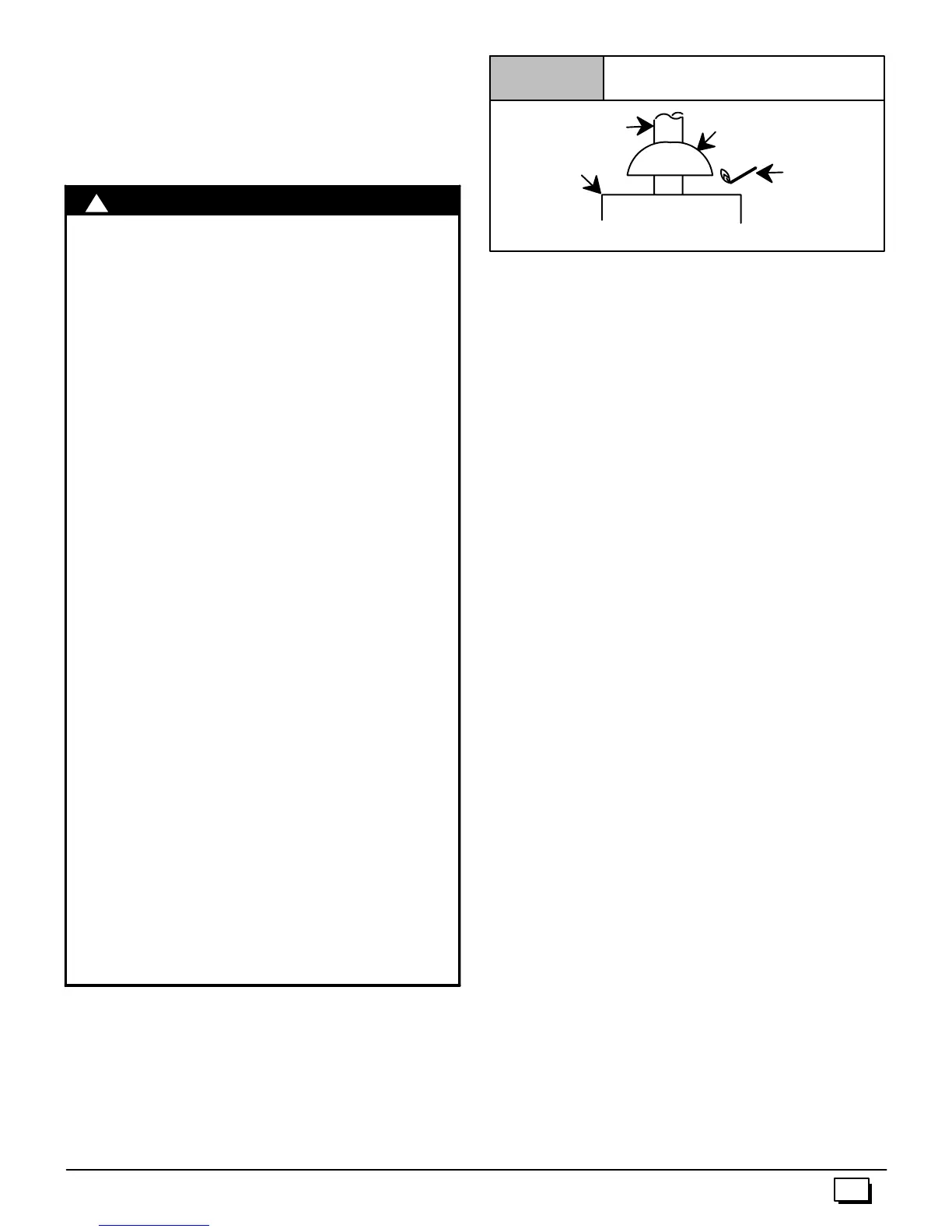
7.Test for spillage from draft hood equipped appliances at
thedrafthoodreliefopeningafter5minutesofmainburner
operation.Use the flame of a match or candle. (Figure 9)
8.If improper venting is observed, during any of the above
tests,theventingsystemmustbecorrectedinaccordance
with the National Fuel Gas Code, ANSI Z223.1/NFPA 54
and/orCSAB149.1,NaturalGasandPropaneInstallation
Code.
9.After it has been determined that each appliance con-
nected to the venting system properly vents when tested
as outlined above, return doors, windows, exhaust fans,
fireplace dampers and any other gas--fired burning
appliance to their previous conditions of use.
!
WARNING
Vent Check
Draft HoodVent Pipe
Match
Typical Gas
Water Heater
Figure 9
NOTE: If flame pulls towards draft hood, this indicates
sufficient infiltration air.
Venting to Existing Masonry Chimney
Dedicated venting of one fan assisted furnace into any ma-
sonry chimney is restricted. A chimneymust first be lined with
either Type B vent sizedin accordance with NFGC tables 13.1 or
13.2 or a listed, metal lining system, or venting into a masonry
chimneyispermittedas outlinedwith useofanoptionallistedma-
sonry chimney kit. (See Section 7 Masonry Chimney Venting of
these instructions.)
Listed, corrugated metallic chimney liner systems in masonry
chimneysshallbesizedbyusingNFGC tablesper13.1.7fordedi-
cated venting and per 13.2.19 for common v enting with the maxi-
mum capacity reduced by 20% (0.80 X maximum capacity) and
theminimumcapacityasshownintheapplicabletable.InCanada,
use the NSCNGPIC, appendix C, section 10. Corrugated metal
vent systems installed with bends or offsetsrequire additional re-
ductionof 5%oftheventcapacityforeachbendupto45° and10%
of the vent capacity for each bend from 45° up to 90°.
NOTE:Two(2)45° elbows are equivalent to one (1) 90° elbow.
Combined Venting into a Masonry Chimney
Ventingintoamasonryorconcretechimneyisonlypermitted
as outlined in the NFGC or NSCNGPIC venting tables. Follow
all safe venting requirements.
Note: See section “7. Masonry Chimney Venting”.



 To Next Page