4 440 01 4300 00
Specifications subject to change without notice.
(914 mm) horizontally from the furnace. See NFPA 90B
or local code for further requirements.
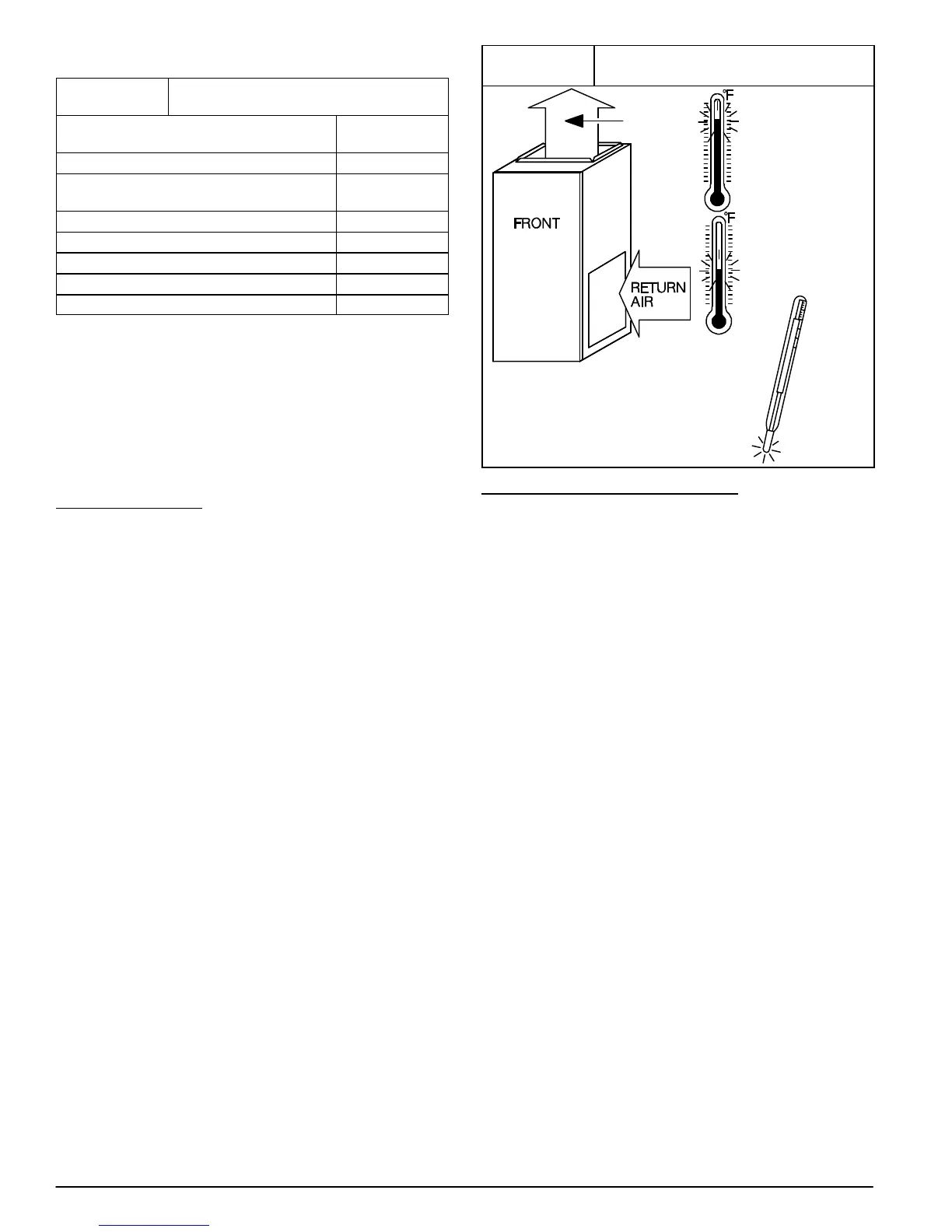
Table 1
Minimum Clearances to
Combustible Materials for All Units
POSITION
CLEARANCE
In(mm)
REAR 0
FRONT (Combustion air openings in fur-
nace and in structure)
1 (25)
Required for service *24 (610)
All Sides of Supply Plenum *1 (25)
Sides 0
Vent 0
Top of Furnace 1 (25)
* Consult your local building codes.
13. These furnaces SHALL NOT be installed directly on
carpeting, combustible tile, or any other combustible
material other than wood flooring. In downflow
installations, factory accessory floor base MUST be
used when installed on combustible materials and wood
flooring. Special base is not required when this furnace
is installed on manufacturer’s Coil Assembly is used.
See Table 1 for clearance to combustible construction
information.
Introduction
The 4−way multipoise Category IV condensing furnace is CSA
design−certified as a direct−vent (2−pipe) and ventilated
combustion air venting installations. (See Figure 3) The
furnace is factory−shipped for use with natural gas. The
furnace can be converted in the field for use with propane gas
when a factory−supplied conversion kit is used. Refer to the
furnace rating plate for conversion kit information.
This furnace is not approved for installation in mobile homes,
recreational vehicles, or outdoors.
This furnace is designed for minimum continuous return−air
temperature of 60°F (15°C) db or intermittent operation down to
55°F (15°C) db such as when used with a night setback
thermostat. Return−air temperature must not exceed 80°F
(27°C) db. Failure to follow these return−air temperature limits
may affect reliability of heat exchangers, motors, and controls
(See Figure 1)
The furnace should be sized to provide 100 percent of the
design heating load requirement plus any margin that occurs
because of furnace model size capacity increments. Heating
load estimates can be made using approved methods available
from Air Conditioning Contractors of America (Manual J);
American Society of Heating, Refrigerating, and
Air−Conditioning Engineers; or other approved engineering
methods. Excessive oversizing of the furnace could cause the
furnace and/or vent to fail prematurely.
For accessory installation details, refer to the applicable
instruction literature.
NOTE: Remove all shipping materials, parts assemblies and
literature before operating the furnace.
Figure 1
Freeze Protection and Return Air
Temperature
32° F/0° C MINIMUM INSTALLED
AMBIENT OR FREEZE
PROTECTION REQUIRED
SUPPLY AIR
MAX 80°F/27°C
MIN 60°F/16°C
A10490
Codes and Standards
Follow all national and local codes and standards in
addition to these instructions. The installation must comply
with regulations of the serving gas supplier, local building,
heating, plumbing, and other codes. In absence of local codes,
the installation must comply with the national codes listed
below and all authorities having jurisdiction.
In the United States and Canada, follow all codes and
standards for the following:
Safety
US: National Fuel Gas Code (NFGC) NFPA
54−2009/ANSI Z223.1−2009 and the Installation
Standards, Warm Air Heating and Air Conditioning
Systems ANSI/NFPA 90B
CANADA: National Standard of Canada, Natural Gas
and Propane Installation Code (NSCNGPIC)
CAN/CSA B149.1−2010
General Installation
US: NFGC and the NFPA 90B. For copies, contact the
National Fire Protection Association Inc.,
Batterymarch Park, Quincy, MA 02269; or for only the
NFGC contact the American Gas Association, 400 N.
Capitol, N.W., Washington DC 20001.
CANADA: NSCNGPIC. For a copy, contact Standard
Sales, CSA International, 178 Rexdale Boulevard,
Etobicoke (Toronto), Ontario, M9W 1R3, Canada.
Combustion and Ventilation Air
US: Section 9.3 of the NFPA54/ANSI Z223.1−2009,
Air for Combustion and Ventilation
CANADA: Part 8 of the CAN/CSA B149.1−2010,
Venting Systems and Air Supply for Appliances



 To Next Page