Page 22
Tracing Low Voltage and Data Cable*
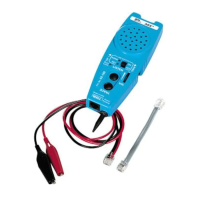
Applications include tracing coax,
twisted pair, Cat 5, alarm and
telephone wire.
Follow the instructions for Tracing
Wires behind walls using the de-
energized method and a remote
ground for a return path.
* When using the alligator clips to
attach the transmitter to live voltage
that is greater than 120 VAC use the
following method.
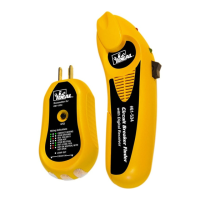
Install the alligator clips to the ends of the 3 foot leads. Do not plug them into the transmitter.
Using appropriate PPE procedures, attach the alligator clips to the live conductors. Next, plug
the safety leads into the terminals on the transmitter, polarity is not important. Now turn the
transmitter on and note if the line energized light illuminates. Proceed with your tracing. To
disconnect, turn the transmitter off, and remove the terminals from the transmitter. Next, using
appropriate PPE procedures disconnect the alligator clips from the energized conductors.
Finding Opens
Applications include locating dead circuits, finding the source of an open (broken point) in a
hot/neutral/ground conductor, and determining the end of a circuit run.
1) Connect the transmitter to the open circuit and power it on.
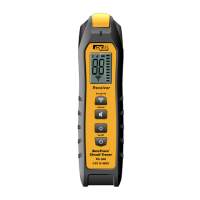
2) Turn on the receiver and use the default maximum sensitivity.
3) Starting several feet from the transmitter, use a sweeping motion and the back of the
receiver to find the strongest signal location behind the wall, above the ceiling or under
the floor.
a) If the signal is too strong, reduce the sensitivity range.
b) If the signal is too weak, connect one lead of the transmitter into the open conductor and
connect the other lead to a remote return path. Then, repeat step #3.
4) Continue following the highest reading until the signal starts to fall off. This is the location
of the open. Reduce the sensitivity range and use the nose of the receiver to pinpoint the
open on the circuit.


 To Next Page