14
Heating detected
If the use of heating selected C 1.20 (accessories) in the Setting
menu, but this is not recognized, the following user information
is displayed.
NOTE:
Check that the heater is correctly connected and turned on.
Factory settings
Settings:
• Menu: animated
• Color palette: white
• Key tones: on
• Date device: 01.01.2012
• Time device: 00:00:00 Uhr
• Units: J/g
• Heating: off
• Disposable crucible: no
• Printer: off
• Service Info: no
• Scale: off
Basic settings:
• C-value IB1: 0
• C-value IB2: 0
•
Reference calorific value:
26457
• Start temperature: 22 °C
•
H
O
Combustible crucible
: 19839
• QExternally 1: 50
• QExternally 2: 0
• Controlled time: off
• O
rinsing: off
• Cooling: on
• Prolonged venting: 0
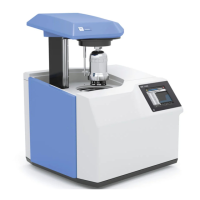
As delivered, the C 1 calorimeter system is configured as follows:
Test condition
Combustion is carried out in a calorimeter under specific
conditions.
The
IKA
®
C 1 is filled with a weighed fuel sample, the fuel sample
is ignited and the temperature increase in the calorimeter system
measured.
The specific calorific value of the sample is calculated as follows:
• Weight of fuel sample
• Heat capacity (C-value) of calorimeter system
• Calculated temperature increase of water in the calorimeter
system
For complete combust on the inner vessel is filled with pure
oxygen (quality 3.5). The pressure of the oxygen atmosphere in
the inner vessel is max. 40 bar.
The exact determinat on of the gross calorific value of a
substance requires that the combust on proceed under precisely
defined conditons. The applicable standards are based on the
following assumptons:
• Depending on the start temperature that is set, the tempera-
ture of the fuel before the combustion is 20 °C upto 30 °C.
• The water contained in the fuel before the combustion and
the water that is formed when compounds comprising the
fuel containing hydrogen undergo combustion is present in
a liquid state.
• No oxidation of the atmospheric nitrogen has taken place.
• The gaseous products after combustion consist of oxygen,
nitrogen, carbon dioxide, sulfur dioxide and the oxidation
products of the sample.
• Solid substances may be formed (for example ash).
Often, however, the combustion products that form the basis
of the standards are not the only products that are formed. In
such cases, an analysis of the fuel sample and the products of
combustion are necessary to provide data for a correction cal-
culation. The standard gross calorific value is then determined
from the measured gross calorific value and the analysis data.
The gross calorifc value Ho is formed as the quotient of the
amount of heat liberated upon total combustion of a solid or
liquid fuel and the weight of the fuel sample. The compounds
comprising the fuel that contain water must be present in liquid
state after the combustion.
The heat value Hu is equal to the gross calorific value less
the energy of condensation of the water that was contained
in the fuel and was formed by the combustion. The heat value
is the more important quantity for technical purposes, since in
all important technical applications, the heat value is the only
quantity that can be evaluated in terms of energy.
For information on the fundamental principles of calcula-
tion for gross calorific value and heat value, please refer
to the applicable standards (for example: DIN 51 900;
ASTM D 240;ASTM D 1989, ISO 1928).
Determination of gross calorific value
Calorimetric measurements


 To Next Page