EasyManua.ls Logo

IMT 3203i - User Manual

IMT 3203i
24 pages
Print Icon
To Next Page IconTo Next Page
Loading...
Printed on 12 February, 2007
# 99903618
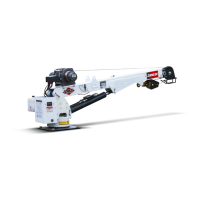
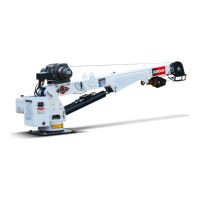
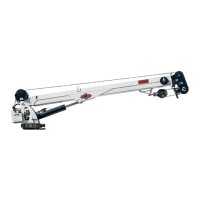
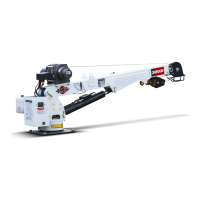
IMT Electric-Hydraulic Crane
Operation & Safety Manual
(Models 3203i, 4004i, & 6006i)
20070212
IOWA MOLD TOOLING CO., INC.
PO Box 189
Garner, IA 50438
Tel: 641-923-3711 FAX: 641-923-2424
Website: http://www.imt.com
Copyright © 2007 Iowa Mold Tooling Co., Inc.
All rights reserved
No part of this publication may be reproduced, stored in a retrieval system, or transmitted in any
form or by any means, electronic, mechanical, photocopying, recording or otherwise without the
prior written permission of Iowa Mold Tooling Co., Inc.
Iowa Mold Tooling Co., Inc. is an Oshkosh Truck Corporation Company.

Other manuals for IMT 3203i

Question and Answer IconNeed help?

Do you have a question about the IMT 3203i and is the answer not in the manual?

Summary

Revisions

Introduction

General

Information for safe and proper operation of the IMT crane, covering regulations and procedures.

Crane and Safety Equipment Modifications

Guidelines for modifications, emphasizing using approved parts and not altering safety devices.

Owner Responsibilities

User's duty to maintain and operate the unit safely, adhering to regulations.

Manual Structure

Explanation of how the manual uses NOTES, CAUTIONS, and WARNINGS to convey information.

Warranty

Conditions under which the unit's warranty may be voided due to misuse or unauthorized modifications.

Notice to the Owner; User

Instructions on reporting property damage or personal injury accidents involving the equipment.

Operation

Safety

Essential safety precautions for crane operation, including bystander safety and general procedures.

Crane Component Identification

Identification of key crane parts and their functions using diagrams.

General Operation Procedures

Operator requirements, safety responsibilities, and pre-work checks for crane operation.

Daily Safety Inspection

Checklist for daily, weekly, and monthly inspections of the crane and its components.

Electrical Hazards

Guidelines and clearances for operating cranes near powerlines to prevent electrocution.

Crane Capacity

Information on understanding and respecting the crane's load capacity limits.

Load Ratings

Explanation of load charts, factors affecting ratings, and hydraulic vs. electric functions.

Outriggers

Importance and procedure for deploying outriggers for truck stabilization before lifting.

Initial Operation

Steps for first-time crane operation, including checking oil and overall function.

Crane Operation

Guidelines for safe crane operation, including load size, attachment, and movement.

Overload Protection System

Explanation of the system that prevents overloads by locking crane functions.

Anti-Two-Block System

Description of the system that prevents the block from contacting the boom crown.

Operation in Adverse Conditions

Procedures for operating the crane in dusty, humid, salty, or high-altitude environments.

Cold Weather Operation

Specific procedures for operating the crane in extremely cold temperatures (-25°F or lower).

Hand Signals

Standardized hand signals for crane communication when voice is not feasible.

Overview

This document is an operation and safety manual for IMT Electric-Hydraulic Cranes, specifically models 3203i, 4004i, and 6006i. It provides essential information for the safe and proper operation and maintenance of these cranes.

Function Description:

The IMT Electric-Hydraulic Cranes are designed to lift and move a variety of materials. They are typically mounted on a vehicle chassis but can also have stationary mounts. The cranes utilize an electric-hydraulic system for their functions, with hydraulic power for most operations and electric power for the hoist. The manual emphasizes that these cranes are intended for lifting specific loads as defined by their capacity placards. They are not to be used for transporting or lifting personnel.

Important Technical Specifications:

  • Models Covered: 3203i, 4004i, and 6006i.
  • Load Capacity: Defined by a capacity placard mounted near the operator's station and on the crane. Load limit information on the capacity placard is formulated on 85% of tipping. Tipping refers to the crane actually tipping with its opposite outrigger and tires having broken contact with the surface.
  • Hydraulic System: Most crane functions (boom raise/lower, boom extension/retraction, swing) are hydraulic. The hoist function is electric.
  • Overload Protection System (OLP): Senses an overload condition (excess pressure in the boom up hydraulic cylinder) and prevents winch up, boom extension, and boom down functions. This system is factory set and should not be tampered with.
  • Anti-Two-Block (A2B) System: Present on all cranes with power extension. It includes a switch connected to a hanging weight at the crown block of the boom. This system activates before the traveling block contacts the boom crown, stopping boom extension, hoist up, and boom down functions. It is designed to be failsafe.
  • Load Holding Valves: Integrated into the hydraulic cylinders to prevent the load from dropping in case of hydraulic hose failure.
  • Circuit Breaker: A manual reset circuit breaker protects electric motors and contactors from overcurrent damage.
  • Arc-Suppression Circuits: Located in the control module and power cable to minimize contact arcing and extend the life of switches and contactors.
  • Outriggers: An outrigger (part # 32000513) or stiffening leg is recommended for stabilizing the truck. It extends three feet to the side of the truck on the crane side and can level the truck bed.

Usage Features:

  • Operation Prerequisites: Operators must read and understand the entire manual, be familiar with governmental regulations (e.g., ANSI/ASME B30.5, OSHA 29CFR, CAL-OSHA Title 8), and be trained in crane safety, controls, load limits, and operating procedures.
  • Pre-Operation Checklist: Before engaging the PTO, ensure the carrier vehicle's transmission is in neutral and the parking brake is applied. Stand clear of all moving outriggers. Know the position of the booms at all times.
  • Load Handling:
    • Position the boom tip directly over the center of the load before lifting to eliminate swing.
    • Never drag a load.
    • Check the load's safety by first lifting it barely off the ground.
    • Stop all crane operation at a signal from anyone.
    • Be cautious when rotating the crane with a load, as weight distribution may shift from outriggers to vehicle suspension.
    • Do not wrap the hoist rope around the load; use slings or other devices of sufficient capacity.
    • Attach the load to the hook securely to minimize swinging.
    • Ensure the hoist rope is not kinked and multiple-part lines are not twisted.
    • Maintain more than five full wraps of rope on the winch drum.
  • Outrigger Deployment: Outriggers must be fully deployed and locked into position before lifting any load. The truck bed should be leveled to within 1% grade. Blocking should be used if necessary to support the stabilizer pad.
  • Electrical Hazard Avoidance: Always maintain a minimum clearance from powerlines, known as the "Danger Zone." The clearance distance varies with voltage (e.g., 10 feet for 0-50 kV, up to 45 feet for 750-1000 kV). Assume all overhead lines are energized. Contact the utility company before working near powerlines. If electrical contact occurs, shut off all power, break contact using non-conductive materials, call emergency services, administer first aid, and avoid the area around the crane.
  • Adverse Conditions Operation:
    • Dusty/Sandy Areas: Keep dust and sand out of moving parts, keep lubricants clean, and cap fluid fill areas tightly.
    • High Humidity/Salt Air: Keep parts dry and well lubricated to prevent deterioration of paint, cables, wiring, and metallic parts. Remove rust and corrosion as it appears.
    • High Altitudes: Consult the vehicle owner's manual for operating the vehicle at high altitudes.
    • Cold Weather (below -25°F):
      1. Start truck and run at manufacturer's recommended idle speed for 45 minutes for warm-up.
      2. Engage PTO after warm-up.
      3. Let hydraulic system oil circulate at idle speed.
      4. Slowly extend and retract outriggers incrementally (6 inches, half-way, then fully).
      5. Begin crane swing operation by rotating slowly approximately one-eighth revolution, return, and repeat in the opposite direction several times, then rotate 90° and return.
      6. Use hydraulic oil conforming to MIL-L-46167 and winch gearbox lubrication oil conforming to MIL-L-2105C, GRADE 75W (GO-75).
      7. Engage valves slowly during warm-up to prevent hydraulic spikes.
  • Power Failure: Move all controls to off/neutral, and land the suspended load if practical.
  • Post-Operation: Before leaving unattended, land any load, bucket, or device; put controls in off/neutral; disconnect and stow the control pendant.
  • Hand Signals: Standardized hand signals (ASME B30.5) are provided for communication between operators and assistants, especially in noisy environments. Signals must be clear and understood. Special signals must be agreed upon beforehand.

Maintenance Features:

  • Daily Safety Inspection: A daily inspection is required using the Crane Log (IMT Manual No. 99900686) or the provided checklist. This includes checking:
    1. Vehicle: Oil level, battery, lights, brakes, tires (inflation, pressure, cuts, loose/missing wheel lugs).
    2. Safety Accessories: Function, oil levels, leaks, malfunctions.
    3. Hydraulic Oil Reservoir: Oil level (1 to 1-1/2" below fill hole), leaks, blockages.
    4. Weldments: Visual check for damage, cracks, breaks.
    5. Cylinders: Leakage, scored rods.
    6. Fasteners: Pins, sheaves, nuts, bolts (breakage, excessive wear, tightness).
    7. Crane Hooks: Presence of safety catch, twists, cracks, damage.
    8. Covers and Guards: Missing or improperly maintained.
    9. Remote Control: Engine stop switch function and corrosion.
    10. Operation Placards and Safety Decals: Legibility, missing decals.
  • Hydraulic Oil: Check level before first operation. Install breather cap.
  • Modifications: All modifications must use IMT-approved accessories, parts, and optional equipment. Safety devices must never be altered or modified and must be maintained in proper working condition. Decals are considered safety equipment and must be kept clean and legible.
  • Reporting Malfunctions: The operator must promptly report any adjustments or repairs needed to an appointed person and notify the next operator.
  • Electrical Contact Follow-up: Inspect and repair any equipment affected by electrical contact and replace any wire rope that has had high voltage contact.

IMT 3203i Specifications

General IconGeneral
BrandIMT
Model3203i
CategoryConstruction Equipment
LanguageEnglish

Related product manuals