3.7. Power On Controller
Note: Before first flight, it is very important that the compass is calibrated.
This is a one-time calibration that will only need to be performed if the
vehicle travels across time-zones. Instructions on Compass calibration can be
found in Section 3.2.
If using a Herelink controller, ensure antennas are plugged into the top of the
controller as shown in the diagram in Section 1.2.
Turn on the Jeti controller by holding the power button.
If using a Jeti controller, the screen will ask “Start Transmitter?” Press the
right-most of the five buttons directly under the screen to confirm.
If using the all-in-one jeti/tablet controller, first turn on the controller, confirm the
“Start Transmitter” screen, and then confirm the USB connection screen. Turn on
the android tablet,
3.8. Flight Modes
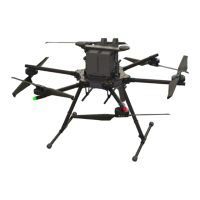
There are a few flight modes on the IF1200, discussed below.
Caution: Altitude flight mode will only maintain vertical position. Horizontal drift
will occur, similar to a hockey puck. This mode will automatically be in use if
vehicle takes off before a GPS lock is obtained.
Position Mode
In position mode, the IF1200 will maintain its position, heading and altitude using
GPS. The roll, pitch, and yaw can still be controlled by the pilot as in manual
mode, but when the sticks are neutral the drone will slow to a stop and maintain
its current position.
This mode is recommended for normal manual flight (and first flight).
Return to Home Mode
When return mode is activated, the IF1200 will automatically return to its home
position and land. The home position is set by the location where the IF1200 is
armed. If the drone is below an altitude of 30 meters, it will first rise to 30 meters
before returning to its home position in a straight line. Upon reaching its
destination, the IF1200 will slowly descend until it lands. This altitude of 30 meters
can be adjusted in the ‘Safety’ tab within QGroundControl.


 To Next Page