Need help?
Do you have a question about the Inspur NF5180M5 and is the answer not in the manual?
Instructions on preventing electric shock and ensuring proper grounding connections.
Instructions on preventing ESD damage to electronic components.
Lists key features and detailed specifications of the server's hardware components.
Details and labels various components found on the motherboard.
Continues the identification of motherboard components.
Details electrical regulations and power supply considerations for installation.
Step-by-step instructions for installing the server into a rack.
Information on installing a supported operating system on the server.
Procedures for installing or replacing the server's processor.
Visual guide and steps for installing the CPU and heatsink module.
Explanation of the DIMM slot layout and population guidelines.
Rules for populating DIMM slots for single and dual CPU configurations.
Step-by-step guide on how to install a DIMM into a slot.
Precautions and steps for managing hot-plug Hard Disk Drives.
Detailed steps for installing a new hot-plug HDD into the server.
Instructions for installing a redundant hot-plug power supply.
Covers common operations within the BIOS setup interface.
Step-by-step guide to accessing the BIOS setup utility.
Instructions for switching between UEFI and Legacy boot modes.
Steps to view detailed CPU information in the BIOS.
Guidance on viewing memory configuration details in the BIOS.
Instructions for viewing HDD details and configuring RAID.
How to view information about onboard SATA and sSATA ports.
Steps to set the SATA mode to RAID and access the Intel RSTe controller.
Guide on creating RAID volumes within the BIOS utility.
Steps to enter and use the Create RAID Volume menu.
Detailed steps and prompts for creating a RAID volume.
Steps and prompts for deleting a RAID volume.
How to view and configure BMC network parameters.
Detailed table explaining BMC IPv4 network configuration parameters.
Guide to setting static IP addresses for BMC network configuration.
Instructions for setting BMC to obtain network parameters dynamically (DHCP).
Overview of BIOS parameter descriptions.
Details the Advanced menu options in the BIOS.
Settings for onboard sSATA/SATA ports.
Interface for processor and memory related settings.
Settings related to the server's processor.
Detailed parameters for processor configuration.
More processor configuration parameters including prefetchers and AES-NI.
Settings related to the server's memory modules.
Parameters for memory frequency, warnings, training error, and data scrambling.
More memory configuration parameters like ADR, NVDIMMs, and topology.
Settings related to memory Reliability, Availability, and Serviceability (RAS).
Settings for CPU power management.
Controls CPU P states for power management.
Controls CPU C states for power consumption in idle.
Controls Package C states for power management.
Advanced tuning options for CPU power saving.
Interface for server management settings.
Configuration for BMC network settings via BIOS.
Detailed settings for BMC IPv4 network configuration.
Interface for configuring BMC users through BIOS.
Steps to add a new BMC user.
Procedure for deleting a BMC user.
How to modify existing BMC user settings.
Settings for system boot options, including boot mode and priority.
Options for saving BIOS settings and exiting the utility.
Instructions for updating the BIOS firmware.
Steps to update BIOS firmware using UEFI Shell.
Commands for updating BIOS and ME firmware via AfuEfi64.
Instructions for updating BIOS in Linux using afulnx_64 tool.
Introduces the Web interface for server management.
Step-by-step guide to logging into the Web management interface.
Interface for managing storage, supporting LSI RAID cards.
Interface for remote control functions like console redirection and virtual media.
Interface for monitoring and configuring power supply and fan settings.
Interface for configuring BMC network, services, NTP, SMTP, and alerts.
Details BMC network settings, services, and BIOS boot options.
Interface for viewing system event logs, audit logs, and black box logs.
Interface for fault diagnosis, including BMC self-inspection and recovery.
Displays BMC self-inspection results, recovery options, and capture screen.
Interface for user administration, security, firmware updates, and factory defaults.
Configuration for BMC services and protocols.
Management of IPMI users, including permissions and security.
Details IPMI user models, permissions, and security settings.
Procedures for updating BMC firmware.
Steps for updating BMC firmware via the web interface.
Introduction to Redfish, a management standard using RESTful interfaces.
Introduces Web interface and command line operations.
Troubleshooting for hardware-related issues.
Diagnosing and resolving power-on failures at startup.
Troubleshooting steps for when the display shows no output after power on.
Troubleshooting for software-related issues.
 General
| Product Model | Inspur NF5180M5 |
|---|---|
| Category | Server |
| Processor | Intel Xeon Scalable Processors |
| Max Processors | 2 |
| Memory | Up to 3TB |
| Memory Slots | 24 DIMM slots |
| Network | 10G Ethernet |
| Power Supply | Redundant Power Supply |
| Operating System Support | Windows Server, Linux, VMware |
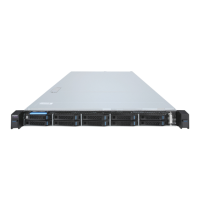
| Form Factor | 1U Rack |
| Storage | Up to 10 x 2.5" or 4 x 3.5" drives |
| RAID Support | Yes, with optional RAID controller |

 To Next Page