
 Need help?
Do you have a question about the Intel VROC and is the answer not in the manual?
Covers essential safety instructions, system power on/off procedures, and hazardous conditions.
Details ESD protection measures, including wrist straps, and safe handling of boards and components.
Specific advice on installing/removing jumpers and general component handling to prevent damage.
Overview of the guide's purpose: providing concise instructions for creating RAID configurations using the VROC HII Configuration Utility.
Details the organization of the guide, outlining its sections and their content for easy navigation.
Lists Intel Server Board product families and hardware components supported by the VROC solution.
Details the compatible Operating Systems for the Intel® VROC (VMD NVMe RAID) solution.
Instructions for preparing the server system, including installing the latest firmware package (SUP).
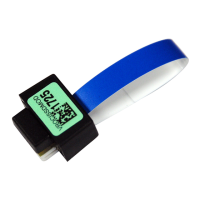
Information on installing the necessary hardware key for enabling Intel® VROC and supporting different RAID levels.
Specifies U.2 form factor NVMe drives and recommends using the Intel® SSD Data Center Tool for firmware updates.
Details on installing firmware for PCIe switches and retimers, and managing LED functionality.
Explains the two driver components: UEFI driver (RSTe NVMe UEFI) and OS driver (RSTe OS).
Step-by-step guide to enable Intel® VMD ports in BIOS Setup for VROC functionality.
Instructions on how to access the HII configuration utility within the BIOS Setup for VROC.
Demonstrates the process of creating RAID volumes using the Intel® VROC HII configuration utility.
This document is a Quick Configuration Guide for Intel® VROC (VMD NVMe RAID), a hybrid RAID solution designed for server products. It provides concise instructions for setting up RAID configurations using the VROC HII Configuration Utility, which operates in a pre-boot environment before the operating system (OS) loads. The guide is intended to help users prepare a RAID volume for OS installation.
Intel® VROC (VMD NVMe RAID) leverages the built-in processor's Volume Management Devices (VMD) and Intel® RSTe drivers to create and manage RAID configurations. It is designed to provide a powerful, reliable, and affordable storage solution for server systems. The system supports NVM Express* (NVMe*) drives, offering enhanced performance and data protection through RAID capabilities in a pre-boot environment. This allows for RAID setup before an OS like Microsoft Windows*, Red Hat Linux*, or SUSE Linux* is loaded. The VROC HII Configuration Utility is the primary tool for creating and managing these RAID configurations. It allows users to define RAID volumes that can be used for data storage or as bootable drives for OS installation. The system supports various RAID levels, including RAID0, RAID1, RAID10, and RAID5, depending on the installed hardware key. A key feature is the ability to connect NVMe drives directly to VMD ports, either in a 1:1 fashion using onboard Oculink* ports or PCIe* retimers, or by connecting multiple NVMe drives to one VMD port via PCIe* switches. This flexibility allows for different bandwidth configurations and drive densities. RAID volumes can be created across multiple Intel® VMD domains, though only volumes within a single VMD domain can be made bootable.
To use Intel® VROC, the server system must be configured for UEFI boot mode. A hardware key must be installed on the Intel® motherboard, and the appropriate processor Virtual Management Devices (VMD) must be enabled in the BIOS Setup. The guide outlines the specific steps to enable VMD ports within the BIOS, navigating through "Advanced," "PCI Configuration," and "Volume Management Device" menus. There are different hardware keys available, supporting various RAID levels and NVMe drive manufacturers. For example, the Intel® VROC Standard key enables RAID levels 0, 1, and 10, while the Premium key adds RAID 5 support. The Intel® VROC Intel SSD Only key supports RAID levels 0, 1, 10, and 5 but is restricted to Intel® NVMe drives.
Accessing the VROC HII Configuration Utility involves entering BIOS Setup and navigating to "Advanced," "PCI Configuration," "UEFI Option ROM Control," and finally "Intel® Virtual RAID on CPU." Once in the utility, users can select "All Intel® VMD Controllers" to view connected NVMe drives. The "Create RAID Volume" menu allows users to name the volume, select the desired RAID level, and choose whether to span drives across different VMD controllers. The utility automatically defaults the volume capacity to the maximum available for the selected drives, but this can be adjusted. After populating the required fields, selecting "Create Volume" finalizes the RAID configuration. The newly created volume will then appear in the Intel® RSTe HII main menu. The system must be rebooted after creating the RAID volume to apply the changes, after which the OS installation can proceed.
Maintaining the Intel® VROC system involves ensuring that all components, especially the server system, NVMe drives, and PCIe switches/retimers, are running the latest firmware. Intel recommends installing the latest System Update Package (SUP) for the motherboard, which includes updates for BIOS, ME, FD, BMC, and FRUSDR utility. These packages can be found on the Intel Download Center. For NVMe drives, Intel provides the Intel® SSD Data Center Tool utility to update firmware on Intel® SSD DC family drives, and other vendors offer similar tools. This tool can be used even when drives are behind VMD controllers or after a RAID configuration has been created. The guide provides step-by-step instructions for using the isdct command-line tool to list NVMe drives, identify firmware update needs, and initiate the update process.
Proper LED management for PCIe switches is also a maintenance consideration. If PCIe switches are used, their firmware handles the drive LED management (locate, fault, rebuild LEDs). This LED management needs to be set to "VMD enabled" when the PCIe switch is first installed, a setting that is persistent. Intel provides a Firmware Package and LED Mode Toggle Tool for Intel® PCIe* Switches, which includes both the firmware package and the LED Management toggle tool, along with readme files for instructions. It is crucial to configure LED management correctly to ensure that locate and fault drive LEDs function, aiding in the identification and replacement of faulty drives.
Driver management is another key aspect of maintenance. The Intel® VROC solution has two driver components: a pre-boot UEFI driver (RSTe NVMe UEFI driver) embedded in the system BIOS and an OS driver (RSTe OS driver) loaded during OS installation. The OS driver version should be equal to or later than the UEFI driver version, except for Linux OS. If the system BIOS is updated with an older RSTe NVMe UEFI driver, the RSTe OS driver must be updated first to prevent unexpected behavior. The RSTe OS driver can be found on the Intel Download Center. The guide includes a table detailing VROC driver requirements, matching system BIOS versions with recommended VROC NVMe UEFI, Windows, and Linux driver versions. This ensures compatibility and optimal performance.
 General
| Full Name | Intel Virtual RAID on CPU |
|---|---|
| Category | Computer Hardware |
| Supported Devices | NVMe SSDs |
| NVMe Support | Yes |
| Bootable RAID | Yes |
| Hot Spare Support | Yes |
| Operating System Support | Windows Server, Linux |
| Key Types | Standard, Premium |
| Supported RAID Levels | 0, 1, 5, 10 |
| Supported Platforms | Intel Xeon Scalable Processors |
| Processor Requirements | Intel Xeon Scalable Processors |
| Chipset Requirements | Intel C620 Series Chipset |
| Management Interface | Intel VROC CLI, Intel RSTe interface (depending on the platform) |

 To Next Page