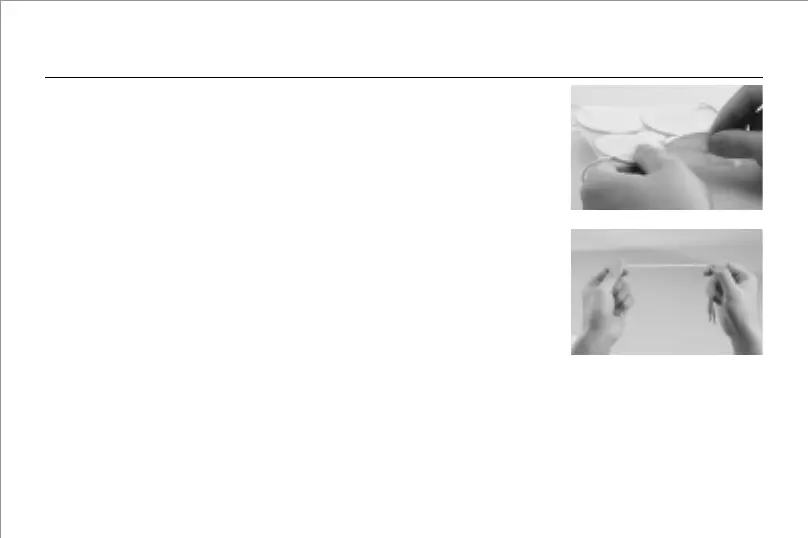
5.19 Care of Electrodes:
To avoid skin irritation and ensure good contact with your skin, clean silicone
rubber electrodes with soap and water frequently. The electrodes must be dried
completely before using.
❈
The If you are using self-adhesive electrodes, disregard this procedure.
❈
Always use the electrodes with the requirements of the EN60601-1 and EN60601-2, such as
with CE mark, or are legally marketed in the US under 510(K) procedure.
5.20 Care of Electrode cords:
Clean the electrode cords by wiping them with a damp cloth. Coating them lightly
with talcum powder will reduce tangles and prolong the life.
2019
6. DO'S AND DON'TS
A. DO:
1. DO place the electrodes only as your clinician recommends.
2. DO keep the stimulator clean.
3. DO see your clinician if you have any problems or questions regarding your system.
4. DO clean the cables only with water and mild soaps. DO NOT use rubbing alcohol or any other solvents.
5. DO remove the electrodes and discontinue stimulation if you experience skin irritation, until the source of that
irritation is determined by your clinician.
6. DO turn both intensity knobs to "OFF" before replacing the battery.
B. DON'T:
1. DO NOT damage your stimulator by bumping, dropping, or rough use.
2. DO NOT engage in contact sports when using your stimulator.
3. DO NOT get the stimulator wet. However, a damp cloth may be used for cleaning the outside only.
4. DO NOT pull or kink the cables.
5. DO NOT clean the cables with alcohol or any other solvents.
6. DO NOT allow electrode gel to get into the connector holes of the electrodes. DO NOT allow the electrodes
to touch each other during stimulation or improper stimulation and poor battery life will result.
7. DO NOT give the device to other individuals.
8. DO NOT store the unit at temperatures less than 32ºF (0ºC) or over 158 (50ºC).


 To Next Page