Affinity
2.0
Additional Information Page 297
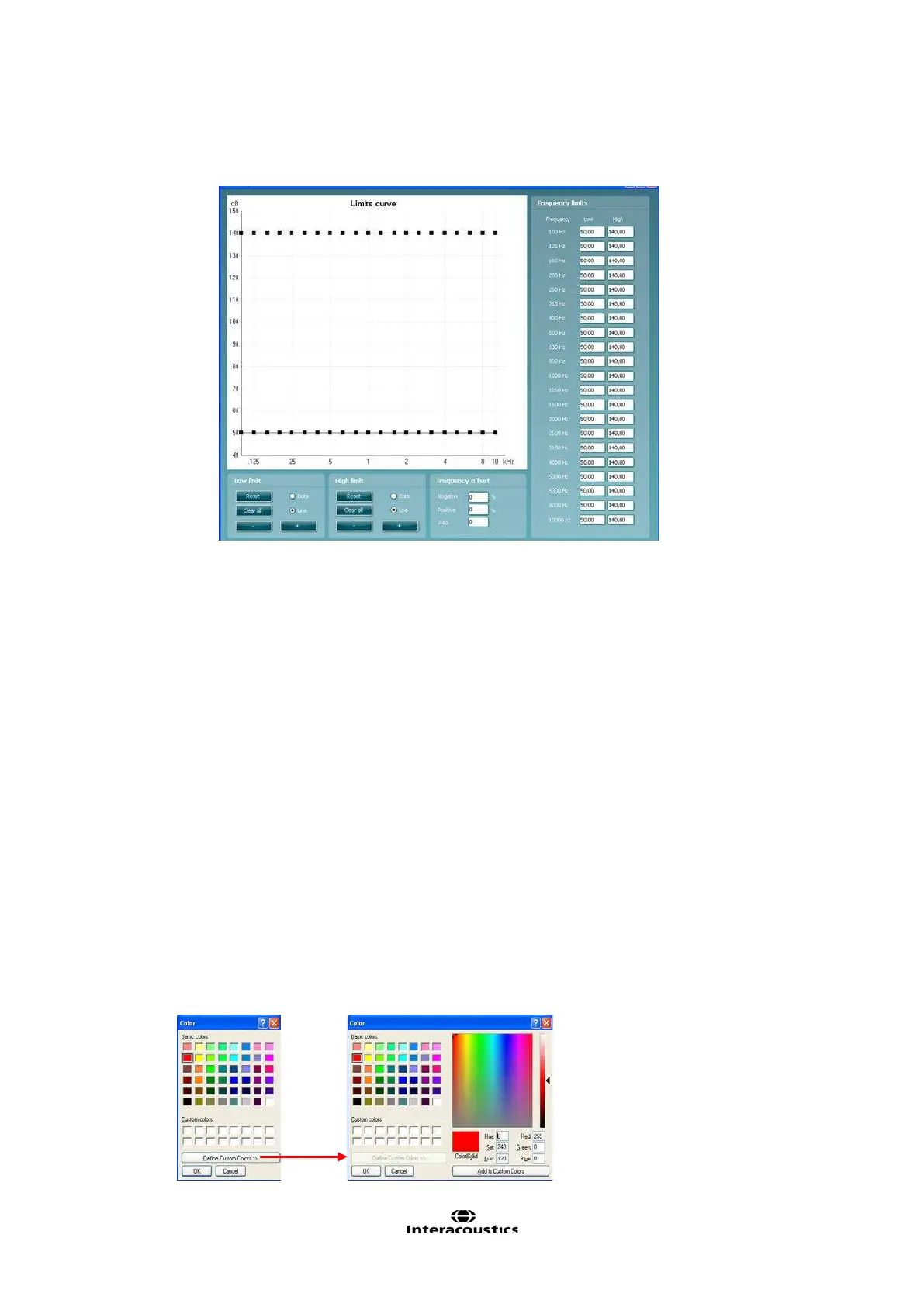
Note: In the General Setup it is possible to set a warning, which will pause the test and prompt the
user if a recording falls outside tolerance limits.
7) Recording Method:
Resolution (of frequency): Select the preferred resolution in the dropdown. The higher the
resolution the slower the measurement.
Keep in mind that 1/3 is what is used in many hearing aid manufacturers software. If the curve
is to be compared to this you may consider choosing this resolution. Also note that when using
a broad band signal the dropdown list will be greyed out and automatically choose FFT. This
makes the distance between frequency bins 43 Hz which ensures precision in the
measurement.
Smoothing Index: You have the option to smooth the measured curve using the slider (see
section 3.6.7 for details). The higher index number selected the more smoothing is applied
8) Te st Settings:
Battery simulator: Select the correct battery type for the hearing aid to be used under the test.
In general Zinc-air types will give best results, particularly on power hearing aids, as this battery
type is best at providing current. If a Zinc-air battery type is selected, then an estimated battery
lifetime is calculated as part of the Battery Current Drain test. If Standard battery is selected, a
traditional high quality zinc-air battery is simulated. Additional battery types may be custom
designed with specific characteristics by the HIT440. This can provide interesting information on
how a particular hearing aid performs with a good battery and with a poor battery.
If “Not Used” is selected no power is supplied by the battery simulator.
Color: Select a colour for the Right and Left curve.
Press each of the buttons to have the custom colour selection below. Choose the desired colour
by clicking on it and press OK.
Note the option to Define Custom Colours to get a more extensive selection. When having
found the exact colour, press Add to Custom Colours.



 To Next Page