3
DC POWER ONLY
Do NOT plug directly into
AC wall outlet
1
5
2
6
3
7
4
8
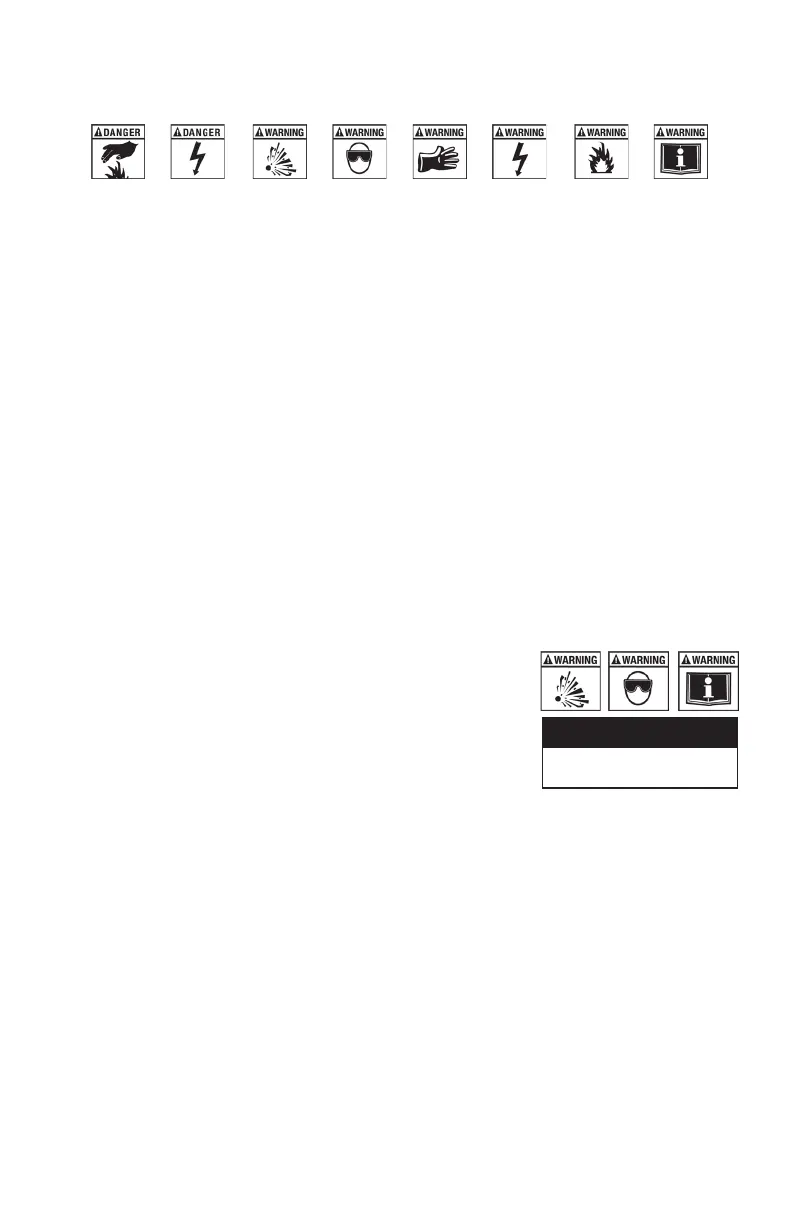
THE FOLLOWING SAFETY ALERT SYMBOLS ARE
USED IN THIS MANUAL.
SYMBOL 1: Potential burn hazard. Sparks from electrical shorts can ignite ammable
liquids such as fuel or oil. Heat from electrical overloads can cause re hazards.
SYMBOL 2: Potential electrical hazard. Batteries have enough electrical energy potential
to ignite ammable liquids such as fuel or oil. Wire overloads can cause electrical failures.
Shock hazard exists.
SYMBOL 3: Potential explosive air hazard. Pneumatic pressures used with this equipment
can cause explosive failures on damaged equipment.
SYMBOL 4: Potential eye hazard. Wear OSHA approved safety glasses. Battery acid and
high air pressures create hazardous situations for eyes.
SYMBOL 5: Potential chemical burn hazard. Wear protective gloves. Battery acid is cor-
rosive and can cause skin damage.
SYMBOL 6: Potential electrical hazard. Electrical energy can cause heat and burn hazards.
SYMBOL 7: Potential re hazard. Use caution with ammable liquids such as fuel and oil.
Electrical shorts can ignite ammable liquids and wiring.
SYMBOL 8: Important information is stated.
BATTERY GASES, TESTER PREPARATION AND
TESTER/CHARGER LOCATION
RISK OF EXPLOSION
• Gases produced by a battery are highly explosive.
• Wear safety goggles and protective clothing, both users
and bystanders.
• Use in an area having at least four air changes per hour.
• Read, understand and follow all instructions for charger,
battery, vehicle and any equipment used near battery and
charger.
• Do not smoke, strike a match, place metal tools on the battery or cause a spark in the
vicinity of the battery. When removing battery cables, remove the ground cable rst.
• Clean terminals before charging battery. During cleaning, keep corrosive particles from
eyes, nose and mouth. Use baking soda and water to neutralize acid and help eliminate
airborne corrosion.
• Never allow the clamps on the charger cables to touch each other.
• Do not expose the tester or charger to rain, snow or wet conditions.
• Do not allow battery gases or acid to contact the Ranger MUTT
®
cabinet. Do not place
the charger directly above or below the battery.
• Fill the battery to the level specied by battery manufacturer using distilled water.
• Do not remove cell caps while charging per manufacturer’s instructions.
• Make sure tester cable clamps make tight connections.
• Battery explosion can cause injury.


 To Next Page