32
MCP-Z Process/Ismatec SA/14.07.00/CB/GP
Überlastschutz
Der Antrieb MCP-Z Process
verfügt über eine Überlast-
Sicherung. Eine Überlastung wird
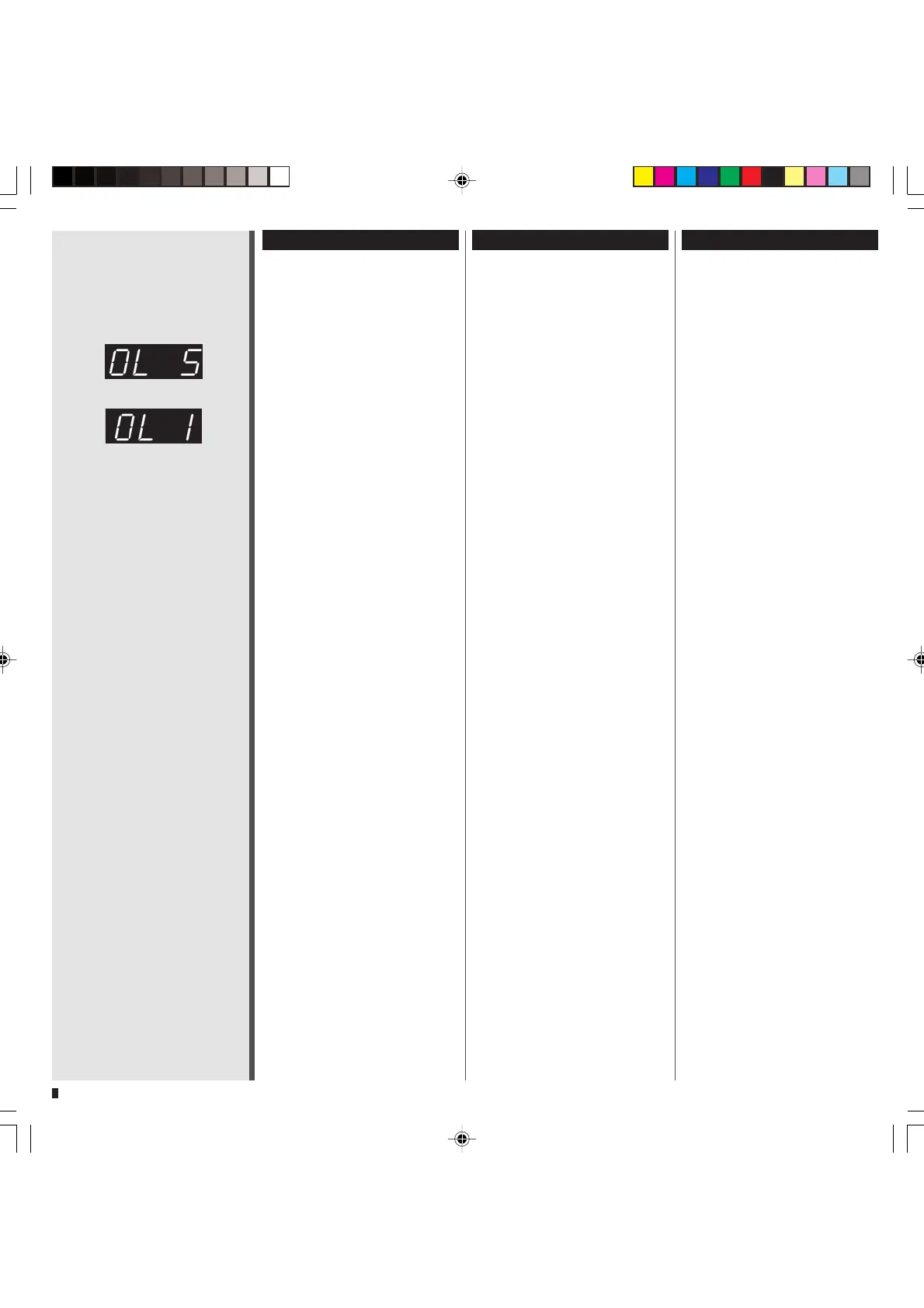
im Display durch die Buchstaben
'OL' (für 'Overload') angezeigt,
und die Pumpe stoppt.
OL S = Soll-Drehzahl kann nicht
erreicht werden
OL I = Strom Überlast
In einer solchen Situation ist die
Pumpe sofort mit dem Netz-
schalter auszuschalten. Bevor die
Pumpe wieder gestartet wird, ist
unbedingt zu prüfen, was die
Überlastung der Pumpe verur-
sacht hat (z.B. zu hoher Diffe-
renzdruck, etc.).
❖❖
❖❖
❖
Erst nachdem die Ursache für
die Überlast behoben worden ist,
darf die Pumpe neu gestartet
werden.
Overcurrent protector
The drive MCP-Z Process
features an overload protector.
When an overload condition
occurs, it is indicated in the
display by the letters 'OL' and the
pump is stopped.
OL S = Speed set-point
cannot be reached
OL I = Current Overload
Whenever this situation occurs,
the pump must be switched off
immediately. Before the pump is
re-started, it is most important to
check the reason for the overload
(eg. too high differential
pressure, etc.).
❖❖
❖❖
❖ Only when the cause of the
overload has been detected and
the failure corrected accordingly
may the pump be started again.
Protection de surcharge
La pompe MCP-Z Process
possède une protection de
surcharge. Un état illégal est
indiqué sur l’écran par l’affichage
des lettres 'OL' (pour 'Overload').
OL S = Le nombre de tours prévu
ne peut être atteint.
OL I = Surcharge de tension
Dans une telle situation, la
pompe doit étre immédiatement
déclenchée. Avant d’enclencher à
nouveau la pompe, il est
indispensable de contrôler ce qui
a pu provoquer la surcharge (p.
ex. pression différentielle trop
élevée, etc.).
❖❖
❖❖
❖ La pompe ne doit être remise
en marche qu'après l'identifi-
cation de la cause de la
surcharge et la réparation
correspondante du défaut.


 To Next Page