EasyManua.ls Logo

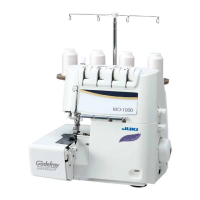
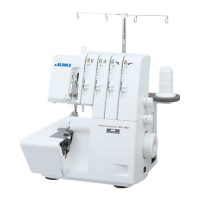
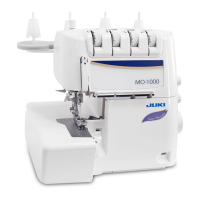
JUKI MO-1000 - User Manual

JUKI MO-1000
56 pages
Print Icon
To Next Page IconTo Next Page
Loading...
MO-1000
Instruction Manual
使用说明书
2-Needle, 2/3/4-Thread Overlock Sewing Machine
双针,2/3/4 线包缝机
IMPORTANT:
Read all safety regulations carefully and
understand them before using your sew-
ing machine.
Retain this instruction manual for future
reference.
注意 :
请阅读本服务手册的所有安全规定,并在
充分理解的基础上进行使用。
请保留本说明书以供日后参考。

Questions and Answers

  • K
    Kimberly CopelandSep 4, 2025
    How to fix poor stitch formation on my JUKI Sewing Machine?
    • F
      fwalkerSep 4, 2025
      Poor stitch formation on your JUKI Sewing Machine may be caused by a few issues. Check if the threads are correctly positioned between the tension dials, ensuring the thread is lying between the tension discs. Also, check if the thread has gotten caught; raise the presser foot and pull the thread. Finally, the machine may be incorrectly threaded, so check the threading path of each thread.
  • J
    Jenna TerrySep 3, 2025
    How to thread upper and lower loopers on a JUKI MO-1000 Sewing Machine?
    • E
      Eric KingSep 3, 2025
      To resolve issues with threading the upper and lower loopers on your JUKI Sewing Machine: Raise the threading changeover lever and turn the handwheel to fix it. Insert the thread into the threading hole by 1 to 2 cm. Slack the thread before the threading hole. Remove the thread from the location where it has been caught. Thread the loopers by means of the looper threader supplied in the accessory bag to remove the lint in the pipe.
  • C
    Christina SanchezSep 2, 2025
    What to do if thread loops are too loose on JUKI MO-1000?
    • L
      lynn33Sep 2, 2025
      If the thread loops are too loose on your JUKI Sewing Machine, there might be too little fabric in the stitch. To resolve this, increase the cutting width.
  • M
    Melissa FloresSep 1, 2025
    Why are the seams puckering on my JUKI MO-1000 Sewing Machine?
    • J
      joe36Sep 1, 2025
      Seams puckering on your JUKI Sewing Machine can result from a needle thread tension that is too tight, so reduce the needle thread tension. It can also happen if the differential feed is set incorrectly; adjust the differential feed to 0.7 - N.
  • R
    Ronald EdwardsAug 31, 2025
    What causes poor stitch formation on a JUKI MO-1000 Sewing Machine?
    • E
      Eric JohnsonAug 31, 2025
      If you're experiencing poor stitch formation with your JUKI Sewing Machine, check that the threads are correctly positioned between the tension dials. Make sure the thread hasn't gotten caught anywhere. Also, verify the threading path of each thread to ensure the machine is threaded correctly.
  • D
    Diana WatsonAug 30, 2025
    How to fix a JUKI MO-1000 Sewing Machine that does not sew?
    • Q
      qsmithAug 30, 2025
      If your JUKI Sewing Machine isn't sewing, make sure the looper or cloth plate cover is closed. Verify that the main switch is turned on (set to “I”). Also, ensure the machine is properly plugged into the main socket.
  • C
    combslauraAug 29, 2025
    What to do if needles break on JUKI MO-1000?
    • A
      Angelica McclureAug 30, 2025
      Needle breakage in your JUKI Sewing Machine can occur for a few reasons. First, inspect the needles for any bending, blunting, or damage to the points; if present, replace them. Ensure that the needles are fully inserted into the needle clamp with the flat side to the back. Lastly, avoid pulling the fabric while sewing; instead, gently guide the fabric with both hands.
  • D
    Diana WardAug 28, 2025
    What causes thread loops to be too loose on my JUKI MO-1000?
    • M
      madisonnguyenAug 29, 2025
      Loose thread loops on your JUKI Sewing Machine are caused by too little fabric in the stitch. Increase the cutting width to resolve this issue.
  • C
    Christine PopeAug 28, 2025
    Why doesn't fabric feed evenly on my JUKI Sewing Machine?
    • L
      Laura MorganAug 28, 2025
      Uneven fabric feed on your JUKI Sewing Machine can be due to a wrongly adjusted differential feed; check the setting. Also, the presser foot pressure might be too low; adjust it accordingly.
  • J
    Jenna BruceAug 27, 2025
    What to do if my JUKI MO-1000 is skipping stitches?
    • N
      Nicole SloanAug 27, 2025
      If your JUKI Sewing Machine is skipping stitches, there are a few potential causes. The needles may be bent or blunt, in which case you should replace them. Ensure you are using the correct needles, specifically needle system 130/705H or JLx2. Also, the presser foot pressure might be too low, so try increasing the presser foot pressure.

Summary

General Safety Instructions and Warnings

DANGER: Reduce Electric Shock Risk

Instructions to mitigate electric shock hazards during use.

WARNING: Reduce Burn, Fire, Injury Risks

Guidance to prevent burns, fire, electric shock, and personal injury.

Machine Overview and Components

Machine Parts Identification

Identification and labeling of all machine parts.

Operating the Sewing Machine

Adjustments and Settings

Threading the Machine

Lower Looper Threading

Detailed steps for threading the lower looper with red markings.

Upper Looper Threading

Detailed steps for threading the upper looper with purple markings.

Right Needle Threading

Detailed steps for threading the right needle with green markings.

Left Needle Threading

Detailed steps for threading the left needle with beige markings.

Sewing Techniques and Troubleshooting

Trial Sewing and Thread Tension

Performing a sewing test and adjusting thread tension for optimal results.

Troubleshooting Common Machine Issues

A guide to diagnosing and resolving common sewing machine problems.

Machine Maintenance, Data, and Accessories

Cleaning and Lubrication Procedures

Steps for cleaning lint and lubricating machine parts, with oil handling precautions.

JUKI MO-1000 Specifications

General IconGeneral
TypeOverlock Sewing Machine
Stitch Length1 to 4 mm
Maximum Sewing Speed1, 500 stitches per minute
Needle Thread TensionAdjustable
Looper Thread TensionAdjustable
Number of Needles1 or 2
Power Consumption105W
Differential Feed Ratio0.7 to 2.0
Weight9.0 kg
Presser Foot Lift5 mm
Stitch Typesrolled hem
Needle System130/705H
Power RequirementsAC 220-240V, 50/60Hz
Number of Threads2/3/4 Thread
Needle Type130/705H (HAx1)

Related product manuals