EasyManua.ls Logo

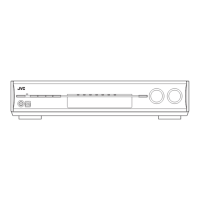
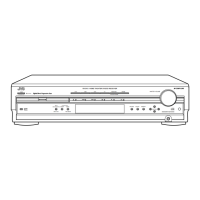
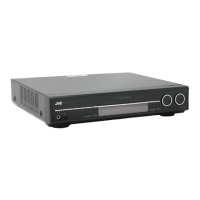
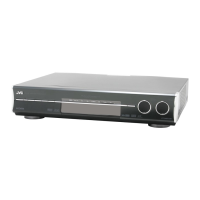
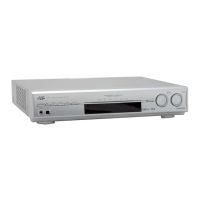
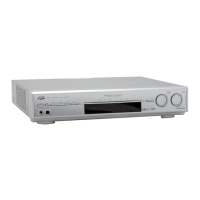
JVC RX-D301S - User Manual

JVC RX-D301S
92 pages
Print Icon
To Next Page IconTo Next Page
Loading...
LVT1321-001A
[J]
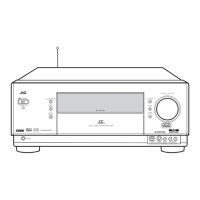
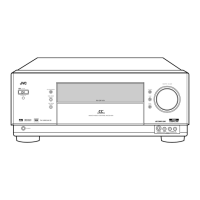
RX-D301S / RX-D302B
AUDIO / VIDEO CONTROL RECEIVER
INSTRUCTIONS
For Customer Use:
Enter below the Model No. and Serial
No. which are located either on the rear,
bottom or side of the cabinet. Retain this
information for future reference.
Model No.
Serial No.
cover_RX-D301S[J]_f.p65 05.2.22, 16:443

Table of Contents

Other manuals for JVC RX-D301S

Questions and Answers

  • P
    Patricia FordAug 19, 2025
    What to do if JVC RX-D301S Receiver remote control does not work?
    • M
      Mrs. Diane EllisAug 19, 2025
      First, check for any obstructions that might be blocking the remote sensor on the receiver and remove them. If there are no obstructions, replace the batteries in the remote, as they may be weak. Lastly, ensure that the mode selector is set to the correct position.
  • J
    Joyce BennettAug 21, 2025
    What to do if the JVC RX-D301S Receiver remote control does not work?
    • C
      Carlos ReidAug 21, 2025
      If the remote control for your JVC Receiver isn't working, first, ensure that there are no obstructions blocking the remote sensor on the receiver. If that's not the issue, replace the batteries. Finally, make sure the mode selector is in the correct position.
  • B
    Bonnie BushAug 23, 2025
    Why is there no sound from my JVC RX-D301S Receiver speakers?
    • J
      Jill PerryAug 25, 2025
      If there is no sound from the speakers connected to your JVC Receiver, there might be several reasons: * The speaker signal cables might not be connected. Check the speaker wiring and reconnect if necessary. * The connections could be incorrect. Review the audio connections. * The wrong source might be selected. Ensure you've selected the correct source. * Muting might be activated. Press the MUTING button to cancel mute. * An incorrect input mode (analog or digital) might be selected. Choose the correct input mode.
  • R
    rlesterAug 26, 2025
    Why does my JVC Receiver keep turning off?
    • J
      Jesse CookeAug 26, 2025
      If your JVC Receiver turns off or enters standby mode, it could be due to several reasons. The speakers might be overloaded because of high volume. Stop the playback source, turn the receiver on again, and lower the volume. Alternatively, there might be a short circuit at the speaker terminals; in this case, check the speaker wiring. If the wiring is not short-circuited, contact your dealer. Finally, the receiver itself may be overloaded due to high voltage; if this is the case, unplug the power cord and consult your dealer.
  • J
    Jason RobinsonAug 28, 2025
    What to do if JVC Receiver shows “OVER HEAT”?
    • D
      David SheltonAug 28, 2025
      If your JVC Receiver displays “OVER HEAT” and then turns off, it means the receiver is overloaded due to high volume or long usage. To resolve this, either turn the volume down or turn off the receiver for a while before turning it back on.
  • T
    thomasheatherAug 30, 2025
    How to stop buzzing sound on JVC Receiver during FM reception?
    • J
      Jacob McmillanAug 30, 2025
      If you're experiencing a continuous hiss or buzzing during FM reception on your JVC Receiver, it could be due to a weak incoming signal. Try connecting an outdoor FM antenna or contact your dealer. The station might be too far away, so try selecting another station. Ensure you're using the correct antenna, and check the connections to make sure they are properly connected.
  • J
    Jennifer SilvaSep 1, 2025
    Why is sound coming from only one speaker on my JVC RX-D301S?
    • D
      Dana CollinsSep 2, 2025
      If you only hear sound from one speaker connected to your JVC Receiver, the speaker signal cables are likely not connected properly. Check the speaker wiring and reconnect if necessary.
  • S
    Shannon SchultzSep 4, 2025
    Why JVC RX-D301S power does not come on?
    • J
      John ThomasSep 4, 2025
      If your JVC Receiver's power does not come on, the power cord is not plugged in. Plug the power cord into an AC outlet.
  • J
    john61Sep 6, 2025
    Why is there cracking noise during FM reception on my JVC RX-D301S?
    • C
      Charlene CarrollSep 6, 2025
      If you hear occasional cracking noises during FM reception on your JVC Receiver, it is likely due to ignition noise from automobiles. Try moving the antenna farther away from automobile traffic.
  • Y
    yrobersonSep 8, 2025
    What to do if my JVC Receiver turns off by itself?
    • B
      Brian GonzalezSep 9, 2025
      Your receiver might be turning off (entering standby mode) because the speakers are overloaded due to high volume. Stop the playback source, turn the receiver on again, and then lower the volume. Another cause might be a short circuit at the speaker terminals, so check the speaker wiring. If the speaker wiring is not short-circuited, contact your dealer. Finally, the receiver could be overloaded because of high voltage; in this case, consult your dealer after unplugging the power cord.

Summary

Safety Warnings and Compliance Information

General Safety Precautions

Details essential safety precautions, warnings against electrical shock, moisture, and proper handling of the unit.

USA FCC Compliance Statements

Explains compliance with FCC Part 15 rules for digital devices and interference guidelines for USA users.

Canada Compliance Statements

Outlines compliance with Canadian ICES-003 standards for digital apparatus and operational conditions.

Getting Started

USB Connectivity Setup and Installation

Finalizing System Setup and Power Connection

Basic Operations

Receiver Power On;Off and Standby Mode

Explains how to turn the receiver on, put it into standby mode, and the function of the standby lamp indicator.

Source Selection and Input Mode Configuration

Details selecting audio/video sources and choosing between analog or digital input modes for connected components.

Volume Adjustment and Muting

Covers adjusting the main volume and temporarily turning off sound using the mute function.

Digital Decode Mode Selection

Explains how to select digital audio decode modes like Dolby Digital and DTS based on the source material.

Basic Settings Configuration

Quick Speaker Setup Procedure

Guides users through the Quick Speaker Setup process to automatically register speaker configuration and room size.

Speaker Setup Configuration Details

Speaker Size and Channel Definitions

Provides tables defining speaker sizes (L/R, C, LS/RS, SB) corresponding to channel configurations (2.0ch to 7.1ch).

Room Size and Speaker Level Settings

Details how room size selection affects speaker distance and output levels for optimal surround sound.

Manual Speaker Configuration

Subwoofer and Speaker Size Configuration

Guides on setting subwoofer connection status and configuring speaker sizes (large/small) for optimal performance.

Surround Back Speaker Setup Options

Explains how to configure surround back speakers, including selecting the number of speakers used (1SPK or 2SPK).

Speaker Distance and Surround Mode Settings

Speaker Distance Measurement and Input

Details how to measure and input speaker distances for precise sound delay and localization.

Activating EX;ES;PLIIx Surround Modes

Explains how to activate EX/ES/PLIIx modes for enhanced surround sound based on content type (AUTO, ON, MOVIE, MUSIC, OFF).

Audio Modes and Bass Settings

Input and Source Configuration

Digital Input Terminal Assignment

Assigns components (DVD, DBS, VCR, TV) to specific DIGITAL IN terminals for correct source identification.

Component Video Input Mode Selection

Sets the input mode for component video sources (DVD, VCR, DBS) to ensure proper picture and system control.

Sound Adjustments

Overview of Basic Sound Adjustment Items

Lists adjustable sound parameters including speaker levels, equalization, bass boost, and DSP effects.

Adjusting Speaker Output Levels Procedure

Guides on adjusting individual speaker output levels for balanced sound, using a test tone for reference.

Fine-Tuning Sound Output Levels and Equalization

Speaker Level Calibration Process

Details how to adjust output levels for all speakers to ensure a uniform listening experience, memorized per source.

Graphic Equalizer Adjustment Procedure

Explains how to adjust the graphic equalizer in five frequency bands for the front speakers to fine-tune audio response.

Advanced Sound Customization Options

Center Channel Sound Optimization

Tuner Operations

Surround Sound Field Creation

Simulating Theater Ambience

Explains how the receiver uses multiple speakers to simulate the immersive sound experience of a movie theater.

Introduction to Dolby Surround Technologies

Details Dolby Digital, Dolby Digital EX, and Dolby Pro Logic II (Movie/Music) surround sound modes.

Advanced Audio Technologies and Formats

Digital Sound Processor (DSP) Modes

Surround;DSP Mode Compatibility Guide

Activating Surround and DSP Modes

AV COMPU LINK Remote Control System

AV COMPU LINK System Setup and Operation

Troubleshooting Guide

Resolving Power and Sound Issues

Provides solutions for common power issues (no power, auto-off) and sound problems (no sound, distortion).

Remote Control and Tuner Reception Troubleshooting

Offers solutions for remote control malfunctions and tuner reception problems like hiss or cracking noise.

Technical Specifications

JVC RX-D301S Specifications

General IconGeneral
Channels5.1
Audio Formats SupportedDolby Digital, DTS
FM TunerYes
BluetoothNo
Input sensitivity200mV (line)
Signal to noise ratio98dB (line)
Tuner TypeDigital
Power Output100W per channel
Tuning range87.5 - 108.0 MHz (FM)
Frequency response10 Hz - 100 kHz
Total harmonic distortion0.08%
OutputSpeaker, Subwoofer
Speaker load impedance6 ohms
Digital inputsCoaxial, Optical
Video ConnectionsComponent, Composite
Total Power Output500W
OutputsSpeaker, Subwoofer

Related product manuals