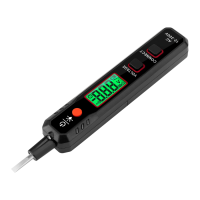
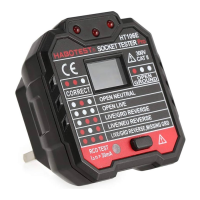
The KAIWEETS KM117B is a receptacle tester designed to identify common wiring problems in standard and GFCI (Ground-Fault Circuit Interrupter) receptacles. Beyond basic wiring diagnostics, this advanced model features an LCD screen that provides measurements for Phase Voltage (L-N), Leakage Voltage (N-E), and Current.
Function Description:
The primary function of the KM117B is to quickly and accurately diagnose the wiring configuration of electrical outlets. It uses a combination of indicator lights and an LCD display to communicate the status of the receptacle. The device can detect several common wiring faults, including:
- CORRECT: The receptacle is wired correctly.
- OPEN GROUND: The ground contact is not connected, or the ground wire is not connected to the ground.
- OPEN NEUTRAL: The neutral contact is not connected.
- HOT/GRD REVERSE: The hot and ground connections are reversed.
- HOT/NEU REVERSE: The hot and neutral connections are reversed.
- HOT/GRD REVERSE, OPEN GRD: A reverse connection between the hot line and ground line, with the ground line also unconnected.
In addition to these diagnostic indicators, the LCD provides real-time electrical measurements. The tester is also capable of performing a GFCI test to ensure the GFCI receptacle is functioning correctly and tripping when a fault is detected.
Important Technical Specifications:
- Operating Voltage: 90~250V / 45~65Hz
- Phase Voltage (L-N): 90~250V / 45~65Hz with an accuracy of ±(2.0%+2)
- Leakage Voltage (N-E): 0~99V / 45~65Hz with an accuracy of ±(2.0%+2)
- Operating Temperature: 0°C~40°C
- Operating Humidity: 20%~75%RH
- Storage Temperature: -10°C~50°C
- Storage Humidity: 20%~80%RH
- Altitude: ≤2000m
- GFCI Test: >5mA
- GFCI Working Voltage: 110V±20V
Usage Features:
The KM117B is designed for ease of use with clear visual indicators and an informative LCD.
- Wiring Configuration Testing:
- Insert the tester into a standard three-hole power outlet.
- Observe the indicator lights to determine the wiring condition. The "Diagnostics chart" in the manual provides a clear mapping of light patterns to wiring faults.
- The LCD will display Current, Phase Voltage (L-N), and Leakage Voltage (N-E).
- It's important to note that the tester indicates specific fault conditions but does not cover all possible wiring issues, such as the quality of ground, multiple hot wires, combinations of defects, or reversal of grounded and grounding conductors. For accurate readings, all appliances or equipment on the circuit being tested should be unplugged.
- GFCI Receptacle Testing:
- Before testing, it's recommended to consult the GFCI receptacle's user manual.
- Insert the tester into the GFCI receptacle. The indicator lights should illuminate.
- Read the Current, Phase Voltage (L-N), and Leakage Voltage (N-E) on the LCD.
- Press the test button on the GFCI receptacle only when the tester lights indicate "CORRECT".
- Observe if the GFCI trips (all lights on the tester go dark).
- If it trips, reset the GFCI by pressing its reset button; the GFCI is operating properly.
- If it does not trip, check if the GFCI light on the tester illuminates. If it does, the GFCI may not be operating properly, or the receptacle is miswired, requiring consultation with a qualified electrician. If the GFCI light does not illuminate, the tester is operating properly, but the GFCI itself is not functioning.
- Voltage Test (N-E Voltage):
- The N-E (Neutral-Earth) voltage is typically "0" or close to "0".
- If the N-E voltage reading is too high, the LCD screen will change from green to orange, indicating a potential issue. Possible reasons for a high N-E voltage include:
- Excessive power consumption, undersized, or excessively long wiring (leading to high resistance).
- A loose, poorly contacted, or oxidized neutral line connector.
- A disconnected or severely oxidized neutral wire, preventing electrical appliances from forming a complete circuit and causing a voltage drop between the neutral and ground wires due to the load of electrical appliances.
- Safety Precautions:
- The test duration should not exceed 5 minutes.
- Avoid touching the GFCI button unnecessarily during use to prevent accidental tripping of the leakage protection switch.
- Before checking a circuit, turn off all household appliances in use and confirm that a power failure will not pose any safety hazards.
- Always verify the tester's operation on a known live and correctly wired receptacle before each use. Do not use if the tester appears damaged.
- The tester is intended for indoor use only. Other equipment or devices attached to the circuit being tested could interfere with the tester; clear the circuit before testing.
- This tester only detects common wiring problems; always consult a qualified electrician for complex issues.
- The tester cannot distinguish between a reverse connection of the neutral line and the ground line.
Maintenance Features:
- Cleaning: Wipe the device with a clean, dry, lint-free cloth. Do not use abrasive cleaners or solvents, as these can damage the device.
- Storage: Store the device within the specified temperature and humidity ranges to ensure longevity and accurate performance.

 Need help?
 General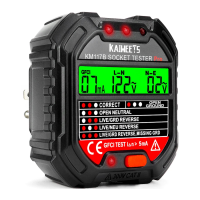

 To Next Page