- 19 -
KALVIS-4 (N) EN 2019.01.14
During stoking of the boiler, make sure that both the combustion chamber
and fuel loading doors were tightly closed. During intense stoking, don’t open
them.
In the case of incorrect operation of the boiler, unsuitable fuel or low
chimney draft, valves located in the chimney can get stuck, so, during every
stoking, move the valves: open and close several times all the valves of the
boiler.
6.6. Boiler extinguishing
In the case of normal operation, the boiler extinguishes itself, when the
fuel load burns out. If forced extinguishing is needed, first of all remove fuel
from the combustion chamber.
Put burning fuel into a container with water for less smoke generated in
the room.
In the case of forced extinguishing, open doors and windows to ensure
adequate ventilation.
6.7. Boiler cleaning
Ash, accumulated under the firegrate, can prevent air from entering the
combustion chamber. Therefore, at least before every second firing, remove
ash from the ash box and extract the remaining ash from the ashtray.
Clean the boiler, remove ash drawer and extract the remaining ash
only after the boiler has completely extinguished and cooled.
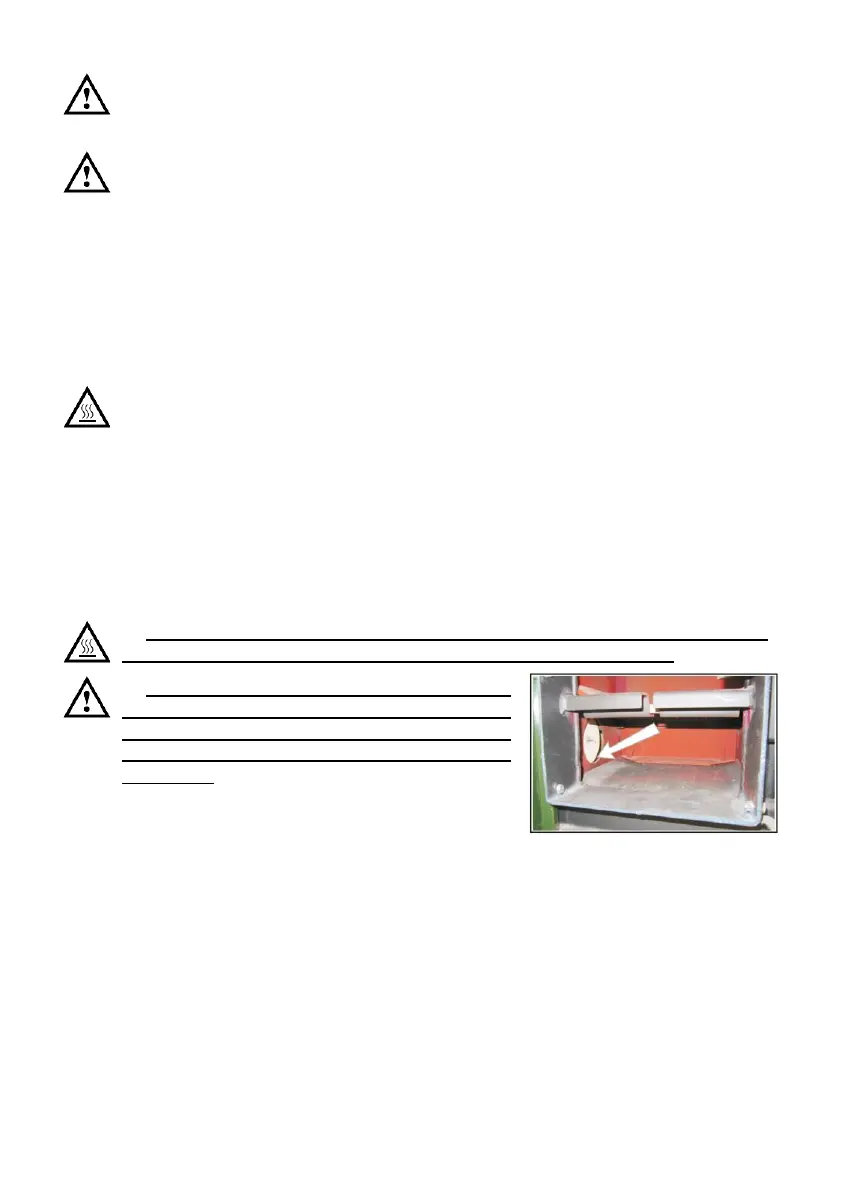
Protect the air draft valve on the side of
the ashtray from dropping ash which can
hinder the valve operation resulting in
poor combustion and difficult boiler
operation.
Fig. 10.
In order to ensure efficient boiler operation, periodically clean soot away
from boiler internal surfaces. Intervals between the cleaning depend on fuel
quality (especially moisture), stoking intensity, chimney draft and other
circumstances. We recommend cleaning boiler heat exchanger and
combustion chamber when the soot layer is up to 3 mm, but at least monthly.
Remove accumulated ash and soot. When cleaning, remove the rings and
thoroughly clean internal planes of the boiler.
Remove ash and soot by opening the combustion chamber door,
removing ash drawer and cleaning lid behind the drawer.


 To Next Page