Serial Printer
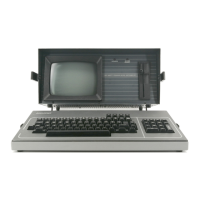
Your KAYPRO was designed to be as easy to use as possible. The standard
KAYPRO expanded system consists of your computer connected to a standard
parallel printer via the parallel connector, J2, and to a modem via the RS-232C
serial connector,
J4.
However, if you have a serial printer, you will need to adapt
the serial interface for your printer.
The following information is provided to aid such modifications. But please note
that Non-Linear Systems and Kaypro Computers make no guarantees about the
suitability of a given serial printer for use with the KAYPRO's RS-232C serial in-
terface. The reasons for some of the difficulties are given here, but before you
purchase any serial printer, insist upon a demonstration of its operation.
There are three things you must do if you are to use a serial printer with the
KAYPRO computer:
1.
You must tell CP/M to redirect the printer output to the serial interface. Use
STAT to change the physical assignment like this: A>STAT LST: = TTY:
You can make the change from a parallel printer (LPT:) to serial (TTY:) per-
manent on some of your diskettes by using the CONFIG program on your
CP/M S-BASIC diskette.
2.
You should make sure that the line being used by your computer for data
transmission (pin 2 of connector J4) is connected to the printer's data recep-
tion pin (this is usually, but not always, pin 3 of the printer connector).
3.
The remaining task is to take care of the hand- shaking signal lines. You can
strap the signals so that they are always true (i.e., connect pins 8 and 5 of
connector J4 to pin 6). The potential problem with defeating the handshak-
ing lines in this manner is that you have to limit your baud rate to avoid over-
writing the printer's internal buffer. For example, if you leave the KAYPRO's
baud rate at 300 baud, your printer must be able to print at least 30
characters per second.
If you have problems with overwriting the buffer in your serial printer, you will
have to implement some handshaking to correct the problem. The KAYPRO uses
pin 5 (CLEAR TO SEND, see the following figure) as an indicator of printer readi-
ness. For proper handshaking, the serial printer must produce a "not busy"
signal for pin 5 that is high when the printer can accept data. Details of the hand-
shaking your printer requires should be in its owner's manual.
47



 To Next Page