34
IV. WHEELCHAIR USE & CONFIGURATION
T. Wheel Locks
WARNING: Underinflated or worn tires may cause your wheel locks to not function
properly. Failure of the wheel locks to hold your chair could cause a loss of control or fall
resulting in serious injury or death.
• Wheel locks are not to be used as brakes to slow or stop your wheelchair. Using a
wheel lock as a brake could cause loss of control or a fall resulting in serious injury
or death.
How to Adjust Your Wheel Locks
NOTE: Always loosen and tighten wheel lock hardware by alternating between the two
bolts while loosening/tightening a little at a time. This prevents overclamping on one set of
hardware which leads to binding of the fasteners and increased difficulty in removal.
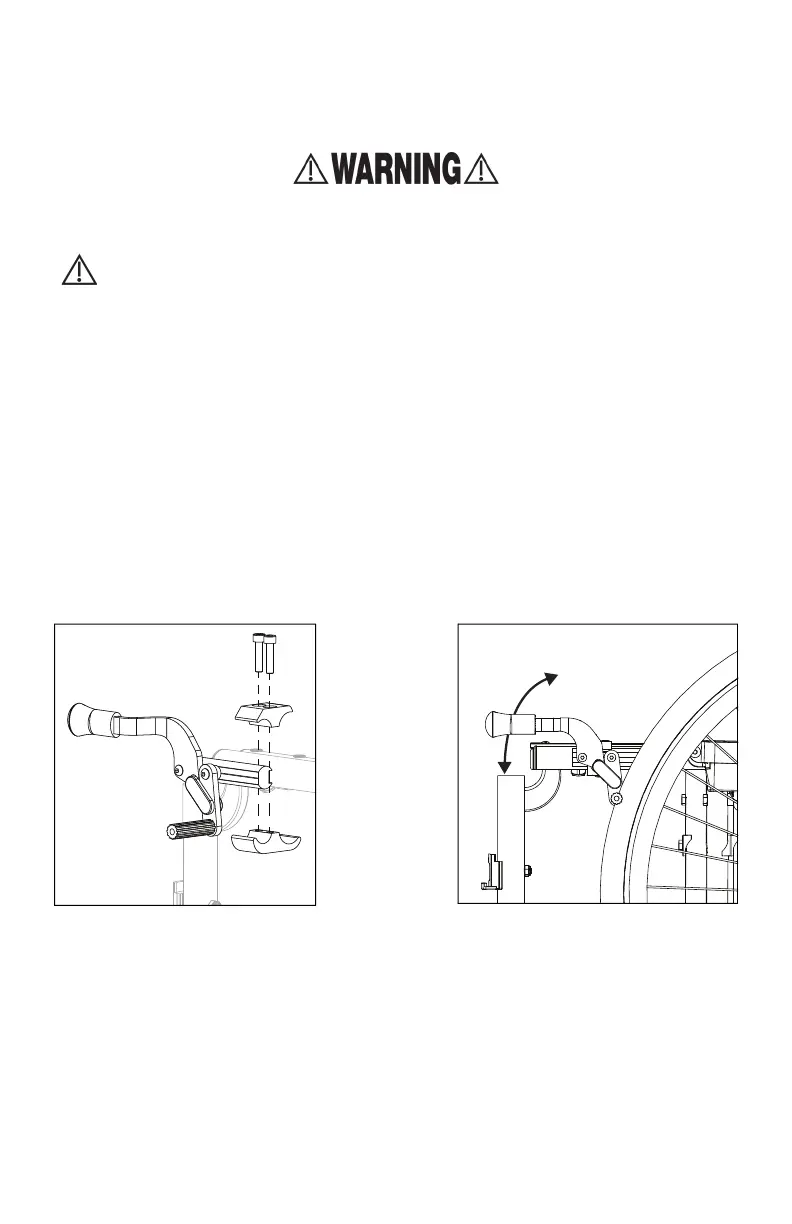
1. Use a 5mm Allen wrench to turn one of the screws in the clamp until it runs easily (less than
one turn).
2. Repeat step 1 with the second screws so the clamp can be adjusted on the frame.
3. Adjust the clamp along the frame so the wheel lock properly compresses the tire and
prevents any wheel movement. See Fig. 20.
4. Retighten the screws.
5. Always test new wheel lock positioning on a flat level surface. Once wheel locks are
engaged, the wheels should not slip or move. If the wheel locks are not fitted properly
readjust wheel lock again. See Fig. 21.
Wheel Lock Operation
1. Wheel lock operation is based on the lock style your chair is equipped with. Engagement of
the wheel lock bar to tire is done by pushing or pulling on the wheel lock handle to fully
engage wheel lock bar to tire.
2. To disengage wheel lock move in opposite direction.
Fig. 20
Fig. 21



 To Next Page