Need help?
Do you have a question about the KI Matrix and is the answer not in the manual?
List of tools and hardware needed for chair back replacement, including screwdrivers, lubricant, drill bits, and screws.
Instructions for safely removing the existing Matrix chair back, including chair placement and screw removal.
Detailed steps for removing spring clips from the chair back if pre-installed, using a screwdriver.
Guidance on applying lubricant to back support rods and aligning the new Matrix back for installation.
Instructions for drilling precise pilot holes in the new Matrix back for screw insertion.
Steps for attaching the new Matrix back using self-tapping screws and ensuring proper fit.
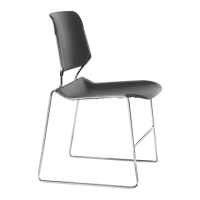
The provided manual details the repair and replacement procedures for the back of a Matrix® Chair, specifically for chairs manufactured before July 5, 2005. This document serves as a comprehensive guide for users to perform maintenance tasks related to the chair's back, ensuring its proper function and longevity.
The Matrix® Chair is designed with a removable and replaceable back, allowing for maintenance and repair rather than full chair replacement. The back component provides ergonomic support to the user and is integral to the chair's overall structure and comfort. The replacement process ensures that the chair can continue to be used effectively even if the back component becomes damaged or worn over time. The design allows for the back to be securely attached to the chair's frame via back support rods and attachment screws, ensuring stability and safety during use. The chair's back is designed to integrate seamlessly with the existing frame, maintaining the original aesthetic and functional integrity of the chair. The process involves careful alignment and secure fastening to ensure the back provides proper support and remains stable during use.
The Matrix® Chair's design incorporates features that facilitate its maintenance. The back is attached using two attachment screws located along its bottom edge, making them accessible for removal. The back also slides onto back support rods, which guide its placement and provide structural support. This sliding mechanism, when lubricated with a small amount of dish soap, allows for easier assembly and disassembly, reducing the effort required to replace the back. The chair's frame is designed to be sturdy enough to support the back replacement process, allowing it to be placed upside down on a table for easier access to the attachment points. The replacement back may come with pre-installed spring clips, which are designed to secure the back to the frame. If these clips are not pre-installed or need to be removed, the manual provides instructions on how to do so using a flat-head screwdriver, highlighting the modularity of the design. The attachment method using self-tapping screws into pilot holes ensures a secure fit while allowing for future removal if necessary. The design also emphasizes the importance of proper drilling techniques for pilot holes, ensuring that the screws are inserted correctly without damaging the plastic web of the back or creating visible stress marks. This attention to detail in the design ensures that the chair can be maintained without compromising its structural integrity or appearance. The chair's back is designed to rest firmly against the wire frame once installed, indicating a secure and stable attachment. The use of specific screw types, such as #6-19 x 7/8" Plastite self-tapping screws, is a key feature, as these are designed to create their own threads in the plastic, providing a strong and reliable connection. The chair's overall design supports a user-friendly maintenance approach, allowing for component replacement rather than full product disposal.
The manual outlines a detailed maintenance procedure for replacing the chair's back, emphasizing precision and proper technique. Key maintenance features include:
In summary, the Matrix® Chair is designed with maintainability in mind, offering clear, step-by-step instructions and specific tool requirements to facilitate the replacement of its back component. This approach extends the life of the chair, reduces waste, and ensures continued user comfort and safety.
 General
| Category | Indoor Furnishing |
|---|---|
| Manufacturer | KI |
| Product Name | Matrix |
| Material | Steel |
| Dimensions | Varies by configuration |
| Weight Capacity | Varies by component |

 To Next Page