24
15. Cleaning Your Alarm
Your Alarm Should be Cleaned at Least Once a Year
You can clean the interior of your alarm (sensing chamber) by using compressed air or a vacuum
cleaner hose and blowing or vacuuming through the openings around the perimeter of the alarm.
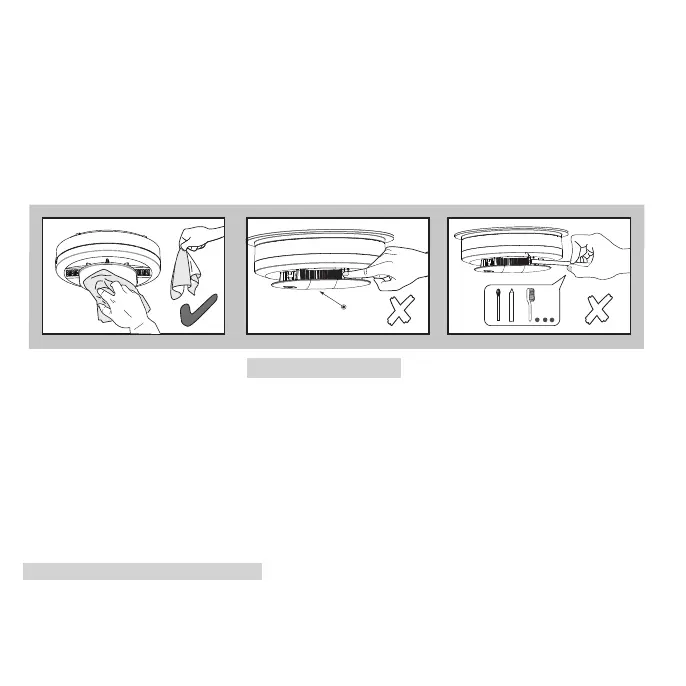
The outside of the alarm can be wiped with a clean, dry cloth. Do not use water, detergents or cleaners
as they may damage the alarm.
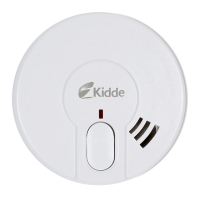
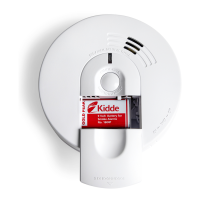
NOTE: Do not insert fingers or cleaning items under the shield during cleaning.
If the alarm is in Fault mode, the alarm may be in need of cleaning. After cleaning, press the Test
button. If the fault does not clear, the alarm needs to be replaced.
• Never use detergent or other solvents to clean the unit.
• Avoid spraying air freshener, hair spray, or other aerosols near the alarm.
• Do not use a hair dryer to clean the alarm, as it may damage the alarm and impact performance.
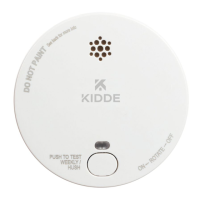
• Do not paint the unit. Paint will seal the vents and interfere with the sensor’s ability to detect
smoke (smoke only models) or smoke and CO (combination smoke/CO models).
• Never attempt to disassemble the unit to clean inside. This action will void your warranty.
For combination smoke/CO models:
The following substances can affect the CO sensor and may cause false readings and damage to the
sensor: Methane, propane, isobutane, iso-propanol, ethyl acetate, hydrogen sulfide, sulfide dioxides,
alcohol based products, paints, thinner, solvents, adhesives, hair spray, aftershave, perfume, and some
cleaning agents.
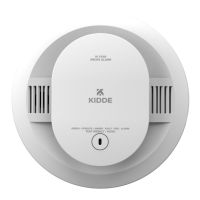
Figure 15
✘
✘
Shield


 To Next Page