This document serves as an assembly, use, and care manual for King Kooker® Outdoor Cookers, specifically models CS29 and CS42. These appliances are designed for outdoor cooking, including deep frying, boiling, and other cooking methods. The manual emphasizes safety precautions, proper assembly, and maintenance to ensure safe and effective operation.
Function Description
The King Kooker® Outdoor Cooker is a versatile outdoor cooking appliance designed to provide a powerful heat source for various cooking tasks. It utilizes liquid propane (LP) gas as fuel, delivered through a hose and regulator assembly to one or more burners. The appliance is intended for use with cooking vessels such as pots, fryers, and boilers, allowing users to prepare a wide range of foods outdoors. Its primary function is to heat cooking liquids like oil, grease, or water to desired temperatures for frying seafood, chicken, onion rings, mushrooms, and wings, as well as for boiling and blackening fish. The cooker is built with a sturdy frame, legs, and a windguard shield to support cooking vessels and protect the flame from wind. A key safety feature is the inclusion of a deep fry thermometer, which is crucial for monitoring oil temperatures during deep frying to prevent overheating and potential fires. The appliance is designed for attended use only, meaning it should never be left unsupervised while in operation or while hot.
Usage Features
The King Kooker® Outdoor Cooker is designed for ease of use while prioritizing safety.
- Outdoor Use Only: This appliance is strictly for outdoor use. It must not be operated in any enclosed area, including buildings, garages, tents, recreational vehicles, or boats, due to the risk of fire and carbon monoxide poisoning.
- Clearance Requirements: A minimum clearance of 10 feet (3.05m) from any structure, combustible material, or other gas cylinder is required on all sides (front, back, and sides). It should not be located under any overhead construction. Additionally, a 24-inch (0.61m) space must be maintained between the LP gas cylinder and the appliance. The appliance and cylinder should be positioned so that wind blows the heat and flames away from the propane cylinder.
- Stable Surface: The fryer/boiler must be placed on a level, stable, noncombustible surface such as brick, concrete, or dirt. Wood, asphalt, or plastic surfaces are unsuitable as they may burn, blister, or melt.
- LP Gas Cylinder Connection: The cooker is designed for use with a 20 lb. (9 kg) LP gas cylinder, which must have a protective collar and be stored and transported upright. The regulator connects to the cylinder valve by turning the Type 1 fitting clockwise until hand-tight, then an additional 1 to 1 1/2 turns with a wrench. It is crucial to ensure the cylinder is not overfilled (never beyond 80% full).
- Leak Testing: Before each use and lighting, a thorough leak test must be performed using a non-ammonia soapy water solution on all gas joints after opening the cylinder valve. Any bubbles indicate a leak, which must be corrected before use.
- Lighting Instructions: To light the burner, manual valves must first be in the "OFF" position, and the cylinder control valve opened counterclockwise. A multipurpose lighter or paper match is inserted through the shroud hole, and the manual valve is turned to "ON" until ignition occurs. If ignition doesn't happen within 3-5 seconds, all valves must be turned off, and a 5-minute wait period observed before reattempting.
- Flame Monitoring: The flame should be primarily blue and emit from every port. A yellow flame or missing flames indicate a potential obstruction in the venturi tube or ports, requiring maintenance. The flame must be continuously monitored during cooking. If extinguished, all valves must be turned off, and the relighting procedure followed after a 5-minute gas dispersal period.
- Deep Frying Safety: When deep frying with oil or grease, the provided deep fry thermometer is mandatory. It must be calibrated before each use by placing its tip in boiling water (should read within +/-20° of 212°F or 100°C). The thermometer should hang inside the pot with the probe immersed in the cooking liquid. The oil temperature must never exceed 350°F (177°C). If it does, or if oil begins to smoke, the burner and gas supply must be immediately turned OFF. The pot should never be covered when cooking with oil.
- Food Preparation for Frying: All food products must be completely thawed and towel-dried before immersion in hot oil/grease to prevent overflow and splattering. Food and accessories should be lowered slowly into the cooking liquid.
- Cooking Vessel Fill Levels: Cooking vessels should never be overfilled. If a pot lacks a maximum fill line, the proper liquid level is determined by placing the food and holder in the empty vessel, filling with water until the food is submerged (leaving a minimum of 3 inches/7.5cm between water level and pot top), then removing the food and measuring or marking the water level. This measured amount is the maximum fill for cooking liquid.
- Post-Cooking Handling: Heated liquids and equipment remain at scalding temperatures long after cooking. The appliance and pot should not be touched until liquids have cooled to 100°F (38°C) or less. Protective mitts or oven mitts are recommended for handling hot surfaces.
- Emergency Procedures: In case of an oil/grease fire, do NOT attempt to extinguish with water. Immediately call the Fire Department. A Type BC or ABC fire extinguisher should be readily available. If rain, snow, hail, or sleet occurs while cooking with oil/grease, cover the cooking vessel immediately and turn off the burners and gas supply. Do not move the appliance or cooking vessel.
- Storage: After use, turn off manual valves first, then the gas cylinder valve. Disconnect the regulator from the cylinder. The cooker must be completely cooled before moving or storing. For storage, the windguard shield and legs can be removed and secured within the cooker frame using the provided locking bracket and bolt, creating a compact storage module. The cooker should be carried by its handle in this configuration, never by the manifold. The LP cylinder must be disconnected and stored outdoors, out of reach of children, and not in a building, garage, or enclosed area.
Maintenance Features
Regular maintenance is essential for the safe and efficient operation of the King Kooker® Outdoor Cooker.
- Pre-Use Inspection: Before each use, the cooking area must be clear of combustible materials, gasoline, and other flammable vapors. The burner/venturi tube should be checked for insects, nests, or other obstructions, as a clogged tube can lead to a fire beneath the appliance. The LP hose should also be inspected for signs of abrasion, wear, cuts, or leaks. Any damaged hose/regulator assembly must be replaced with one specified by Metal Fusion, Inc.
- Flame Characteristics Check: After lighting, the flame should be checked for proper color and appearance. A strong yellow flame or missing flames indicate a potential obstruction. If this occurs, turn off the cooker, allow it to cool, disconnect the hose, remove the air shutter, and inspect the venturi tube with a flashlight for blockages. A wire (like a coat hanger) can be used to remove obstructions. Reattach the air shutter and relight. If the problem persists, contact Metal Fusion, Inc.
- Cleaning the Cooker and Hose/Regulator: Any spilled oil or liquid on the unit during cooking should be removed with mild soapy water and a rag, then towel-dried. The burner unit, hose, and regulator should not be immersed in water to prevent rust.
- Cleaning Aluminum or Stainless Steel Pots: These pots do not require seasoning. They should be washed with liquid dishwashing detergent and towel-dried after each use. For cooked-on grease or black soot, a steel wool scouring pad can be used on the outside. If food is stuck, soak the pot in hot water, then scrub. Hard water stains can be removed by boiling a solution of water and cream of tartar or vinegar for 5-10 minutes.
- Cleaning and Seasoning Cast Iron Cookware: New cast iron pots are coated with paraffin to prevent rust. Before first use, wash with mild soapy water, rinse, and dry thoroughly (never use abrasive detergents). To season, grease the entire surface with a thin coating of solid vegetable shortening (not salted fat), heat in an oven at 300-350°F (149-177°C) for 30-60 minutes, then pour out excess grease and wipe with a paper towel. After each subsequent use, coat the surface with a thin layer of solid vegetable shortening, wipe, and store.
- Thermometer Care: The thermometer should be cleaned with mild soapy water and towel-dried after each use. It should not be submerged in liquid or placed in a dishwasher.
- Cooking Oil Storage: After use, allow cooking oil to cool. While slightly warm, filter out particles using filter paper or a clean cloth before storing in its original container or a sturdy plastic/glass container in a cool place. Oil can be reused within 30 days or until its flavor becomes objectionable. Frying french fried potatoes after cooking can help improve the oil's flavor for future use.
- Replacement Parts: For damaged or lost replacement parts, contact Metal Fusion, Inc. during business hours.

 Need help?
 General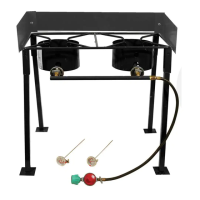

 To Next Page
