10
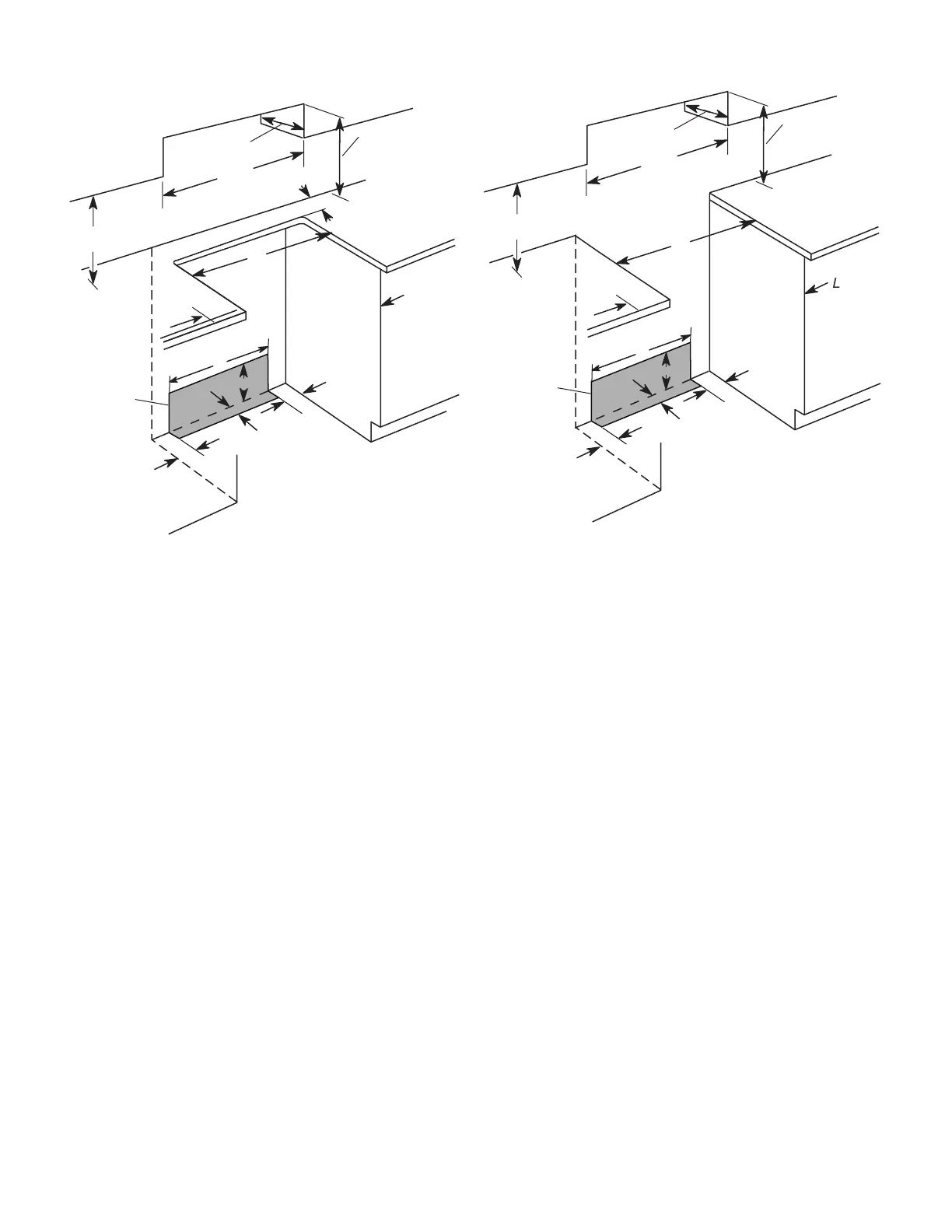
Slide-in Cutout Freestanding Cutout
A. 18" (45.7 cm) upper side cabinet to countertop
B. 13" (33 cm) maximum upper cabinet depth
C. 30" (76.2 cm) minimum opening width
D. For minimum clearance to top of cooktop, see NOTE*.
E. 30" (76.5 cm) minimum opening width
F. 5" (12.7 cm) minimum clearance from both sides of range to side wall
or other combustible material
G. The shaded area is recommended for installation of rigid gas pipe and
grounded outlet
H. 13
1
/
8
" (33.3 cm)
I. 7
11
⁄
16
" (19.5 cm)
J. 4
13
⁄
16
" (12.2 cm)
K. 3
11
⁄
16
" (9.4 cm) plus measurement of M
L. Cabinet door or hinges should not extend into the cutout.
M. Remaining counter depth should not exceed 2
1
/
4
" (5.7 cm)
A. 18" (45.7 cm) upper side cabinet to countertop
B. 13" (33 cm) maximum upper cabinet depth
C. 30" (76.2 cm) minimum opening width
D. For minimum clearance to top of cooktop, see NOTE*.
E. 30" (76.2 cm) minimum opening width
F. 5" (12.7 cm) minimum clearance from both sides of range to side wall
or other combustible material
G. The shaded area is recommended for installation of rigid gas pipe and
grounded outlet.
H. 13
1
/
8
" (33.3 cm)
I. 7
11
/
16
" (19.5 cm)
J. 4
13
/
16
" (12.2 cm)
K. 3
11
/
16
" (9.4 cm)
L. Cabinet door or hinges should not extend into the cutout.
NOTE*: 24" (61.0 cm) minimum when bottom of wood or metal cabinet is shielded by not less than 1/4" (6.4 mm) flame retardant
millboard covered with not less than No. 28 MSG sheet steel, 0.015" (0.4 mm) stainless steel, 0.024" (0.6 mm) aluminum or 0.020"
(0.5 mm) copper.
30" (76.2 cm) minimum clearance between the top of the cooking platform and the bottom of an uncovered wood or metal cabinet.
Venting Requirements
IMPORTANT: This range must be exhausted outdoors unless you
are using ductless venting. See the “Venting Methods” section.
� Do not terminate the vent system in an attic or other enclosed
area.
� Use an approved vent cap for proper performance. If an
alternate wall or roof cap is used, be certain the cap size is not
reduced and that it has a backdraft damper.
� Vent system must terminate to the outside unless you are
using a ductless vent kit.
� Use a 5" (12.7 cm) or 6" (15.2 cm) round metal vent or a
3
1
⁄
4
" x 10" (8.3 cm x 25.4 cm) rectangular vent.
� Rigid metal vent is recommended. For best performance, do
not use plastic or metal foil vent.
� If a joist or stud must be cut, then a supporting frame must be
constructed.
� The size of the vent should be uniform.
� The vent system must have a damper.
� Seal all joints in the vent system.
� Use caulking to seal exterior wall or roof opening around the
cap.
� Determine which venting method is best for your application.
For Best Performance:
� Use 26-gauge minimum galvanized or 25-gauge minimum
aluminum metal vent. Poor quality pipe fittings can reduce
airflow. For external venting, flexible metal vent is not
recommended.
NOTE:
� For external venting, flexible metal vent is not recommended.
Flexible vent creates back pressure and air turbulence that
greatly reduce performance.
� Local codes may require a heavier gauge material.




 To Next Page