EasyManua.ls Logo

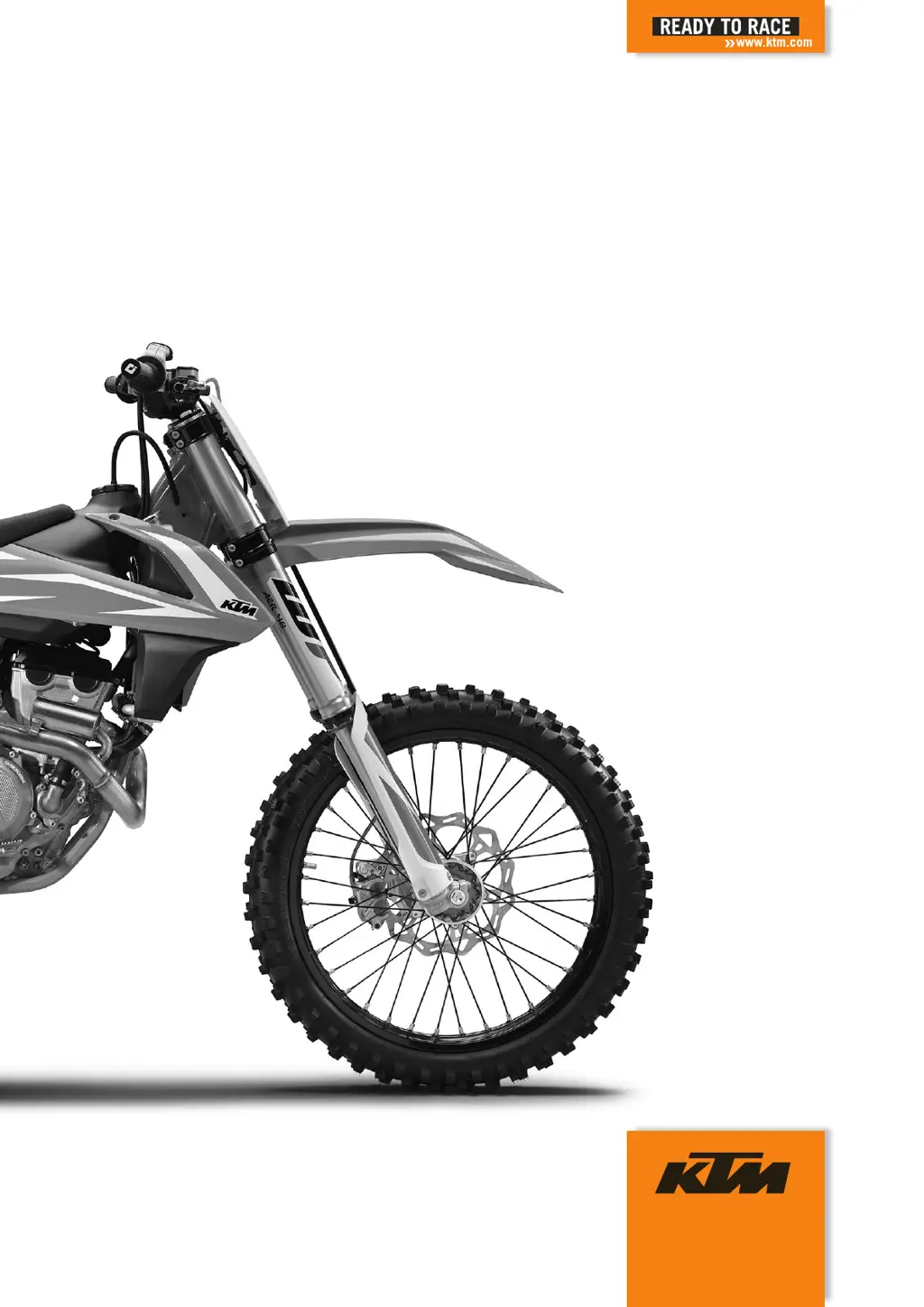
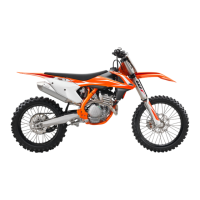
KTM 250 XC-F 2018 - User Manual

KTM 250 XC-F 2018
120 pages
Print Icon
To Next Page IconTo Next Page
Loading...
OWNER'S MANUAL 2018
250 SX-F
250 XCF
Art. no. 3213638en

Table of Contents

Other manuals for KTM 250 XC-F 2018

Questions and Answers

  • T
    Thomas WatkinsAug 13, 2025
    What to do if my KTM 250 XC-F 2018 engine does not turn when pressing the electric starter?
    • C
      Christopher PierceAug 13, 2025
      If your KTM Motorcycle engine doesn't turn when you press the electric starter button, consider the following possibilities: * It could be an operating error; ensure you follow the correct start procedure. * The battery might be discharged; try recharging it, and check the charging voltage, open-circuit current, and the stator winding of the alternator. * The main fuse could be blown; replace the main fuse. * The starter relay might be defective; check the starter relay. * The starter motor itself could be defective; in this case, check the starter motor.
  • M
    Mark PierceAug 18, 2025
    Why does my KTM 250 XC-F 2018 Motorcycle engine overheat?
    • Z
      zjordanAug 18, 2025
      Your KTM Motorcycle engine may overheat due to these reasons: * There might be too little coolant in the cooling system; check the cooling system for leakage and ensure the coolant level is correct. * There could be too little air stream; switch off the engine when standing. * The radiator fins might be very dirty; clean the radiator fins. * There might be foam formation in the cooling system; drain and refill the coolant. * A bent radiator hose could be the cause; replace the radiator hose.
  • H
    Holly CollinsAug 25, 2025
    Why KTM Motorcycle engine has too little power?
    • D
      Donna FlynnAug 25, 2025
      If your KTM Motorcycle engine has too little power, here are potential causes: * The air filter might be very dirty; clean the air filter and air filter box. * The fuel filter could be very dirty; replace the fuel filter. * There may be a defect in the fuel injection system; read out the fault memory using the KTM diagnostics tool. * The exhaust system might be leaky or deformed, or there could be too little glass fiber yarn filling in the main silencer; check the exhaust system for damage and replace the glass fiber yarn filling of the main silencer. * The valve clearance could be too little; adjust the valve clearance.
  • D
    Dorothy BowenAug 28, 2025
    Why does my KTM 250 XC-F 2018 have high oil consumption?
    • K
      Kimberly BarnesAug 28, 2025
      High oil consumption in your KTM Motorcycle can be attributed to: * A bent engine vent hose; ensure the vent hose is routed without bends, and replace it if necessary. * An engine oil level that is too high; check the engine oil level. * Engine oil that is too thin (low viscosity); change the engine oil and oil filter, and clean the oil screen. * A worn piston or cylinder; measure the piston/cylinder mounting clearance.
  • L
    lisajuarezSep 1, 2025
    What to do if malfunction indicator lamp lights up or flashes on my KTM 250 XC-F 2018?
    • A
      Amy AndersonSep 2, 2025
      If the malfunction indicator lamp lights up or flashes on your KTM Motorcycle, it indicates a defect in the fuel injection system. Check the cabling for damage and the electrical plug-in connections for corrosion and damage. Then, read out the fault memory using the KTM diagnostics tool.
  • S
    Shannon SmithNov 7, 2025
    Why does my KTM 250 XC-F 2018 Motorcycle engine turn but not start?
    • J
      Juan TurnerNov 7, 2025
      Your KTM Motorcycle engine might turn but fail to start due to several reasons: * The plug-in connection of the fuel line may not be connected; ensure it is properly connected. * The fuel screen in the fuel hose connection could be clogged; in this case, you should replace the fuel screen. * The idle speed might not be set correctly; adjust the idle speed accordingly. * The spark plug could be oily or wet; clean and dry it, or replace it if necessary. * The electrode distance (plug gap) of the spark plug might be too wide; adjust the plug gap to the recommended guideline of 0.8 mm (0.031 in). * There could be a short circuit cable in the wiring harness frayed, or the kill switch may be defective; check the wiring harness visually and the electrical system. * There might be a...

Summary

Safety Advice and Precautions

Intended Use and Misuse of Vehicle

Defines the proper use of the motorcycle and consequences of misuse.

Safe Operation Guidelines

Instructions for safe riding, including physical condition and environmental compatibility.

Mandatory Protective Clothing

Emphasizes the importance of wearing appropriate protective gear for riding.

Importance of the Owners Manual

Stresses reading the manual for operation, handling, and maintenance.

Important Notes and Warranty Information

Motorcycle Controls and Indicators

Preparing the Motorcycle for Use

Initial Riding Advice and Safety Checks

Guidance on first use, safety precautions, and essential pre-ride checks.

Riding Instructions and Techniques

Pre-Ride Checks and Maintenance

Essential checks before every trip to ensure safe operation.

Starting the Engine Safely

Safety warnings and procedures for starting the motorcycle engine.

Activating Launch Control

How to activate launch control for optimal race starts.

Activating Traction Control

Explanation of traction control function and how to activate/deactivate it.

Shifting Gears and Riding Techniques

Guidance on smooth gear changes, throttle control, and clutch use.

Braking Techniques and Warnings

Instructions on proper brake application and potential hazards.

Refueling Safely and Correctly

Instructions for refueling the fuel tank, including safety precautions.

Service Schedule and Maintenance

Required Maintenance Tasks

List of essential maintenance tasks and their required intervals.

Chassis Tuning and Suspension Adjustment

Basic Chassis Setting with Riders Weight

Adjusting suspension based on rider weight for optimal handling.

Shock Absorber Compression Damping

Explanation of high-speed and low-speed compression damping adjustment.

Adjusting Low-Speed Compression Damping

Step-by-step guide to adjust low-speed compression damping on the shock absorber.

Adjusting High-Speed Compression Damping

Step-by-step guide to adjust high-speed compression damping on the shock absorber.

Adjusting Rebound Damping (Shock Absorber)

Instructions for adjusting the rebound damping on the shock absorber.

Measuring Unloaded Rear Wheel Sag

Procedure for measuring rear wheel sag without rider weight.

Checking Static Sag of Shock Absorber

How to check static sag and its specified values for different models.

Checking Riding Sag of Shock Absorber

Procedure for measuring riding sag with rider weight.

Adjusting Shock Absorber Spring Pretension

Detailed steps for adjusting spring preload on the shock absorber.

Adjusting Riding Sag

How to choose and mount a suitable spring for adjusting riding sag.

Adjusting Fork Air Pressure

Instructions for adjusting the air pressure in the front fork legs.

Adjusting Fork Compression Damping

Procedure to adjust compression damping on the fork legs.

Adjusting Fork Rebound Damping

Instructions for adjusting rebound damping on the fork legs.

Adjusting Handlebar Position

Step-by-step guide for adjusting the handlebar mounting position.

Chassis Service and Maintenance

Checking Steering Head Bearing Play

How to check for play in the steering head bearing and its importance.

Adjusting Steering Head Bearing Play

Steps for adjusting the steering head bearing play for proper steering.

Cleaning Air Filter and Box

Procedure for cleaning the air filter and its housing, with safety precautions.

Checking Chain Tension

How to measure and check the chain tension and its importance.

Adjusting Chain Tension

Step-by-step guide for adjusting chain tension and wheel alignment.

Brake System Maintenance and Checks

Checking Brake Disc Thickness and Condition

Inspecting brake discs for wear, damage, cracking, and deformation.

Checking Front Brake Fluid Level

Procedure for checking the front brake fluid level and its importance.

Adding Front Brake Fluid

Instructions for adding front brake fluid, with safety and fluid type notes.

Checking Front Brake Linings for Wear

How to check front brake linings for minimum thickness and damage.

Changing Front Brake Linings

Step-by-step guide to changing front brake linings, with safety warnings.

Adjusting Foot Brake Lever Basic Position

Adjusting the foot brake lever position for rider comfort and control.

Checking Rear Brake Fluid Level

Procedure for checking the rear brake fluid level and its importance.

Adding Rear Brake Fluid

Instructions for adding rear brake fluid, with safety and fluid type notes.

Checking Rear Brake Linings for Wear

How to check rear brake linings for minimum thickness and damage.

Changing Rear Brake Linings

Step-by-step guide to changing rear brake linings, with safety warnings.

Wheels, Tires, and Spoke Maintenance

Checking Tire Air Pressure

How to check and set the correct tire air pressure.

Electrical System Maintenance

Recharging the Battery

Instructions for recharging the battery and its importance for longevity.

Cooling System Maintenance

Checking Antifreeze and Coolant Level

How to check coolant level and antifreeze protection.

Draining and Refilling Coolant

Procedures for draining and refilling the cooling system.

Refilling Coolant Safely

Instructions for refilling the cooling system with coolant.

Engine Tuning and Adjustments

Checking and Adjusting Throttle Cable Play

How to check and adjust throttle cable play for smooth operation.

Engine Service and Maintenance

Changing Engine Oil, Filter, and Cleaning Oil Screen

Detailed procedure for engine oil and filter change, with safety notes.

Motorcycle Cleaning and Care

Motorcycle Storage Procedures

Preparing for Long-Term Storage

Steps for preparing the motorcycle for extended storage periods.

Troubleshooting Common Issues

Engine Starting Problems

Diagnosing and resolving issues when the engine won't start.

Engine Performance Issues

Troubleshooting engine power loss, stalling, and overheating.

Recommended Fluids and Substances

KTM 250 XC-F 2018 Specifications

General IconGeneral
Bore x Stroke78 mm x 52.3 mm
Transmission6-speed
StarterElectric starter
Front Brake260 mm disc
Rear Brake220 mm disc
Seat Height950 mm
Liquid CooledYes
Compression Ratio12.8:1
Fuel System DetailsKeihin EFI
IgnitionKeihin EMS
Final DriveChain
Front Suspension Travel300 mm
Rear Suspension Travel310 mm
ABSNo
Engine TypeSingle cylinder, 4-stroke
Displacement249.9 cc
Fuel SystemFuel injection
Front SuspensionWP Xplor 48 upside-down fork
Rear SuspensionWP Xplor PDS
Fuel Tank Capacity8.5 liters
Front Suspension TypeWP USD fork, AER 48
Rear Suspension TypeWP Xplor PDS shock absorber
FrameCentral tube frame made of chrome molybdenum steel

Related product manuals