EasyManua.ls Logo

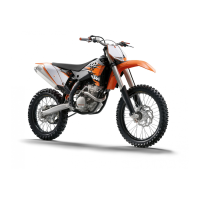
KTM 250 EXC 2018 - User Manual

KTM 250 EXC 2018
178 pages
Print Icon
To Next Page IconTo Next Page
Loading...
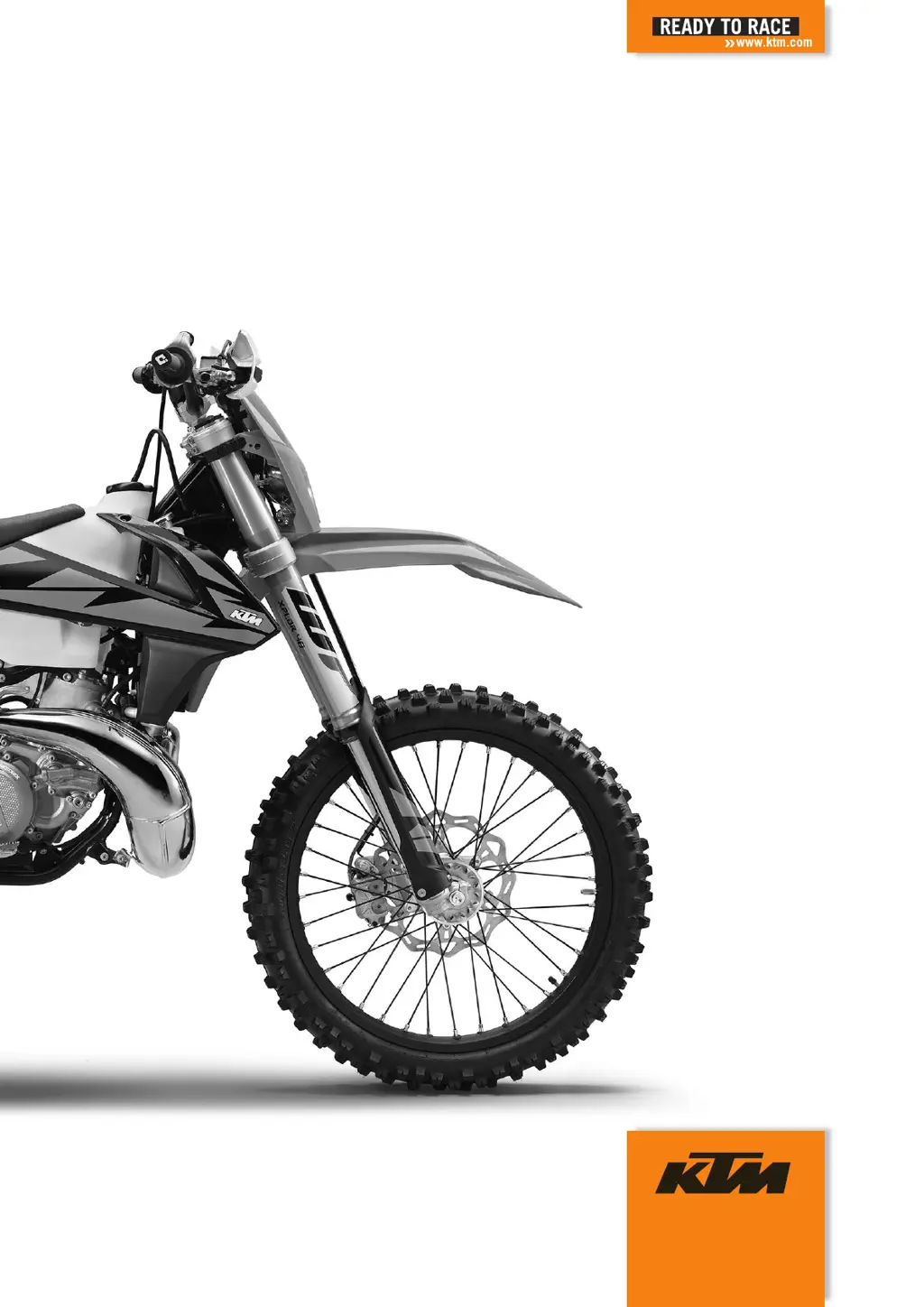
OWNER'S MANUAL 2018
250 EXC
250 XCW
300 EXC
300 XCW
300 XCW Six Days
Art. no. 3213644en

Table of Contents

Questions and Answers

  • A
    Ashley WilliamsAug 15, 2025
    What to do if my KTM 250 EXC 2018 Motorcycle engine cannot be cranked?
    • M
      Melissa NielsenAug 15, 2025
      If your KTM Motorcycle's engine cannot be cranked by the electric starter, possible causes include a discharged battery, a blown main fuse, a faulty starter relay, or a faulty starter motor. Recharge the battery, check the charging voltage, closed current and alternator. Change the main fuse if it's blown and check both the starter relay and starter motor for any issues. Also, ensure you are following the correct start procedure.
  • N
    nicole84Aug 21, 2025
    Why KTM 250 EXC 2018 engine does not speed up?
    • E
      ehortonAug 21, 2025
      If your KTM Motorcycle engine does not speed up, it could be due to several reasons related to the carburetor or ignition system. The carburetor might be running over because the float needle is dirty or worn, or the carburetor jets might be loose. In either case, check/set the carburetor components. Additionally, a fault in the ignition system could be the cause, so inspect the ignition system.
  • A
    Albert CarsonAug 25, 2025
    Why does my KTM Motorcycle engine have too little power?
    • D
      David PowersAug 25, 2025
      If your KTM Motorcycle engine has too little power, the issue might stem from several causes. The fuel feed could be interrupted; in this case, check the fuel tank breather, clean the fuel tap, and check/set the carburetor components. A very dirty air filter can also restrict power, so clean the air filter and air filter box. Check the exhaust system for leaks or deformation, and replace the glass fiber yarn filling in the main silencer if it's insufficient. A fault in the ignition system could also be the culprit, so inspect the ignition system. Lastly, examine the diaphragm and reed valve housing for any damage.
  • S
    Samantha BakerAug 27, 2025
    What to do if KTM 250 EXC 2018 Motorcycle engine overheats?
    • M
      Matthew BirdAug 27, 2025
      If your KTM Motorcycle engine overheats, first check the coolant level and inspect the cooling system for leaks. If the motorcycle is stationary, switch off the engine to prevent overheating due to insufficient airflow. Clean the radiator fins if they are very dirty. If there's foam formation in the cooling system, drain and refill the coolant. Also, inspect the cylinder head and cylinder head gasket for damage. Replace any bent radiator hoses.
  • Y
    ygayAug 30, 2025
    What causes KTM 250 EXC 2018 Motorcycle engine to stall or pop into the carburetor?
    • E
      Elizabeth KnightAug 31, 2025
      If your KTM Motorcycle engine stalls or pops into the carburetor, there are a few potential causes to investigate. First, ensure the engine isn't running out of fuel by turning the fuel tap to the ON position and refueling if necessary. Also, check the intake flange and carburetor for tightness, as the engine might be taking in bad air. Lastly, inspect the connector or ignition coil for looseness or oxidation; clean the connector and treat it with contact spray if needed.
  • D
    David JamesSep 2, 2025
    How to fix KTM Motorcycle engine when it has no idle?
    • K
      kbrooksSep 2, 2025
      If your KTM Motorcycle engine has no idle, the possible causes include a blocked idling jet, distorted adjusting screws on the carburetor, a defective spark plug or a defective ignition system. Check/set the carburetor components. Adjust the idle speed. Change the spark plug. Check the ignition coil and the spark plug connector.
  • J
    Jordan RyanSep 5, 2025
    Why gear oil exits at the vent hose of my KTM 250 EXC 2018 Motorcycle?
    • M
      michelledanielSep 6, 2025
      If gear oil is exiting at the vent hose of your KTM Motorcycle, it's likely due to too much gear oil having been added. Check the gear oil level.
  • S
    Sabrina LoweSep 8, 2025
    Why is my KTM Motorcycle emitting white smoke?
    • J
      jperrySep 8, 2025
      If you see white smoke emission (steam in exhaust gas) from your KTM Motorcycle, it could be caused by a damaged cylinder head or cylinder head gasket. Check the cylinder head and cylinder head gasket.
  • C
    Caleb ZimmermanSep 12, 2025
    How to fix water in the gear oil of KTM 250 EXC 2018 Motorcycle?
    • J
      Jay KingSep 12, 2025
      If there is water in the gear oil of your KTM Motorcycle, it could be due to a damaged shaft seal ring or water pump. Check the shaft seal ring and water pump.
  • V
    Vernon FletcherNov 17, 2025
    What to do if KTM 250 EXC 2018 Motorcycle engine turns but does not start?
    • A
      angelaleeNov 18, 2025
      If your KTM Motorcycle engine turns but doesn't start, several factors could be at play. You might not be following the correct start procedure. If the motorcycle has been sitting unused for an extended period, old fuel in the float chamber could be the issue; in that case, empty the carburetor float chamber. Also, the fuel feed might be interrupted, so check the fuel tank breather and clean the fuel tap. A spark plug that is oily or wet can also prevent starting, so clean and dry the spark plug, or replace it if necessary. Ensure the spark plug electrode gap is correctly adjusted to 0.60 mm (0.0236 in). Other potential causes include a fault in the ignition system, a defective kill switch, loose or oxidized connectors on the ignition coil (clean the connector and treat it with contact spr...

Summary

2 Safety Advice

2.1 Use Definition - Intended Use

Defines the intended purpose and usage scope for the vehicle model.

2.2 Misuse

Details improper uses of the vehicle and associated dangers.

2.3 Safety Advice

Provides general safety instructions and highlights important safety warnings.

2.4 Degrees of Risk and Symbols

Explains danger, warning, caution, and note symbols and their meaning.

2.5 Tampering Warning

Warns against modifying noise control systems and lists prohibited acts.

2.6 Safe Operation

Outlines critical safety aspects for operating the vehicle responsibly.

2.7 Protective Clothing

Emphasizes the importance of wearing appropriate protective gear during operation.

3 Important Notes

6 Controls

6.4 Kill Switch (All EXC models)

Describes the kill switch function and states for EXC models.

6.5 Kill Switch (All XC-W models)

Explains the kill switch function and states for XC-W models.

6.10 Emergency OFF Switch (EXC AU)

Explains the function and states of the emergency OFF switch for EXC AU.

6.15 Opening the Filler Cap

Provides instructions and safety warnings for opening the fuel filler cap.

6.23 Steering Lock (All EXC models)

Details the steering lock location and its function for securing the vehicle.

6.24 Locking the Steering (All EXC models)

Provides step-by-step instructions for locking the steering.

6.25 Unlocking the Steering (All EXC models)

Details the procedure for unlocking the steering.

7 Combination Instrument

8 Preparing for Use

8.1 Advice on First Use

Offers crucial advice for initial operation and safety.

8.2 Running in the Engine

Provides guidelines for the engine break-in period to ensure longevity.

9 Riding Instructions

9.1 Checks and Maintenance Measures When Preparing for Use

Lists essential pre-ride checks and maintenance tasks for safety.

9.2 Starting the Vehicle

Provides instructions and safety warnings for starting the engine.

9.3 Start Off

Guides on how to start moving from a standstill safely.

9.4 Shifting, Riding

Explains gear shifting techniques and general riding advice.

9.5 Braking

Details braking techniques and warnings for safe stopping.

9.8 Refueling

Offers instructions and safety warnings related to refueling the vehicle.

10 Service Schedule

11 Tuning the Chassis

11.1 Checking the Basic Chassis Setting with the Riders Weight

Explains how to adjust chassis settings based on rider weight for optimal handling.

11.2 Compression Damping of the Shock Absorber

Introduces high-speed and low-speed compression damping concepts for shock absorbers.

11.3 Adjusting the Low-Speed Compression Damping of the Shock Absorber

Guides on adjusting the low-speed compression damping of the rear shock absorber.

11.4 Adjusting the High-Speed Compression Damping of the Shock Absorber

Details how to adjust the high-speed compression damping of the rear shock absorber.

11.5 Adjusting the Rebound Damping of the Shock Absorber

Explains how to adjust the rebound damping of the rear shock absorber.

11.7 Checking the Static Sag of the Shock Absorber

Describes how to check static sag and adjust spring pretension.

11.8 Checking the Riding Sag of the Shock Absorber

Guides on checking riding sag and adjusting it.

11.9 Adjusting the Spring Pretension of the Shock Absorber

Provides detailed steps for adjusting the shock absorber's spring preload.

11.12 Adjusting the Compression Damping of the Fork

Details how to adjust fork compression damping for different models.

11.13 Adjusting the Rebound Damping of the Fork

Explains how to adjust fork rebound damping for different models.

12 Service Work on the Chassis

12.13 Checking the Play of the Steering Head Bearing

Explains how to check for play in the steering head bearing.

12.14 Adjusting the Steering Head Bearing Play

Guides on adjusting the steering head bearing play to correct issues.

12.32 Removing the Fuel Tank

Details the procedure for removing the fuel tank, with safety warnings.

12.33 Installing the Fuel Tank

Guides on correctly installing the fuel tank, with safety warnings.

12.36 Checking the Chain Tension

Details how to check and measure the drive chain tension.

12.37 Adjusting the Chain Tension

Guides on adjusting the drive chain tension according to specifications.

12.44 Checking;Correcting the Fluid Level of the Hydraulic Clutch

Explains how to check and correct the hydraulic clutch fluid level.

12.45 Changing the Hydraulic Clutch Fluid

Provides instructions for changing the hydraulic clutch fluid, with safety warnings.

13 Brake System

13.1 Checking the Free Travel of the Hand Brake Lever

Explains how to check and set the free travel of the hand brake lever.

13.2 Adjusting Free Travel of Hand Brake Lever (All EXC models)

Guides on adjusting hand brake lever free travel for EXC models.

13.3 Adjusting the Basic Position of the Hand Brake Lever (All XC-W models)

Details how to adjust the hand brake lever position for XC-W models.

13.4 Checking the Brake Discs

Explains how to check brake disc thickness and condition.

13.5 Checking the Front Brake Fluid Level

Guides on checking the front brake fluid level and identifying issues.

13.6 Adding Front Brake Fluid

Provides instructions for adding front brake fluid, with safety warnings.

13.7 Checking the Front Brake Linings

Explains how to check the thickness and condition of front brake linings.

13.8 Changing the Front Brake Linings

Details the procedure for changing front brake linings, with warnings.

13.9 Checking the Free Travel of Foot Brake Lever

Guides on checking and setting the free travel of the foot brake lever.

13.10 Adjusting the Basic Position of the Foot Brake Lever

Explains how to adjust the basic position of the foot brake lever.

13.11 Checking the Rear Brake Fluid Level

Guides on checking the rear brake fluid level and identifying issues.

13.12 Adding Rear Brake Fluid

Provides instructions for adding rear brake fluid, with safety warnings.

13.13 Checking the Brake Linings of the Rear Brake

Explains how to check rear brake lining thickness and condition.

13.14 Changing the Rear Brake Linings

Details the procedure for changing rear brake linings, with warnings.

14 Wheels, Tires

14.1 Removing the Front Wheel

Details the steps for removing the front wheel, including brake caliper and spindle.

14.2 Installing the Front Wheel

Guides on correctly installing the front wheel, including bearings and spindle.

14.3 Removing the Rear Wheel

Explains the procedure for removing the rear wheel.

14.4 Installing the Rear Wheel

Guides on correctly installing the rear wheel, chain, and adjusters.

15 Electrical System

15.1 Removing the Battery

Details the procedure for safely removing the vehicle's battery.

15.2 Installing the Battery

Guides on correctly installing the vehicle's battery.

15.3 Recharging the Battery

Provides instructions and safety precautions for recharging the battery.

15.4 Changing the Main Fuse

Details how to replace the main fuse, with warnings about electrical system safety.

15.9 Checking the Headlight Setting

Guides on checking and verifying the correct headlight beam alignment.

15.10 Adjusting the Headlight Range

Details how to adjust the headlight's vertical beam range.

16 Cooling System

16.2 Checking the Antifreeze and Coolant Level

Guides on checking antifreeze protection and coolant levels, with warnings.

16.3 Checking the Coolant Level

Details how to check the coolant level in the radiator, with safety warnings.

17 Tuning the Engine

17.1 Checking the Play in the Throttle Cable

Details how to check throttle cable play and its effect on idle speed.

17.2 Adjusting the Play in the Throttle Cable

Provides instructions for adjusting the throttle cable play.

17.3 Carburetor Setting

Explains how different carburetor components affect engine performance.

17.4 Carburetor - Idle

Discusses the importance of idle settings and factory values for various models.

17.5 Carburetor - Adjusting the Idle Speed

Guides on adjusting idle speed using specific screws and checking with a tachometer.

18 Service Work on the Engine

18.2 Checking the Gear Oil Level

Guides on checking the engine's gear oil level when the engine is cold.

18.3 Changing the Gear Oil

Provides instructions for changing the gear oil, with safety and environmental warnings.

19 Cleaning, Care

22 Technical Data

22.8 Fork

Provides detailed specifications for the front fork, including damping and spring rates.

22.8.1 All 250 Models, EXC AU, 300 XC-W US

Lists fork specifications for specific 250/300 models.

22.8.2 EXC BR

Provides fork specifications for the EXC BR model.

22.8.3 All Six Days Models

Lists fork specifications for All Six Days models.

22.9 Shock Absorber

Details specifications for the rear shock absorber, including damping and spring settings.

KTM 250 EXC 2018 Specifications

General IconGeneral
Displacement249 cm³
Bore x Stroke66.4 mm x 72 mm
Transmission6-speed
Fuel SystemCarburetor
CoolingLiquid cooled
Front SuspensionWP Xplor 48 upside-down fork
Rear SuspensionWP Xplor PDS shock absorber
Rear Tire140/80-18
Front Wheel1.60 x 21"
Rear Wheel2.15 x 18"
Ground Clearance370 mm
Seat Height960 mm
Engine Type1-cylinder, 2-stroke
ClutchWet multi-disc clutch, hydraulically operated
FrameCentral tube frame made of chrome molybdenum steel
Front BrakeDisc brake
Rear BrakeDisc brake, 220 mm
Front Tire90/90-21
StarterKick and electric starter
Fuel Tank Capacity9 liters

Related product manuals