ENGLISH
15
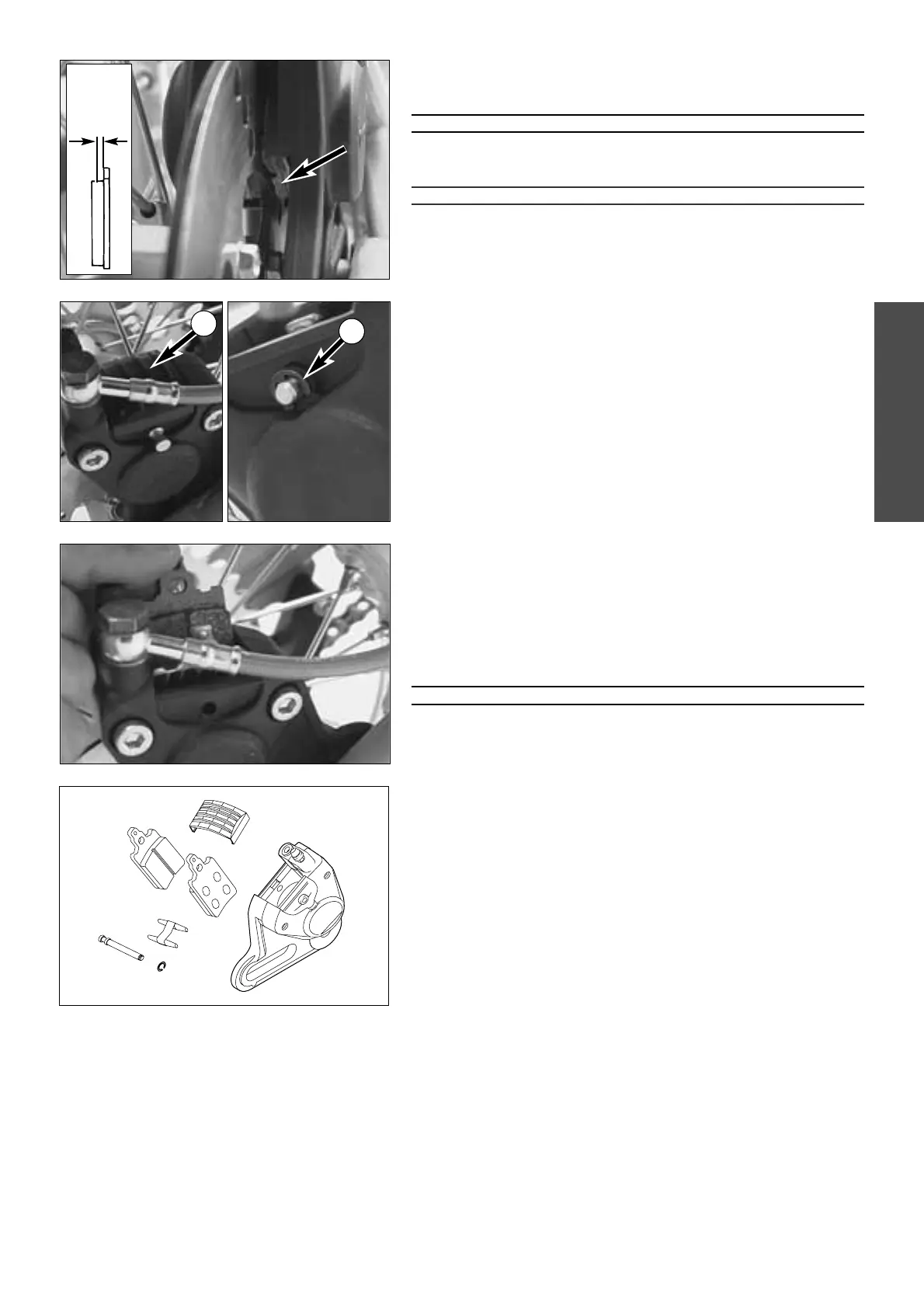
Checking the rear brake pads
The brake pads can be inspected from the rear. The thickness of the linings
may not be less than 1 mm (0.04 in).
WARNING
A
T THEIR MOST WORN POINT BRAKE PAD LININGS SHOULD NOT BE THINNER THAN
1 MM,
OTHERWISE THEY COULD LEAD TO BRAKE FAILURE
. FOR YOUR OWN SAFETY
DON
’T PUT OFF HAVING YOUR BRAKE PADS CHANGED.
!
CAUTION
!
I
F THE BRAKE PADS ARE REPLACED TOO LATE SO THAT THE LINING IS PARTLY OR ENTIRE-
LY WORN, THE STEEL COMPONENTS OF THE BRAKE PAD WILL RUB AGAINST THE BRAKE
DISC
, THEREBY IMPARING THE BRAKING EFFECT AND DESTROYING THE BRAKE DISC
.
Replacing the rear brake pads *
– Remove the cover 1 and the locking ring 2. Using a punch 3, urge the
bolt out of the brake caliper in an outward direction and remove it
together with the leaf spring
4.
– Pull the brake pads upwards and out of the brake caliper. Clean brake
caliper thoroughly with compressed air.
– Before installing the new brake pads push the brake pistons backwards
with an appropriate screwdriver.
– Insert the new brake pads 5 into the brake caliper, position the leaf
spring
4, and secure it with the bolt 3. By tapping on the bolt, drive
it into the brake caliper up to the stop. Reattach locking ring
2 and
cover
1.
WARNING
–I
T IS VERY IMPORTANT TO KEEP THE BRAKE DISK FREE FROM OIL AND FATTY MATTERS
.
O
THERWISE, THE BRAKING EFFECT WOULD BE STRONGLY REDUCED.
–A
FTER ASSEMBLY, CHECK IF CIRCLIPS HAVE BEEN FITTED CORRECTLY.
–H
AVING PERFORMED ANY WORK ON THE BRAKING SYSTEM
,
ONE MUST ALWAYS ACTUA
-
TE THE HAND BRAKE LEVER OR FOOT BRAKE LEVER
,
RESPECTIVELY SO AS TO ENSURE
THAT THE BRAKE PADS WILL LIE AGAINST THE BRAKE DISK AND THE PRESSURE POINT IS
ESTABLISHED
.
1
2
1
2
3
4
5
min.
1 mm


 To Next Page