3
24
3.3.4.Righting the boat after capsizing
If the boat capsizes:
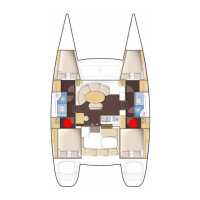
- Break the emergency panels located in each hull with the specific hammer provided.
The hammers are located under the starboard and port hatchways.
A hammer is also located outside in the liferaft compartment in case of evacuation from outside boat.
ADVICE-RECOMMENDATIONS
Reduce your speed before making tight
turns in order to avoid losing control.
In heavy weather conditions, close hatchways, lockers
and doors in order to minimise the risk of water
infiltration;
Keep bilge water to a minimum.
3.4.PREVENTION OF MAN OVERBOARD
Deck areas which are not considered part of the working deck, and which should not be used when sailing are hatched on the
diagram on the next page.
Regularly check the lifelines:
Regarding metal lifelines, check for the appearance of rust-spots and corrosion, particularly at connection points.
Regarding synthetic lifelines, have them changed as soon as the first signs of wear and tear appear due to chafing or UV.
The lashing at the ends of the lifelines is used to adjust their tension.
A textile lifeline has a lifetime of between 5 and 7 years depending on the boat’s sailing programme and area.
Have all lifelines checked annually to identify any signs of wear and tear or chafing.
After 7 years or in the event of chafing, the lifelines MUST be replaced.
- Rinse the lifelines in fresh water after sailing.
- Textile lifelines can be removed when wintering the boat to protect them against UV.
- Make sure that you label each lifeline correctly to be sure of repositioning it correctly when re-installing it.



 To Next Page