DCR822
LECTROSONICS, INC.
28
NOTE: It’s the user’s
responsibility to select the
approved frequencies for the
region where the transmitter
is operating.
Receiver
Operating Frequencies (MHz):
Model A1/B1: 470.100 - 614.375
Model B1/C1: 537.600 - 691.175
941: 941.525 - 959.825
Frequency Selection Steps: 25 kHz
Frequency Response: 25 Hz to 20 kHz (+0/-3 dB)
Frequency Stability: ±0.001 %
Front end bandwidth: ±5.5 MHz, @ -3 dB
Sensitivity: 20 dB Sinad: 0.9 uV(-108 dBm), A weighted
60 dB Quieting: 1.12 uV (-105 dBm), A weighted
AM rejection: >60 dB, 2 uV to 1 Volt
Modulation acceptance: 85 kHz
Spurious rejection: 85 dB
Third order intercept: +15 dBm
Diversity method: Vector Diversity (advanced true diversity)
Antenna inputs: Dual SMA female jacks; 50 Ohm impedance
Audio output: Rear panel 2 TA3M connectors; can drive 600 Ohm,
adjustable from -50 to +7 dBu in 1 dB steps
(into nominal 10 k bal. load)
Audio Performance (overall system):
THD: 0.2% (typical)
SNR at receiver output (dB):
Note: The dual envelope “soft” limiter
provides exceptionally good handling
of transients using variable attack and
release time constants. Once activated,
the limiter compresses 30+ dB of transmitter input range into 4.5 dB of receiver output range, thus
reducing the measured figure for SNR without limiting by 4.5 dB
SmartNR No Limiting w/Limiting
OFF 103.5 108.0
NORMAL 107.0 111.5
FULL 108.5 113.0
Input Dynamic Range: 125 dB (with full Tx limiting)
Overall Latency (time delay): 1.4 ms with digital source, <2.9 sm with Hybrid TX
Audio Test Tone: 1 KHz, -50 to +7 dBu, <1%THD
Controls:
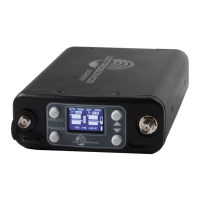
Front Panel: • LCD display
• Menu/Sel, Pwr/Back, Up/Down Arrow Buttons
• SD Card Reader
• IR Port
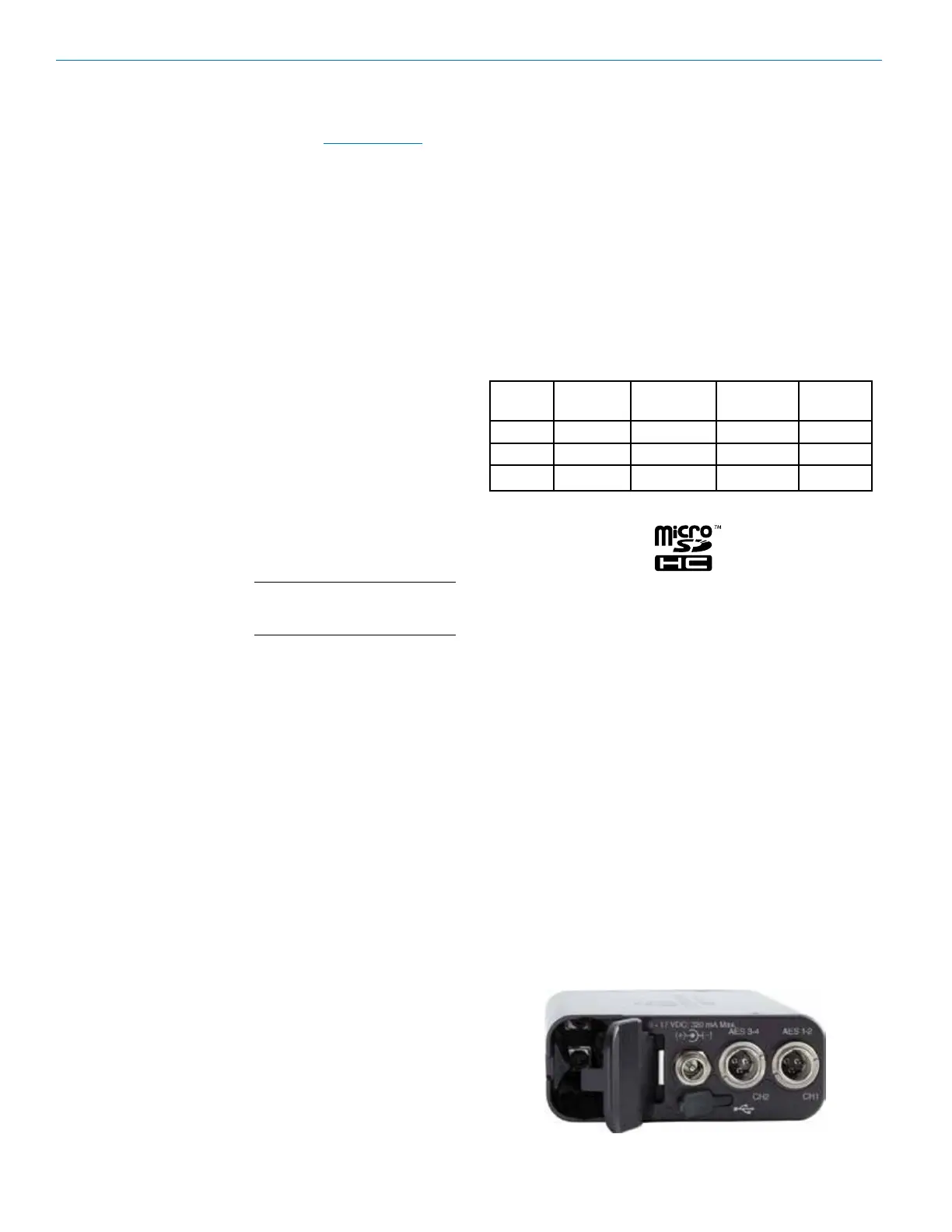
Rear Panel: • Analog/AES audio output jack (2)
• External DC input
• Battery compartment
• USB port
External Power: Minimum 9 Volts to maximum 17 VDC
2.5 W; 170 mA at 12 VDC
Battery Life: 6 hrs. continuous, w/ 4 disposable, 1.5VDC Lithium
AA batteries (recommended)
Weight: 408 grams with batteries (14.4 oz.)
Dimensions: 3.23” wide x 1.23” high x 5.50” deep
82 wide x 31 high x 140 deep mm
Recorder
Storage media: microSDHC memory card
File format: .wav files (BWF)
A/D converter: 24-bit
Sampling rate: 48 kHz
Recording modes/Bit rate: 24 bit - 144 kbytes/s per channel (up to 4)
Specifications and Features
Audio Performance:
Frequency response: 25Hz to 20 kHz; +0/-3 dB
Dynamic range: 110 dB (A), before limiting
Distortion: < 0.035%
Operating temperature range:
Celsius: -20 to 50
Fahrenheit: -5 to 122
Specifications subject to change without notice.
Available Recording Time
Using a microSDHC memory card, the approximate recording times are as follows. The actual
time may vary slightly from the values listed in the tables.
*microSDHC Logo is a trademark of SD-3C, LLC
Card
Size
1 Track
Hrs:Min
2 Tracks
Hrs:Min
3 Tracks
Hrs:Min
4 Tracks
Hrs:Min
8 GB 15.30 7.45 5.10 3.53
16 GB 31.00 15.30 10.20 7.45
32 GB 62.00 31.00 20.40 15.30
FCC Notice
NOTE: This equipment has been tested and found to comply with the limits for a Class B digital
device, pursuant to part 15 of the FCC Rules. These limits are designed to provide reasonable
protection against harmful interference in a residential installation. This equipment generates,
uses and can radiate radio frequency energy and, if not installed and used in accordance with
the instructions, may cause harmful interference to radio communications. However, there is no
guarantee that interference will not occur in a particular installation. If this equipment does cause
harmful interference to radio or television reception, which can be determined by turning the
equipment off and on, the user is encouraged to try to correct the interference by one or more of
the following measures:
• Reorient or relocate the receiving antenna.
• Increase the separation between the equipment and receiver.
• Connect the equipment into an outlet on a circuit different from that to which the receiver is
connected.
• Consult the dealer or an experienced radio/TV technician for help.
Changes or modifications to this equipment not expressly approved by Lectrosonics, Inc. could
void the user’s authority to operate it.


 To Next Page