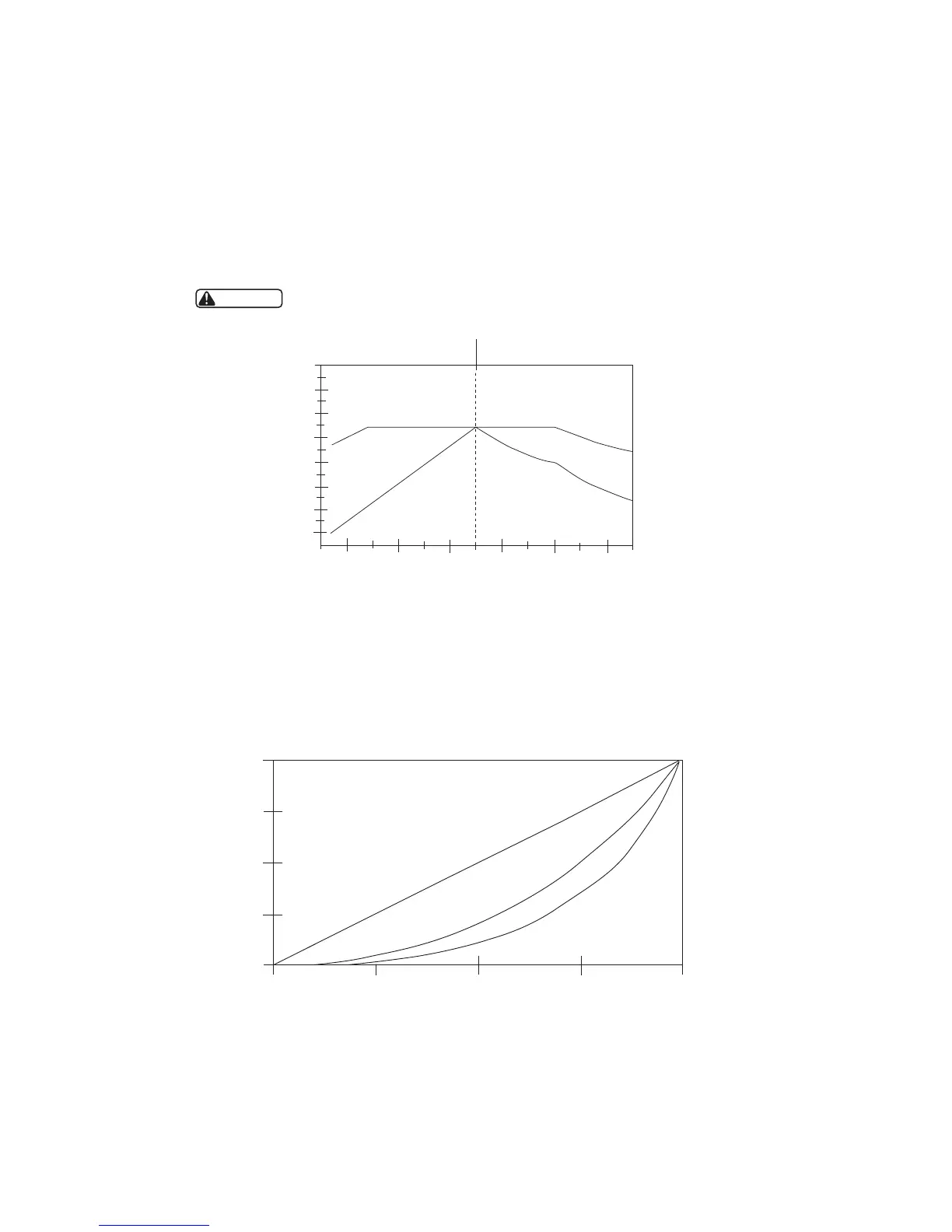
If the frequency applied to the motor is increased while the voltage remains constant, torque capability will
decrease as speed increases. This will cause the horsepower capability of the motor to remain approximately
constant. Motors run in this mode when operated above base speed, where drive output voltage is limited
by the input line voltage. This operating range is known as the "constant horsepower" range. The typical
maximum range for constant horsepower is about 2.3 to 1 (60 to 140 Hz). The diagram below depicts the
operating characteristics of a typical AC induction motor with a 60 Hz base speed.
Consult motor manufacturer before operating motor and/or driven equipment above base speed.
6.1.1 VARIABLE TORQUE VS CONSTANT TORQUE
Variable frequency drives, and the loads they are applied to, can generally be divided into two groups:
constant torque and variable torque. Constant torque loads include: vibrating conveyors, punch presses,
rock crushers, machine tools, and just about every other application that is not considered variable torque.
Variable torque loads include centrifugal pumps and fans, which make up the majority of HVAC
applications.
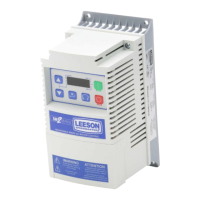
Variable torque loads are governed by the affinity laws, which define the relationships between speed, flow,
torque, and horsepower. The diagram below illustrates these relationships:
14


 To Next Page