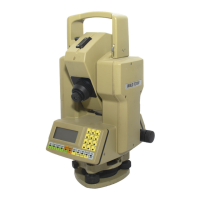
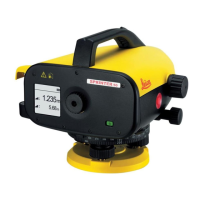
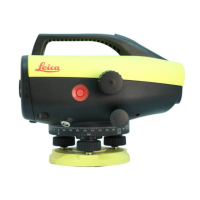
The Leica TS12 Lite is a total station designed for measuring, calculating, and capturing data, available in various accuracy classes. It can be integrated with an add-on GNSS system to form a SmartStation or combined with a CS10/CS15 field controller for remote control surveys. The device is supported by LEICA Geo Office software for data management and additional help programs.
Function Description
The TS12 Lite performs horizontal and vertical angle measurements, distance measurements (with and without reflectors), and records data. It features Automatic Target Aiming (ATR) for automatic prism targeting, Electronic Guide Light (EGL) for visual aiming assistance, and a laser plummet for precise setup. The instrument can be motorized for automatic horizontal and vertical turning. It also supports data communication with external appliances and can measure raw data and compute coordinates using carrier phase and code signals from GNSS satellites when used as part of a SmartStation.
Important Technical Specifications
Angle Measurement:
- Available angular accuracies (ISO 17123-3): 2", 3", 7"
- Display resolution: 1" (0.0001°, 0.1 mgon, 0.01 mil)
Distance Measurement with Reflectors (EDM):
- Laser Classification: Class 1 (IEC 60825-1:2007-03)
- Maximum average radiant power: 0.33 mW
- Pulse duration: 800 ps
- Pulse repetition frequency (PRF): 100 MHz - 150 MHz
- Wavelength: 650 nm - 690 nm
- Beam divergence: 1.5 mrad x 3 mrad
- Shortest measuring distance: 1.5 m
- Range (Standard prism GPR1):
- Range A (Strong haze): 1800 m (6000 ft)
- Range B (Light haze): 3000 m (10000 ft)
- Range C (Overcast, no haze): 3500 m (12000 ft)
- Accuracy (ISO 17123-4, standard prism):
- Standard mode: 1 mm + 1.5 ppm (typical time 2.4 s)
- Single (fast) mode: 2 mm + 1.5 ppm (typical time 0.8 s)
- Continuous mode: 3 mm + 1.5 ppm (typical time < 0.15 s)
- Display resolution: 0.1 mm
Distance Measurement without Reflectors (PinPoint R400/R1000):
- Laser Classification: Class 3R (IEC 60825-1:2007-03)
- Maximum average radiant power: 5.00 mW
- Pulse duration: 800 ps
- Pulse repetition frequency (PRF): 100 MHz - 150 MHz
- Wavelength: 650 nm - 690 nm
- Beam divergence: 0.2 mrad x 0.3 mrad
- NOHD (Nominal Ocular Hazard Distance) @ 0.25s: 80 m / 262 ft
- Range (Kodak Gray Card, White side, 90% reflective):
- R400: 200 m (660 ft)
- R1000: 800 m (2630 ft)
- Accuracy (ISO 17123-4):
- 0 m - 500 m: 2 mm + 2 ppm (typical time 3-6 s)
-
500 m: 4 mm + 2 ppm (typical time 3-6 s)
- Laser dot size (approximate): 7x10 mm at 30m, 8x20 mm at 50m, 16x25 mm at 100m
Distance Measurement - Long Range (LO mode):
- Range (Standard prism GPR1):
- Range A: 2200 m (7300 ft)
- Range B: 7500 m (24600 ft)
- Range C: >10000 m (>33000 ft)
- Accuracy (ISO 17123-4): 5 mm + 2 ppm (typical time 2.5 s)
Automatic Target Aiming (ATR):
- Laser Classification: Class 1 (IEC 60825-1:2007-03)
- Maximum peak power: 10 mW
- Pulse duration: 11 ms
- Pulse repetition frequency (PRF): 37 Hz
- Wavelength: 785 nm
- Range (Standard prism GPR1): 1000 m (3300 ft)
- ATR angle accuracy Hz, V (ISO 17123-3): 1" (0.3 mgon)
- Base Positioning accuracy: ± 1 mm
- Typical search time in field of view: 1.5 s
Electronic Guide Light (EGL):
- Produces visible LED beams (red and yellow).
- Working range: 5 m to 150 m (15 ft to 500 ft)
- Position accuracy: 5 cm at 100 m (1.97" at 330 ft)
Laser Plummet:
- Laser Classification: Class 2 (IEC 60825-1:2007-03)
- Wavelength: 650 nm - 690 nm
- Maximum average radiant power: 0.95 mW
- Accuracy: 1.5 mm (2 sigma) at 1.5 m instrument height
- Diameter of laser point: 2.5 mm at 1.5 m instrument height
General Technical Data:
- Telescope: Magnification 30x, Free Objective aperture 40 mm, Field of view 1°30'/1.66 gon
- Compensator: Angular accuracy 2", 3", 7"
- Control unit: VGA (640x480 pixels) color TFT touch screen, LED backlight, 36 keys
- Weight: Instrument 4.8-5.5 kg, Tribrach 0.8 kg, Internal battery 0.2 kg
- Internal Battery (Li-Ion): 7.4 V, GEB221 (4.4 Ah, 5.7 h operating time), GEB222 (6.0 Ah, 6.5 h operating time)
- External Battery (NiMH): 12 V, GEB171 (9.0 Ah)
- Operating Temperature: -20 to +50 °C (-4 to +122 °F)
- Storage Temperature: -40 to +70 °C (-40 to +158 °F)
- Protection: IP55 (IEC 60529) dusttight and protected against water jets.
Usage Features
- User Interface: Operated via keyboard or touch screen with a stylus.
- Power Functions: Instrument can be turned on/off, put into stand-by mode, keyboard locked, or touch screen turned off. A "Power Options" menu provides reset options for Windows CE and installed software.
- Batteries: Li-Ion batteries must be charged before first use. Optimal charging temperature is 10°C to 20°C (50°F to 68°F). Batteries can operate from -20°C to +55°C (-4°F to +131°F).
- Memory Device: Data is stored on an SD card (up to 8 GB) or internal memory (1 GB). A USB stick can be used for data transfer. Leica SD cards are recommended to prevent data loss.
- Connecting to PC: Uses Microsoft ActiveSync (Windows XP) or Windows Mobile Device Center (Windows Vista/7/8) via a GEV223 USB cable. Leica Viva USB drivers must be installed.
- Display Foil: A display foil is pre-fixed to protect the screen. Instructions are provided for replacement.
- RTK Device (SmartStation): Supports various digital cellular phones (Telit UC864-G, CINTERION MC75i, CDMA Telit CC864-DUAL) and radios (Pacific Crest PDL, Satelline 3AS, Satelline M3-TR1) as slot-in devices. LED indicators on these devices show basic status (Mode, Data transfer, Signal strength, Power).
- Automatic Corrections: The instrument automatically applies corrections for line of sight error, tilting axis error, Earth curvature, circle eccentricity, compensator index error, vertical index error, standing axis tilt, refraction, and ATR zero point error.
Maintenance Features
- Periodic Checks & Adjustments: Recommended to perform test measurements and field adjustments periodically, especially after abnormal use, before and after important measurements, after transportation, long working/storage periods, or significant temperature changes (>20°C from last calibration).
- Electronic Adjustments: The instrument can electronically check and adjust compensator errors (longitudinal and transversal index errors), vertical index error, horizontal collimation error, and ATR zero point errors. These are typically performed via the "Check & Adjust Wizard".
- Mechanical Adjustments:
- Circular Level: Can be adjusted on both the instrument and tribrach using a supplied Allen key.
- Prism Pole Circular Level: Can be adjusted using an Allen key.
- Tripod: Allen screws on the tripod legs and articulated joints should be tightened to ensure stability.
- Laser Plummet Inspection: The laser plummet does not typically require adjustment but should be inspected periodically. If adjustment is needed, the instrument should be returned to an authorized service workshop.
- Care and Transport:
- Transport: Always carry the product in its original transport container or with the tripod legs splayed across the shoulder. Secure it in road vehicles. For rail, air, or sea transport, use original Leica Geosystems packaging.
- Storage: Store within specified temperature limits. Remove batteries from the product and charger before storing. Recharge batteries after long storage. Protect batteries from dampness.
- Cleaning: Blow dust off lenses and prisms. Use a clean, soft, lint-free cloth moistened with water or pure alcohol for cleaning. Do not use other liquids. Keep plugs clean and dry.
- Drying: Dry damp products, transport containers, foam inserts, and accessories at temperatures not exceeding 40°C (104°F).
- Motorisation Inspection: Motorized instruments require inspection by a Leica Geosystems authorized service workshop after approximately 4000 hours of operation or twice a year for permanent use.

 Need help?
 General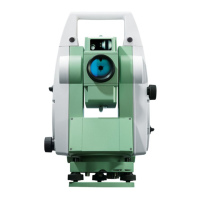

 To Next Page