41
41
RTJ400 User Guide
Chapter 9
Half-Blind Dovetail Joint Procedures
9-33
Rabbeted Drawer Fronts: Provided the rabbet on the
drawer front is less than ⅜" [9.5mm] wide
A
and more than
⅜" deep
B
, the sidestop, as previously set on the drawer side, is
correctly positioned for the rabbeted pin board.
A
C
C
D
D
A
B
9-34
Front Limit Stop: You will need to make a scrap limit
stop
A
. See the next step for instructions on how to make the
front limit stop.
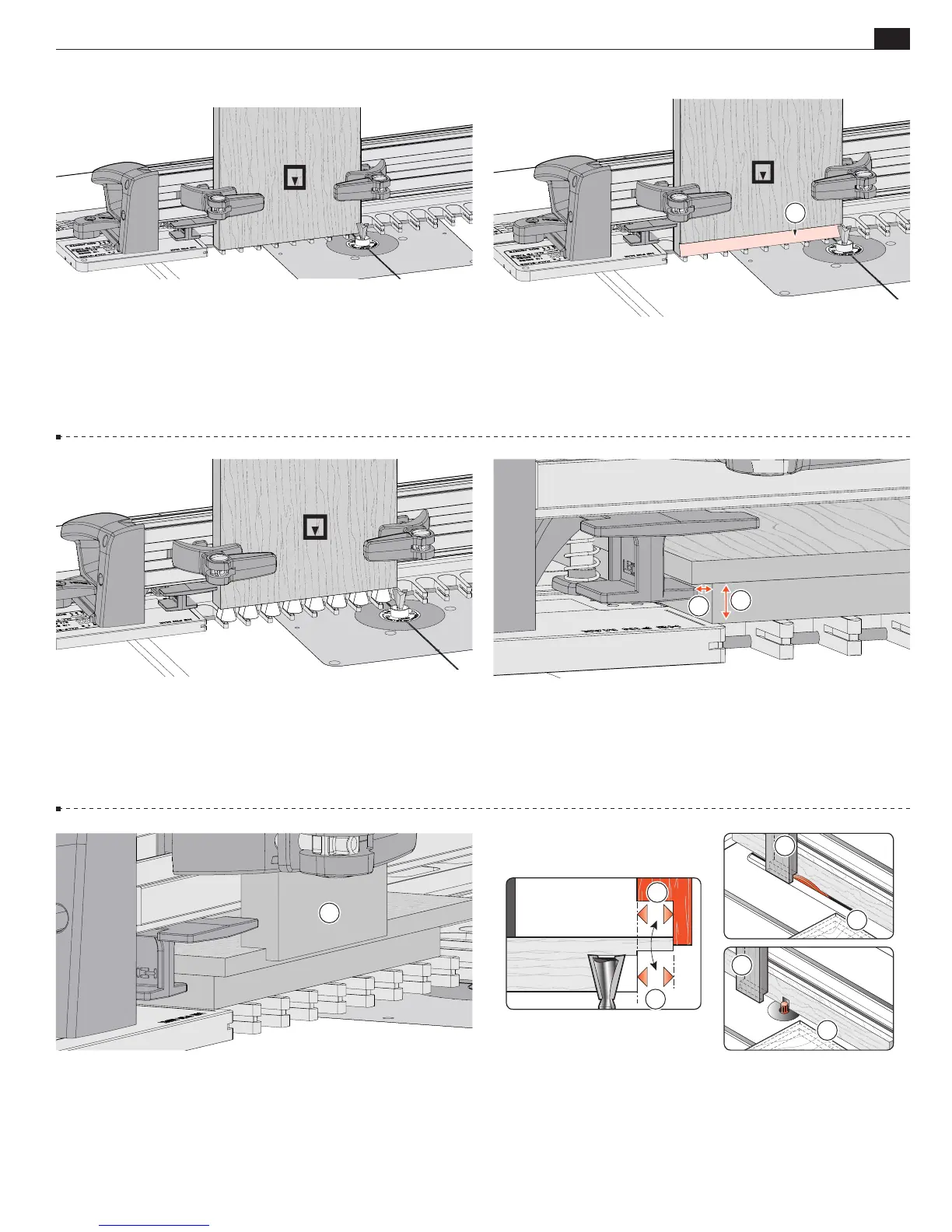
9-30
Note: The pin board and tail board are routed separately
for rabbeted half-blind joints.
Center and clamp a
test
tail board
in the jig. Adjust the sidestop to touch the right edge of the board
and tighten. If you have already determined joint tightness for the
dovetail bit you’re going to use (in Step 9-22), you don’t need to
redo the test fit procedure.
Important note:
Choose a bit from
Step 9-2 with a depth of cut less than the rabbet thickness.
9-31 Make a very light, shallow climb cut, moving the jig
right to left
A
. This will leave a nice clean shoulder.
The bit will tend to drive the jig to the right, so make the
cut light and with a firm grip.
9-35 Left: The rabbet in the scrap limit stop
A
must be exactly
the same width as the rabbet on the drawer front
B
. An easy
and accurate way to make the limit stop, is to rabbet the end
vertically over the router bit or table saw blade
C
immediately
after horizontally machining the rabbet in the drawer front
D
.
A
9-32 Finish the tail board by routing in and out of each
template opening, keeping the guide bushing in contact with
all template finger surfaces. Remove the tail board.
Rabbeted Half-Blind Dovetails cont.
B
A


 To Next Page