206
4-3. Operating the lights and wipers
ness
• When frequently and repeatedly driving
ascending/descending roads, or roads
with rough, bumpy or uneven surfaces
(such as stone-paved roads, gravel
roads, etc.)
• When frequently and repeatedly taking
curves or driving on a winding road
• When there is a highly reflective object
ahead of the vehicle, such as a sign or
mirror
• When the back of a preceding vehicle is
highly reflective, such as a container on a
truck
• When the vehicle’s headlights are dam-
aged or dirty, or are not aimed properly
• When the vehicle is listing or tilting due to
a flat tire, a trailer being towed, etc.
• When the headlights are changed
between the high beams and low beams
repeatedly in an abnormal manner
• When the driver believes that the high
beams may be flashing or dazzling
pedestrians or other drivers
• When the vehicle is used in an area in
which vehicles travel on the opposite side
of the road of the country for which the
vehicle was designed, for example using
a vehicle designed for right-hand traffic in
a left-hand traffic area, or vice versa
Q If “Headlight System Malfunction Visit
Your Dealer” is displayed
P.418
Q Customization
Some functions can be customized. (Cus-
tomizable features: P.463)
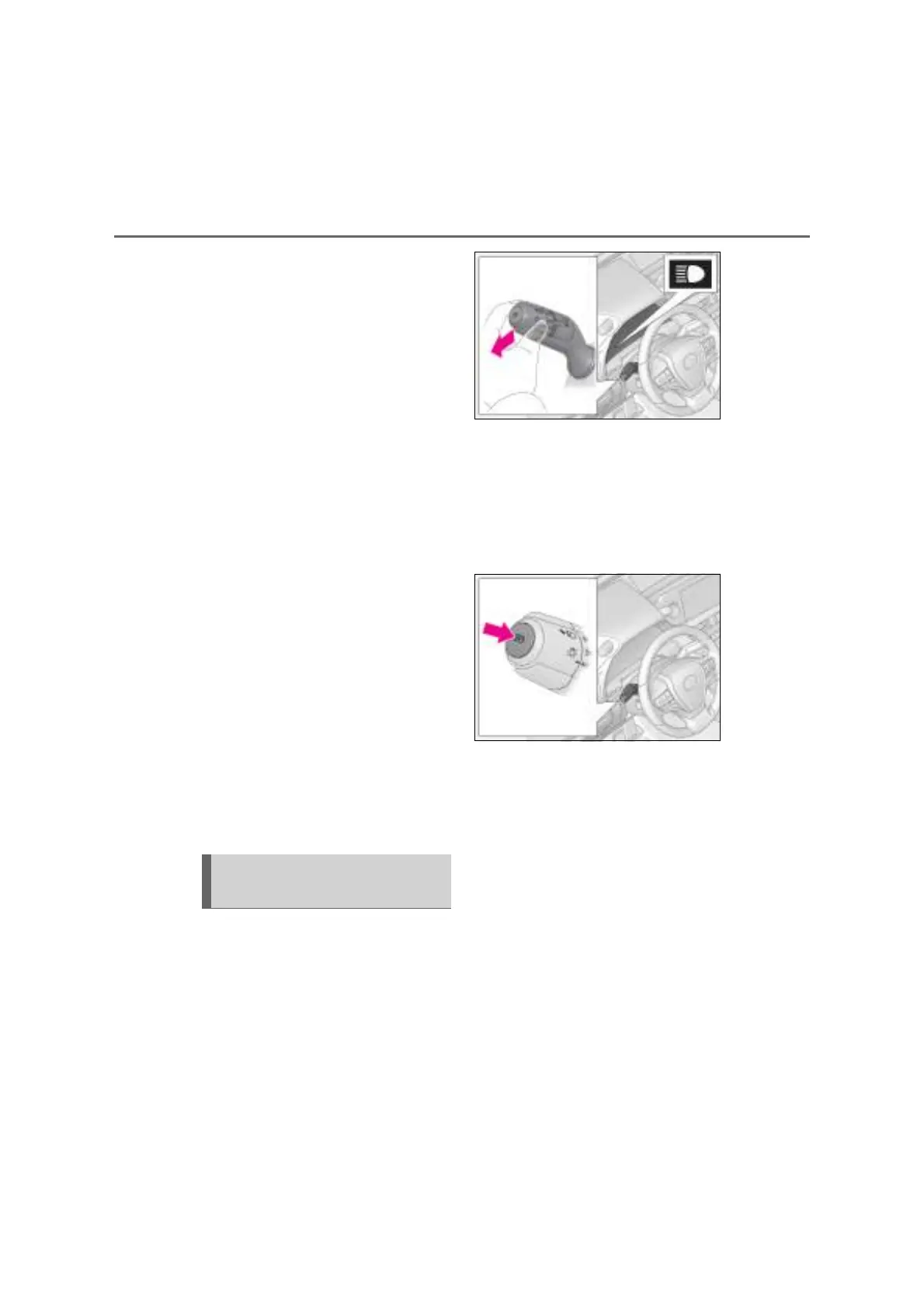
Q Switching to the high beams
Push the lever away from you.
The AHS indicator will turn off and the high
beam indicator will turn on.
Pull the lever to its original position to acti-
vate the Adaptive High-beam System
again.
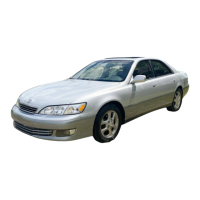
Q Switching to the low beams
Press the Adaptive High-beam System
switch.
The AHS indicator will turn off.
Press the switch to activate the Adaptive
High-beam System again.
Q Temporarily switching to the low
beams
Pull the lever toward you and then
return it to its original position.
The high beams are on while the lever
is pulled toward you. However, after
the lever is returned to its original posi-
tion, the low beams remain on for a
certain amount of time. Afterwards, the
Adaptive High-beam System will be
activated again.
Turning the high beams on/off
manually



 To Next Page