402
7-2. Steps to take in an emergency
When using a flat-bed truck to trans-
port the vehicle, use tire strapping
belts. Refer to the owner’s manual of
the flat-bed truck for the tire strapping
method.
In order to suppress vehicle movement
during transportation, set the parking
brake and turn the power switch off.
If a tow truck is not available in an
emergency, your vehicle may be tem-
porarily towed using cables or chains
secured to the emergency towing eye-
let. This should only be attempted on
hard surfaced roads for short distances
at under 30 km/h (18 mph).
A driver must be in the vehicle to steer
and operate the brakes. The vehicle’s
wheels, drive train, axles, steering and
brakes must be in good condition.
To have your vehicle towed by another
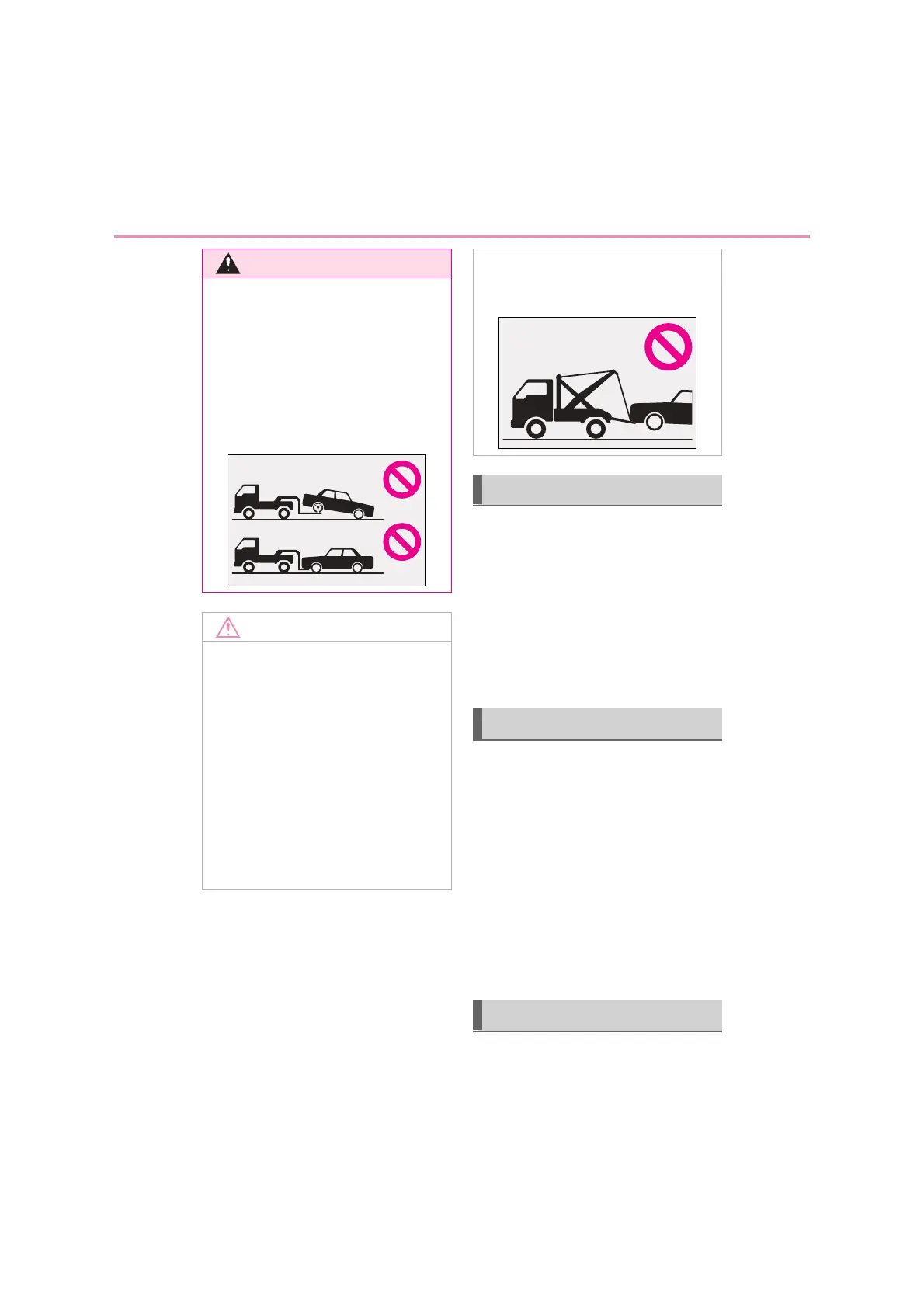
Q When towing the vehicle
Be sure to transport the vehicle with the
front wheels raised or with all four wheels
raised off the ground. If the vehicle is
towed with the front wheels contacting
the ground, the drivetrain and related
parts may be damaged or electricity
generated by the operation of the motor
may cause a fire to occur depending on
the nature of the damage or malfunction.
Q To prevent damage to the vehicle
when towing using a wheel-lift type
truck
O Do not tow the vehicle from the rear
when the power switch is off. The
steering lock mechanism is not strong
enough to hold the front wheels
straight.
O When raising the vehicle, ensure ade-
quate ground clearance for towing at
the opposite end of the raised vehicle.
Without adequate clearance, the vehi-
cle could be damaged while being
towed.
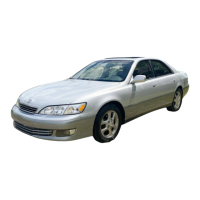
Q Towing with a sling-type truck
Do not tow with a sling-type truck to pre-
vent body damage.
Using a flatbed truck
Emergency towing
Emergency towing procedure



 To Next Page