21GA01208_002_C0 - 11/2016 - © Leybold
3.3 Connection to the System
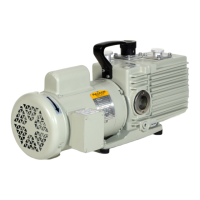
Before connecting the TRIVAC-B-DOT, remove the shipping seals from the
connection flanges (7/2) and (7/3).
Retain the shipping seals in case you need to store the pump in the future.
The pump is shipped with intake and exhaust flanges mounted for horizon-
tal connection of the connecting lines. You can easily convert the ports for
vertical connection by removing the four capscrews, rotating the flanges as
required, and reinstalling the capscrews. Connect the intake and exhaust
lines with a centering ring and a clamping ring each. Use the centering ring
with dirt trap for the intake port.
Connect the intake and exhaust line using anti-vibration bellows, without
placing any strain on the pump.
The intake line must be clean. Deposits in the intake line may outgas and
adversely affect the vacuum. The connecting flanges must be clean and
undamaged.
The maximum throughput of the pump is equivalent to the pumping speed
of the pump.
Note the specified cross sections for the connection lines
If exhaust gases must be collected or contained, do not allow the
exhaust line to become pressurised. The pressure in the oil box must
not exceed 0.5 bar (g). An exhaust line which is too small in diameter
or which is blocked can result in the formation of overpressures within
the pump. Possible consequences can be a damaged or even burst
open pump. Thus the exhaust line must be checked from time to time to
ensure that there are no obstructions.
Never operate the pump with a sealed exhaust line. There is the
danger of injury.
Avoid backflowing condensate
Install the exhaust line with a downward slope (lower than the pump) so
as to prevent condensate from flowing back into the pump. If this is not
possible, insert a condensate trap.
Installation
NOTICE
CAUTION


 To Next Page
 Loading...