EasyManua.ls Logo

Lincoln Electric Tomahawk 1000 - User Manual

Lincoln Electric Tomahawk 1000
36 pages
Print Icon
To Next Page IconTo Next Page
Loading...
Operator’s Manual
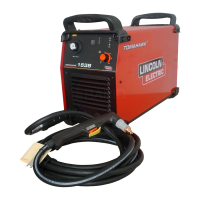
Tomahawk
®
1000
Register your machine:
www.lincolnelectric.com/register
Authorized Service and Distributor Locator:
www.lincolnelectric.com/locator
IM10026-A | Issue D ate May-19
© Lincoln Global, Inc. All Rights Reserved.
For use with machines having Code Numbers:
11581, 12850
Need Help? Call 1.888.935.3877
to talk to a Service Representative
Hours of Operation:
8:00 AM to 6:00 PM (ET) Mon. thru Fri.
After hours?
Use “Ask the Experts” at lincolnelectric.com
A Lincoln Service Representative will contact you
no later than the following business day.
For Service outside the USA:
Email: globalservice@lincolnelectric.com
Save for future reference
Date Purchased
Code: (ex: 10859)
Serial: (ex: U1060512345)

Other manuals for Lincoln Electric Tomahawk 1000

Questions and Answers

  • E
    Emily HarrisAug 3, 2025
    What to do if the arc starts but sputters badly on my Lincoln Electric Welding System?
    • C
      Cody VanceAug 3, 2025
      If the arc sputters, first check the torch consumables, ensuring they are tight, clean, and in good condition, and replace them if necessary. If the problem persists after checking, contact your local Lincoln Authorized Field Service Facility. Also, check the air supply for oil or excessive water. If present, filter the air or switch to nitrogen or bottled air. Finally, ensure the air pressure is correctly set.
  • G
    gregory60Aug 8, 2025
    What to do if the pilot arc starts but will not transfer when brought near work on my Lincoln Electric Tomahawk 1000 Welding System?
    • C
      Cassidy DoyleAug 8, 2025
      If the pilot arc won't transfer, check the work lead connection for a clean and secure connection. Ensure you are cutting conductive material and that the workpiece is clean and dry, removing any scale, rust, or dross. Check all connections to the Control board. A faulty control board may also be the cause.
  • T
    Terry LoweAug 12, 2025
    What to do if the trigger is pulled and air begins to flow, but there is no pilot arc after at least 3 seconds in Lincoln Electric Welding System?
    • J
      John BoydAug 12, 2025
      If air flows but there's no pilot arc after 3 seconds, inspect the torch consumables to ensure they are clean, in good shape, and not greasy; replace if needed. Verify the air pressure is correctly set and that there are no kinks or airflow restrictions in the torch cable; replace the cable if necessary. If you don't feel a slight thump in the torch when the trigger is pulled, check for loose connections in the torch head. A faulty control board could also be the cause.
  • E
    Edward LeeAug 17, 2025
    What to do if the air begins to flow and there is a very brief arc that snaps out consistently with repeated trigger pulls in Lincoln Electric Welding System?
    • A
      ajohnsonAug 17, 2025
      If the air flows, but the arc is brief and snaps out, check the torch consumables to ensure they are tight, clean, not greasy, and in good condition; replace if necessary. Also, make sure the air pressure is set correctly. It is possible that the control board is faulty.
  • R
    Richard WalshAug 22, 2025
    What to do if the Tomahawk® 1000 powers up properly but there is no response when the trigger is pulled and only the POWER LED is lit in Lincoln Electric Welding System?
    • S
      Stacy MoranAug 23, 2025
      If the Tomahawk® 1000 powers up but there's no trigger response and only the POWER LED is lit, turn the output knob to the purge zone. If air doesn't flow, the main gas solenoid assembly/pressure sensor may be faulty and needs checking or replacing, or the control board may be faulty. Remove the torch handles (or barrel) and examine all connections. Check for proper trigger switch operation, replacing the trigger switch or torch cable if defective. A faulty control board is another possibility.
  • B
    Benjamin BrownAug 27, 2025
    What to do if no status indicators light and the fan does not operate 5 seconds after the power switch is turned on in Lincoln Electric Tomahawk 1000 Welding System?
    • K
      Keith WestAug 27, 2025
      If no status indicators light and the fan doesn't operate after turning on the power, first check the input power to ensure it's on. Then, check the power line fuses or breakers and the machine connection. Disconnect input power and check the line switch continuity; replace the line switch if it's faulty.

Summary

Safety Precautions

Fume and Ventilation Safety

Essential practices for managing fumes and ensuring adequate ventilation.

Personal Protective Equipment (PPE)

Guidelines for selecting and using appropriate PPE for safety.

Safety Warnings and Hazards

California Proposition 65 Warnings

Legal warnings regarding chemicals known to cause cancer and reproductive harm.

Arc Welding and Engine Safety

Key safety practices for arc welding and engine-powered equipment.

Electric and Magnetic Field Safety

Precautions related to electromagnetic fields and their potential health effects.

Operational Safety

Electric Shock Prevention

Critical measures to avoid electrocution during operation.

Arc Ray and Fume Protection

Safeguarding against arc rays and hazardous fumes and gases.

Hazard Prevention

Fire and Explosion Safety

Measures to prevent fires and explosions caused by sparks and hot materials.

Cylinder and Electrical Equipment Safety

Safe handling of cylinders and proper electrical equipment connection.

Electromagnetic Compatibility (EMC)

EMC Location and General Practices

Considerations for location, user responsibility, and general EMC management.

EMC Assessment and Mitigation

Evaluating and implementing measures to reduce electromagnetic interference.

EMC Mitigation Techniques

Bonding, Earthing, and Shielding

Methods for equipotential bonding, workpiece earthing, and screening for EMC.

Installation and Specifications

Technical Specifications (Code 12850)

Detailed technical data for the Tomahawk 1000, Code 12850.

Installation and Specifications

Technical Specifications (Code 11581)

Detailed technical data for the Tomahawk 1000, Code 11581.

Installation Procedures

Installation Safety and Location

Key safety steps and site selection for machine installation.

Electrical and Interference Setup

Connecting power and managing high frequency interference during installation.

Installation Connections

Generator and Gas Connections

Guidelines for connecting to generators and gas supplies.

Output Connections

Proper connection of the torch and work clamp for output.

Operation Overview

Operation Safety and General Info

Essential safety rules and a general description of the machine.

Plasma Cutting Parameters

Information on preheat temperature and duty cycle for plasma cutting.

Operation Features

User Responsibility and Design

Understanding user roles and machine design features.

Operation Capabilities

Cutting Performance and Consumables

Details on cutting capacity and the expected life of consumables.

Operation Controls

Operational Limitations and Controls

Key operational limits and an overview of the control panel.

Operation Process Control

Pressure, Mode, and Cutting Process

Managing gas pressure, selecting modes, and executing the cutting process.

Operation Gouging

Plasma Gouging Technique

How to perform plasma gouging for material removal.

Operation Procedures and Torch Use

Plasma Cutting Applications

Various uses for plasma cutting, such as weld imperfection removal.

Torch Handling and Pilot Arc

Safe use of the torch, pilot arc functions, and general recommendations.

Procedure Recommendations

Best practices and tips for effective plasma cutting operations.

Operation System Tips

Improving System Utility

Suggestions for enhancing system performance and consumable life.

Operation Torch Setups

Standard and Contact Cutting Setups

Configurations for standard and contact plasma cutting torch setups.

Operation Gouging Setup

Gouging Torch Configuration

Specific torch assembly for plasma gouging applications.

Operation Machine Interface

Machine Interface Signals

Details on signals and connectors for machine interfacing.

Accessories

Available Torches and Parts

Information on optional torches and expendable parts for the machine.

Maintenance and Safety

Maintenance Safety and Routine Tasks

Safety precautions and regular tasks for machine upkeep.

Periodic Maintenance and Thermal System

Scheduled maintenance and understanding the thermal protection system.

Troubleshooting Guide

Using the Troubleshooting Guide

Instructions on how to effectively diagnose and resolve machine issues.

Troubleshooting Indicators

Understanding Status Indicators

Interpretation of status board indicators for troubleshooting.

Troubleshooting Error Conditions

Error Condition List and Restoration

List of errors and procedures to restore machine operation.

Wiring Diagram

Machine Wiring Diagram

A schematic representation of the machine's electrical connections.

Customer Assistance Policy

Lincoln Electric Support Information

Details on Lincoln Electric's customer support and advice policies.

Lincoln Electric Tomahawk 1000 Specifications

General IconGeneral
BrandLincoln Electric
ModelTomahawk 1000
CategoryWelding System
LanguageEnglish

Related product manuals