www.m2tech.biz
10. Setting MM input resistance and capacitance
The NASH is provided with a dedicated MM input. Correct input resistance and capacitance
are overly important to obtain the best performance by an MM cartridge, as well as by a
high output MC cartridge or other technology cartridges with output level 1mV to 5mV.
Most MM cartridges need a load resistance of 47 kOhms, which is the standard input
resistance of most MM phono preamplifiers. On the other hand, many medium and high
output MC cartridges work better with a lower value, around 15 kOhms. The NASH offers
both values, which can be selected by the rear panel DIP-switches (Fig.2, 10).
MM cartridges are also very sensitive to the capacitive load: many of them work better
when the phono preamplifier’s input impedance is slightly capacitive. As the NASH MM input
has a very small capacitance, user can add more capacitance by the rear panel DIP-
switches. Capacitance base values are 100pF, 220pF and 470pF. By setting more than
one value, user can also set 320pF, 570pF, 690pF and 790pF.
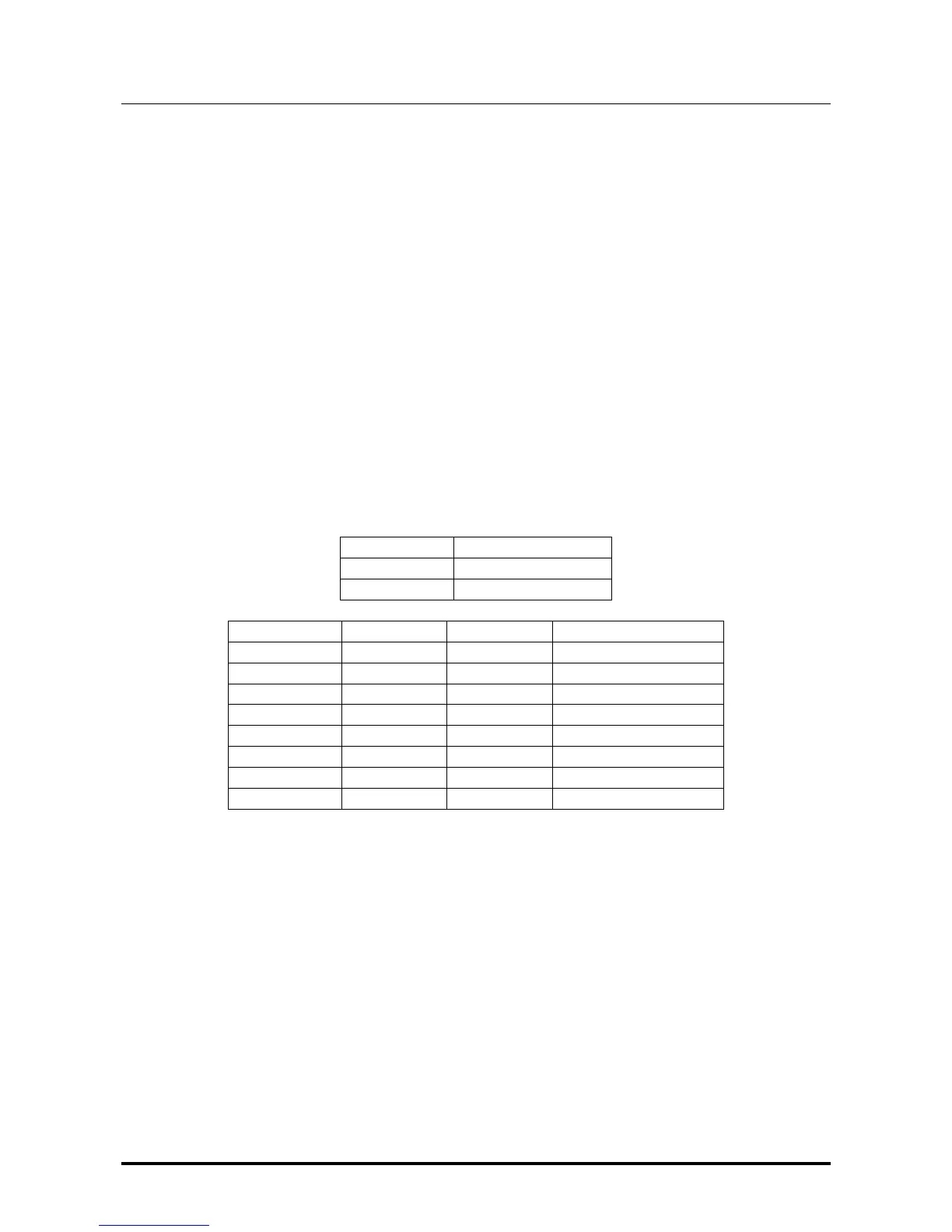
Please refer to the tables below for DIP-switches usage:
Switch 4,8 Input resistance
OFF 47 kOhms
ON 15 kOhms
Switch 1,5 Switch 2,6
Input capacitance
OFF OFF OFF 0pF
OFF OFF ON 100pF
OFF ON OFF 220pF
OFF ON ON 320pF
ON OFF OFF 470pF
ON OFF ON 570pF
ON ON OFF 690pF
ON ON ON 790pF
Switches 1-4 are for left channel, switches 5-8 are for right channel.
11. Considerations on NASH gain and output level
The NASH can deliver up to 95dB total gain on the MC input, and up to 65dB on the MM
input. These values largely exceed the usual gains for a phono preamplifier, which range
between 40dB for an MM input and 60-65dB for an MC input.
The fact is that the more the gain, the more the noise. Therefore designers usually apply
the minimum gain to obtain a reasonable output voltage for a phono stage, which ranges
between 500mV and 1V. This is enough to allow the line preamplifier to drive the power
amp into clipping even with low level recordings, but causes a step level change between
the phono input and a line input to which a CD player or similar is connected, which


 To Next Page