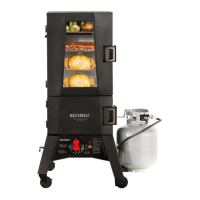
What causes gas to leak from the LP cylinder of Masterbuilt MPS 340 G?
- BBrianna AndersonSep 12, 2025
Gas leaking from the LP cylinder of your Masterbuilt Smoker is due to failure caused by rust or mishandled equipment. Replace the LP cylinder.
What causes gas to leak from the LP cylinder of Masterbuilt MPS 340 G?
Gas leaking from the LP cylinder of your Masterbuilt Smoker is due to failure caused by rust or mishandled equipment. Replace the LP cylinder.
What causes gas to leak from gas cylinder valve in Masterbuilt MPS 340 G?
Gas leaking from the gas cylinder valve of your Masterbuilt Smoker is due to failure of the valve because of rust, mechanical failure, or mishandled equipment. Turn off the gas cylinder valve and return the cylinder to your gas provider/supplier.
Why are cooking times slower than expected on Masterbuilt Smokers?
Slower than expected cooking times on your Masterbuilt Smoker can occur if the valve is not properly aligned to the burner. Check to see if the valve is centered in the burner tube.
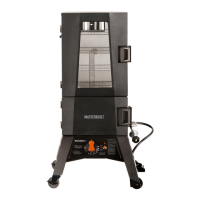
| Brand | Masterbuilt |
|---|---|
| Model | MPS 340 G |
| Category | Smokers |
| Type | Propane |
| Cooking Area | 340 square inches |
| Number of Racks/Cooking Grates | 2 |
| Fuel Type | Propane |
| Material | Steel |
| Color | Black |
| Burner | 1 |
| Temperature Range | 100°F to 400°F |
Lists applicable model numbers and prompts user to record serial and date information.
Highlights the danger of carbon monoxide and advises outdoor, ventilated use.
Covers critical safety warnings, including gas leaks, fire hazards, and unattended operation.
Provides recommendations for safe placement and clearance around the smoker.
Emphasizes reading all instructions, following fire codes, and maintaining safe clearances.
Continues safety instructions, focusing on gas cylinder handling, ignition, and operational restrictions.
Guides users through initial setup, including pre-seasoning the smoker before first use.
Details how to operate the smoker, including adding wood, placing food, and adjusting settings.
Provides procedures for cleaning and storing the smoker after use to ensure longevity.
Lists warnings, preparation steps, and the soapy water solution for leak testing.
Details the process for testing the gas cylinder valve and regulator/hose connections for leaks.
Guides on connecting the regulator, burner, and gas valve, including inspection and alignment.
Provides step-by-step instructions for lighting the smoker burner safely and effectively.
Provides alternative lighting instructions using a match stick if the ignitor fails.
Lists common symptoms, causes, and possible solutions for smoker operational issues.
Addresses causes and solutions for common gas flow problems like vapor lock and low output.
Answers common user questions regarding temperature settings, ventilation, and external factors.
Visual guide to identify various parts of the smoker for assembly and replacement.
Lists all hardware components with their specifications and quantities required for assembly.
Provides a comprehensive list of all smoker parts with corresponding numbers and descriptions.
Contains essential warnings, instructions, and required tools before starting the assembly process.
Lists necessary tools and provides an estimated assembly time for the unit.
Guides assembly of the main cabinet structure and base components using specific hardware.
Details the attachment of legs, braces, and swivel casters to the smoker base.
Focuses on installing the valve assembly, ignitor, and temperature sensors.
Covers routing the cabinet temperature sensor wire and installing sensor covers.
Details the installation of the burner box, heat shield, and other base components.
Guides on attaching final components like racks, doors, and the water bowl.
Covers installing wood chip trays, grease trays, and support brackets.
Outlines warranty periods, conditions, exclusions, and claims process for domestic and commercial use.
Explains consumer rights under Australian law and confirms gas products are for outdoor use only.
Provides contact information for service and warranty claims, and how to register the product.
Provides contact details and operating hours for customer service assistance in Australia.
Stresses the need to keep the purchase receipt for making warranty claims.


Loading...