9
How The Machine Makes Ice
Set the ON/OFF buon to the ON posion. The machine will automacally go to the ice making stage.
There are two disnct cycles: ice freeze and harvest.
1. The freeze cycle happens when water ows to the evaporator surface.
2. The harvest cycle is when the ice is released and water enters the machine.
20 Minutes: A complete cycle takes about 20 minutes, but it depends on temperature and operang condions.
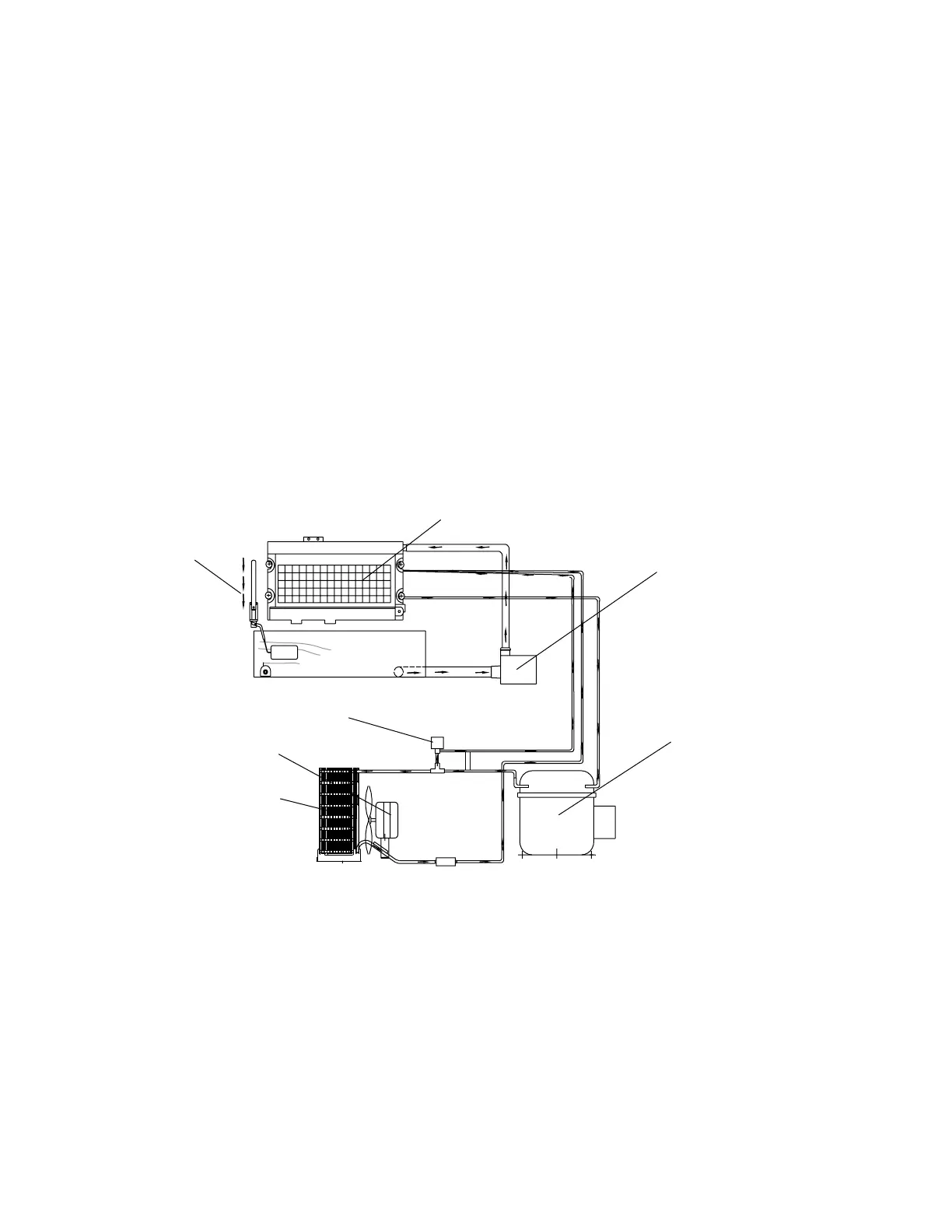
Freeze: During the freeze cycle the compressor is pumping refrigerant, the fan motor is blowing air, and the water pump
is circulang water. When the batch of ice has been fully formed, the ice maker stops the freeze cycle and harvest cycle
begins.
Harvest: During the harvest cycle the compressor is sll operang, but the water pump has stopped. The hot gas valve
opens, diverng hot refrigerant gas into the evaporator. The hot refrigerant gas warms the evaporator, causing the cubes
to slide as a unit o the evaporator and into the storage bin. The freeze cycle will restart when all the cubes have been
harvested.
How The Machine Uses The Water
The ice maker begins with a xed charge of water that is contained in the water trough. As the water ows to the freezing
evaporator surface, the poron of water that does not contain mineral impuries freezes and scks to the ice cube molds.
The water containing impuries falls back into the water trough. During the ice making process, fresh water enters into the
water trough connuously as the water in trough freezes connuously in the evaporator
.
Water Inlet
Evaporator
Water Pump
Compressor
Hot Gas Value
Fan Motor
Condenser
Normal Sounds
Your new ice maker may make sounds that are not familiar to you. Most of the new sounds are normal. Hard surfaces like the
oor and walls can make the sounds louder than they actually are. The following list describes the sounds that might be new to
you and what may be causing them.
• Raling noises may come from the ow of the refrigerant or the water line. Item stored
on top of the ice maker can also make noises.
• The high eciency compressor may make a pulsang or high-pitched sound.
• Water running may make a splashing sound.
• You may hear air being forced over the condenser by the condenser fan.
• During the harvest cycle, you may hear the sound of ice cubes falling into the ice storage bin.


 To Next Page