7\UH3UHVVXUH0RQLWRULQJ6\VWHP
7KH7\UH3UHVVXUH0RQLWRULQJ6\VWHP7306PRQLWRUVWKHSUHVVXUHIRUHDFKW\UH
,IW\UHSUHVVXUHLVWRRORZLQRQHRUPRUHW\UHVWKHV\VWHPZLOOLQIRUPWKHGULYHUYLDWKH
ZDUQLQJOLJKWLQWKHLQVWUXPHQWFOXVWHUDQGE\WKHZDUQLQJEHHSVRXQG
5HIHUWR&RQWDFW$XWKRULVHG0D]GD5HSDLUHUDQG+DYH9HKLFOH,QVSHFWHGRQSDJH
5HIHUWR7DNLQJ$FWLRQRQSDJH
5HIHUWR7\UH,QIODWLRQ3UHVVXUH:DUQLQJ%HHSRQSDJH
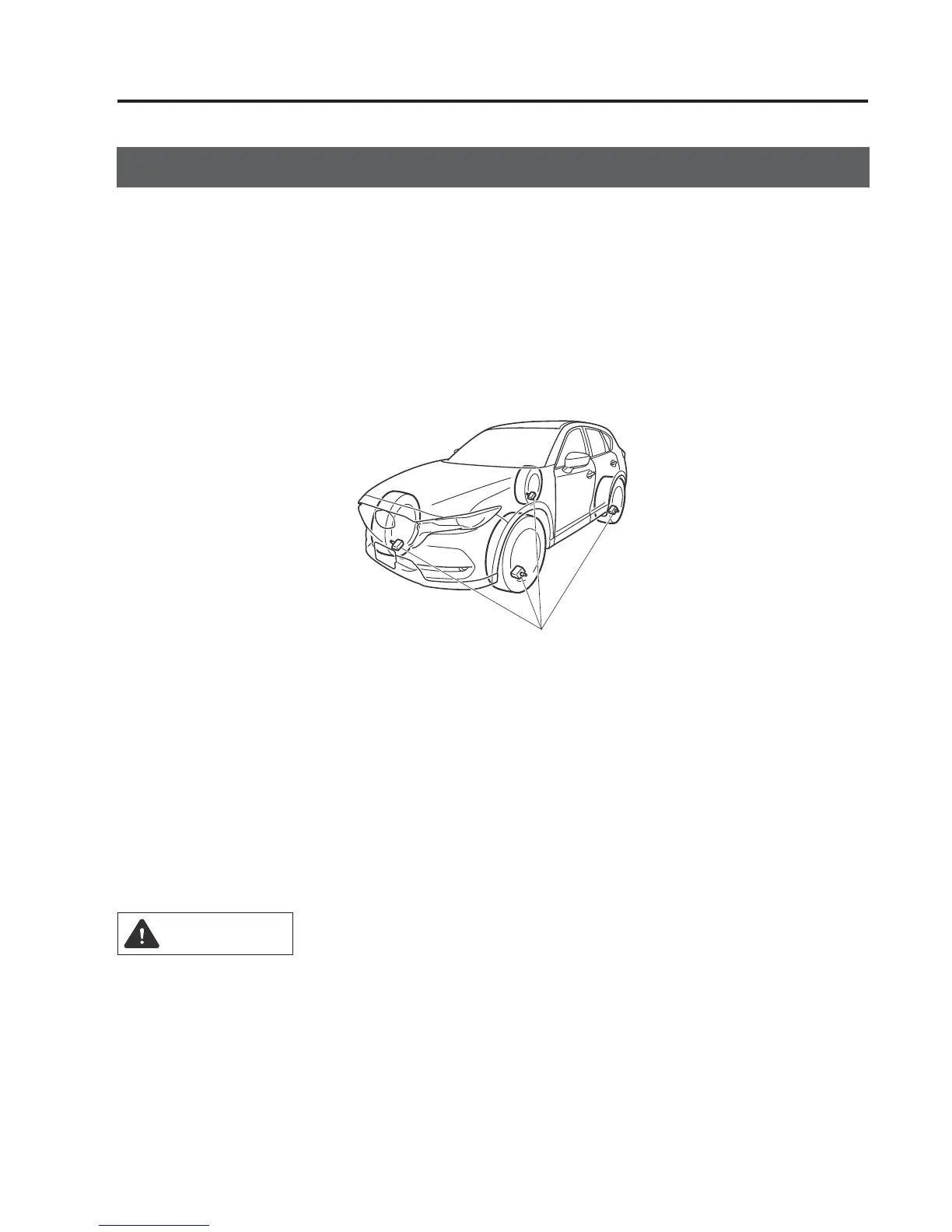
7KHW\UHSUHVVXUHVHQVRUVLQVWDOOHGRQHDFKZKHHOVHQGW\UHSUHVVXUHGDWDE\UDGLRVLJQDOWR
WKHUHFHLYHUXQLWLQWKHYHKLFOH
Tyre pressure sensors
NOTE
When the ambient temperature is low due to seasonal changes, tyre temperatures are also
lower. When the tyre temperature decreases, the air pressure decreases as well. The TPMS
warning light may illuminate more frequently. Visually inspect the tyres daily before driving,
and check tyre pressures monthly with a tyre pressure gauge. When checking tyre pressures,
use of a digital tyre pressure gauge is recommended.
7306GRHVQRWDOOHYLDWH\RXUQHHGWRFKHFNWKHSUHVVXUHDQGFRQGLWLRQRIDOOIRXUW\UHV
UHJXODUO\
&$87,21
¾Each tyre, including the spare (if provided), should be checked monthly when cold and
inated to the ination pressure recommended by the vehicle manufacturer on the vehicle
placard or tyre ination pressure label. (If your vehicle has tyres of a dierent size than the
size indicated on the vehicle placard or tyre ination pressure label, you should determine
the proper tyre ination pressure for those tyres.)
:KHQ'ULYLQJ
7\UH3UHVVXUH0RQLWRULQJ6\VWHP
6RPHPRGHOV



 To Next Page