EasyManua.ls Logo

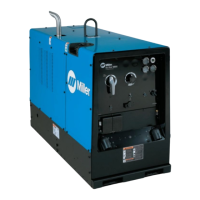
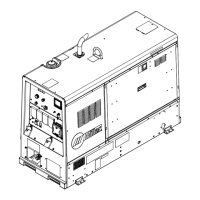
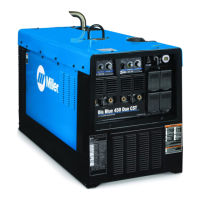
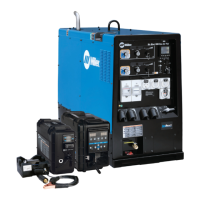
Miller Big Blue 350 PipePro - User Manual

Miller Big Blue 350 PipePro
76 pages
Print Icon
To Next Page IconTo Next Page
Loading...
Processes
OM-244 620G
201009
Big Blue 350 PipePro
Processes
Description
TIG (GTAW) Welding
Stick (SMAW) Welding
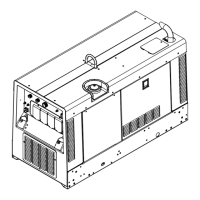
Engine Driven Welding Generator
Visit our website at
www.MillerWelds.com
Air Carbon Arc (CAC-A)
Cutting and Gouging
MIG (GMAW) Welding
Flux Cored (FCAW) Welding
))
File: Engine Drive

Table of Contents

Question and Answer IconNeed help?

Do you have a question about the Miller Big Blue 350 PipePro and is the answer not in the manual?

Summary

SECTION 1 - SAFETY PRECAUTIONS

1-1. Symbol Usage

Explains symbols used in the manual for hazard identification.

1-2. Arc Welding Hazards

Details hazards associated with arc welding processes and precautions.

1-3. Engine Hazards

Details hazards related to the engine, including battery, fuel, and moving parts.

1-4. Hydraulic Hazards

Covers hazards associated with hydraulic equipment and fluid.

1-5. Compressed Air Hazards

Outlines dangers related to compressed air equipment and its use.

1-6. Additional Symbols For Installation, Operation, And Maintenance

Explains symbols related to installation, operation, and maintenance.

1-7. California Proposition 65 Warnings

Provides warnings about chemicals known to cause cancer or birth defects.

1-8. Principal Safety Standards

Lists key safety standards and their sources for reference.

1-9. EMF Information

Discusses electromagnetic fields and their potential interference with medical implants.

SECTION 3 - DEFINITIONS

3-1. Symbols And Definitions

Defines various symbols and terms used in the manual.

SECTION 4 - SPECIFICATIONS

4-1. Weld, Power, And Engine Specifications

Provides detailed specifications for welding, power output, and engine.

4-2. Dimensions, Weights, And Operating Angles

Lists physical dimensions, weights, and safe operating angles for the unit.

4-3. CC Volt-Ampere Curves

Shows Constant Current (CC) volt-ampere curves for different welding modes.

4-4. Fuel Consumption

Illustrates typical fuel consumption based on weld output.

4-5. Duty Cycle And Overheating

Explains duty cycle limitations to prevent overheating and damage.

4-6. AC Generator Power Curve

Displays the AC generator power output characteristics.

SECTION 5 - INSTALLATION

5-1. Serial Number And Rating Label Locations

Identifies the location of serial and rating labels on the product.

5-2. Installing Welding Generator

Provides instructions and safety warnings for installing the welding generator.

5-3. Mounting Welding Generator

Details methods for securely mounting the generator unit.

5-4. Grounding Generator To Truck Or Trailer Frame

Explains the process for properly grounding the generator to a vehicle frame.

5-5. Installing Exhaust Pipe

Guides the installation of the exhaust pipe for the generator.

5-6. Activating The Dry Charge Battery (If Applicable)

Provides steps for activating a dry charge battery.

5-7. Connecting The Battery

Details the procedure for correctly connecting the battery.

5-8. Engine Prestart Checks

Lists essential checks to perform before starting the engine.

5-9. Weld Output Terminals

Identifies weld output terminals and their function for different welding modes.

5-10. Connecting To Weld Output Terminals

Explains the correct procedure for connecting weld cables to output terminals.

5-11. Selecting Weld Cable Sizes

Provides guidelines for selecting appropriate weld cable sizes based on current and length.

5-12. Connecting To Remote 14 Receptacle RC14

Describes how to connect remote controls to the RC14 receptacle.

SECTION 6 - OPERATING WELDING GENERATOR

6-1. Front Panel Controls (See Section 6-2)

Identifies and illustrates the controls on the front panel of the welding generator.

6-2. Description Of Front Panel Controls (See Section 6-1)

Provides detailed descriptions of each front panel control and their functions.

6-3. Process;Contactor Switch

Explains the function and applications of the process/contactor switch.

6-4. Lift-Arc TIG With Auto-Stop

Details the Lift-Arc TIG starting and Auto-Stop features for welding.

6-5. Remote Voltage;Amperage Control

Guides on using remote controls for voltage and amperage adjustment.

6-6. Fuel;Hour Gauge Descriptions

Explains the functions and display indicators of the fuel/hour gauge.

6-7. Operating Engine Block Heater

Instructions for operating the engine block heater for cold weather.

SECTION 7 - OPERATING AUXILIARY EQUIPMENT

7-1. Generator Power Receptacles

Describes the different power receptacles available on the generator.

SECTION 8 - MAINTENANCE & TROUBLESHOOTING

8-1. Maintenance Label

Shows the maintenance label and its recommended service intervals.

8-2. Routine Maintenance

Outlines a schedule for routine maintenance tasks and their frequency.

8-3. Servicing Air Cleaner

Provides instructions for cleaning or replacing the air cleaner element.

8-4. Checking Generator Brushes

Details how to inspect generator brushes for wear.

8-5. Inspecting And Cleaning Spark Arrestor Muffler

Guides on inspecting and cleaning the spark arrestor muffler.

8-6. Servicing Engine Cooling System

Instructions for servicing the engine's cooling system, including coolant levels.

8-7. Servicing Fuel And Lubrication Systems

Covers maintenance procedures for the fuel and lubrication systems.

8-8. Overload Protection

Explains the overload protection devices (breakers, fuses) and their function.

8-9. Adjusting Engine Speed

Notes that engine speed adjustment should be done by an authorized service agent.

8-10. Voltmeter;Ammeter Help Displays

Describes how to use meter displays for diagnosing faults and troubleshooting.

8-11. Maintaining Stainless Steel (Models With Optional Package)

Provides tips for cleaning and maintaining stainless steel components.

8-12. Troubleshooting

Lists common problems and their remedies for welding and generator output.

Troubleshooting (Engine)

Continues troubleshooting for engine issues such as starting or stopping.

SECTION 9 - ELECTRICAL DIAGRAMS

Figure 9-1. Circuit Diagram For Welding Generator

Presents the main electrical circuit diagram for the welding generator.

SECTION 10 - RUN-IN PROCEDURE

10-1. Wetstacking

Explains wetstacking and how to prevent it during engine run-in.

10-2. Run-In Procedure Using Load Bank

Provides steps for running in the engine using a load bank.

10-3. Run-In Procedure Using Resistance Grid

Details the procedure for running in the engine using a resistance grid.

SECTION 11 - GENERATOR POWER GUIDELINES

11-1. Selecting Equipment

Guidance on selecting appropriate equipment, including plugs and cords.

11-2. Grounding Generator To Truck Or Trailer Frame

Instructions for grounding the generator to a vehicle frame for safety.

11-3. Grounding When Supplying Building Systems

Explains how to ground the generator when supplying power to building systems.

11-4. How Much Power Does Equipment Require?

Helps calculate power requirements for various equipment.

11-5. Approximate Power Requirements For Industrial Motors

Lists power requirements for different types and sizes of industrial motors.

11-6. Approximate Power Requirements For Farm;Home Equipment

Lists power requirements for common farm and home equipment.

11-7. Approximate Power Requirements For Contractor Equipment

Lists power requirements for various contractor equipment.

11-8. Power Required To Start Motor

Provides data on starting power requirements for single-phase induction motors.

11-9. How Much Power Can Generator Supply?

Guides on managing generator output and starting loads.

11-10. Typical Connections To Supply Standby Power

Illustrates typical connections for supplying standby power from the generator.

11-11. Selecting Extension Cord (Use Shortest Cord Possible)

Provides tables for selecting extension cords based on current, load, and length.

SECTION 12 - PARTS LIST

Figure 12-1. Main Assembly

Shows an exploded view of the main assembly with numbered parts.

Figure 12-2. Control Panel

Shows the control panel assembly with a list of components.

Figure 12-3. Panel, Front w;Components

Illustrates the front panel with its components and parts list.

Figure 12-4. Generator

Shows the generator assembly with a detailed parts list.

Figure 12-5. Weld Control Assembly

Depicts the weld control assembly with its components and parts.

WARRANTY

Limited Warranty

Details Miller's limited warranty terms, coverage, and exclusions.

Summary

SECTION 1 - SAFETY PRECAUTIONS

1-1. Symbol Usage

Explains symbols used in the manual for hazard identification.

1-2. Arc Welding Hazards

Details hazards associated with arc welding processes and precautions.

1-3. Engine Hazards

Details hazards related to the engine, including battery, fuel, and moving parts.

1-4. Hydraulic Hazards

Covers hazards associated with hydraulic equipment and fluid.

1-5. Compressed Air Hazards

Outlines dangers related to compressed air equipment and its use.

1-6. Additional Symbols For Installation, Operation, And Maintenance

Explains symbols related to installation, operation, and maintenance.

1-7. California Proposition 65 Warnings

Provides warnings about chemicals known to cause cancer or birth defects.

1-8. Principal Safety Standards

Lists key safety standards and their sources for reference.

1-9. EMF Information

Discusses electromagnetic fields and their potential interference with medical implants.

SECTION 3 - DEFINITIONS

3-1. Symbols And Definitions

Defines various symbols and terms used in the manual.

SECTION 4 - SPECIFICATIONS

4-1. Weld, Power, And Engine Specifications

Provides detailed specifications for welding, power output, and engine.

4-2. Dimensions, Weights, And Operating Angles

Lists physical dimensions, weights, and safe operating angles for the unit.

4-3. CC Volt-Ampere Curves

Shows Constant Current (CC) volt-ampere curves for different welding modes.

4-4. Fuel Consumption

Illustrates typical fuel consumption based on weld output.

4-5. Duty Cycle And Overheating

Explains duty cycle limitations to prevent overheating and damage.

4-6. AC Generator Power Curve

Displays the AC generator power output characteristics.

SECTION 5 - INSTALLATION

5-1. Serial Number And Rating Label Locations

Identifies the location of serial and rating labels on the product.

5-2. Installing Welding Generator

Provides instructions and safety warnings for installing the welding generator.

5-3. Mounting Welding Generator

Details methods for securely mounting the generator unit.

5-4. Grounding Generator To Truck Or Trailer Frame

Explains the process for properly grounding the generator to a vehicle frame.

5-5. Installing Exhaust Pipe

Guides the installation of the exhaust pipe for the generator.

5-6. Activating The Dry Charge Battery (If Applicable)

Provides steps for activating a dry charge battery.

5-7. Connecting The Battery

Details the procedure for correctly connecting the battery.

5-8. Engine Prestart Checks

Lists essential checks to perform before starting the engine.

5-9. Weld Output Terminals

Identifies weld output terminals and their function for different welding modes.

5-10. Connecting To Weld Output Terminals

Explains the correct procedure for connecting weld cables to output terminals.

5-11. Selecting Weld Cable Sizes

Provides guidelines for selecting appropriate weld cable sizes based on current and length.

5-12. Connecting To Remote 14 Receptacle RC14

Describes how to connect remote controls to the RC14 receptacle.

SECTION 6 - OPERATING WELDING GENERATOR

6-1. Front Panel Controls (See Section 6-2)

Identifies and illustrates the controls on the front panel of the welding generator.

6-2. Description Of Front Panel Controls (See Section 6-1)

Provides detailed descriptions of each front panel control and their functions.

6-3. Process;Contactor Switch

Explains the function and applications of the process/contactor switch.

6-4. Lift-Arc TIG With Auto-Stop

Details the Lift-Arc TIG starting and Auto-Stop features for welding.

6-5. Remote Voltage;Amperage Control

Guides on using remote controls for voltage and amperage adjustment.

6-6. Fuel;Hour Gauge Descriptions

Explains the functions and display indicators of the fuel/hour gauge.

6-7. Operating Engine Block Heater

Instructions for operating the engine block heater for cold weather.

SECTION 7 - OPERATING AUXILIARY EQUIPMENT

7-1. Generator Power Receptacles

Describes the different power receptacles available on the generator.

SECTION 8 - MAINTENANCE & TROUBLESHOOTING

8-1. Maintenance Label

Shows the maintenance label and its recommended service intervals.

8-2. Routine Maintenance

Outlines a schedule for routine maintenance tasks and their frequency.

8-3. Servicing Air Cleaner

Provides instructions for cleaning or replacing the air cleaner element.

8-4. Checking Generator Brushes

Details how to inspect generator brushes for wear.

8-5. Inspecting And Cleaning Spark Arrestor Muffler

Guides on inspecting and cleaning the spark arrestor muffler.

8-6. Servicing Engine Cooling System

Instructions for servicing the engine's cooling system, including coolant levels.

8-7. Servicing Fuel And Lubrication Systems

Covers maintenance procedures for the fuel and lubrication systems.

8-8. Overload Protection

Explains the overload protection devices (breakers, fuses) and their function.

8-9. Adjusting Engine Speed

Notes that engine speed adjustment should be done by an authorized service agent.

8-10. Voltmeter;Ammeter Help Displays

Describes how to use meter displays for diagnosing faults and troubleshooting.

8-11. Maintaining Stainless Steel (Models With Optional Package)

Provides tips for cleaning and maintaining stainless steel components.

8-12. Troubleshooting

Lists common problems and their remedies for welding and generator output.

Troubleshooting (Engine)

Continues troubleshooting for engine issues such as starting or stopping.

SECTION 9 - ELECTRICAL DIAGRAMS

Figure 9-1. Circuit Diagram For Welding Generator

Presents the main electrical circuit diagram for the welding generator.

SECTION 10 - RUN-IN PROCEDURE

10-1. Wetstacking

Explains wetstacking and how to prevent it during engine run-in.

10-2. Run-In Procedure Using Load Bank

Provides steps for running in the engine using a load bank.

10-3. Run-In Procedure Using Resistance Grid

Details the procedure for running in the engine using a resistance grid.

SECTION 11 - GENERATOR POWER GUIDELINES

11-1. Selecting Equipment

Guidance on selecting appropriate equipment, including plugs and cords.

11-2. Grounding Generator To Truck Or Trailer Frame

Instructions for grounding the generator to a vehicle frame for safety.

11-3. Grounding When Supplying Building Systems

Explains how to ground the generator when supplying power to building systems.

11-4. How Much Power Does Equipment Require?

Helps calculate power requirements for various equipment.

11-5. Approximate Power Requirements For Industrial Motors

Lists power requirements for different types and sizes of industrial motors.

11-6. Approximate Power Requirements For Farm;Home Equipment

Lists power requirements for common farm and home equipment.

11-7. Approximate Power Requirements For Contractor Equipment

Lists power requirements for various contractor equipment.

11-8. Power Required To Start Motor

Provides data on starting power requirements for single-phase induction motors.

11-9. How Much Power Can Generator Supply?

Guides on managing generator output and starting loads.

11-10. Typical Connections To Supply Standby Power

Illustrates typical connections for supplying standby power from the generator.

11-11. Selecting Extension Cord (Use Shortest Cord Possible)

Provides tables for selecting extension cords based on current, load, and length.

SECTION 12 - PARTS LIST

Figure 12-1. Main Assembly

Shows an exploded view of the main assembly with numbered parts.

Figure 12-2. Control Panel

Shows the control panel assembly with a list of components.

Figure 12-3. Panel, Front w;Components

Illustrates the front panel with its components and parts list.

Figure 12-4. Generator

Shows the generator assembly with a detailed parts list.

Figure 12-5. Weld Control Assembly

Depicts the weld control assembly with its components and parts.

WARRANTY

Limited Warranty

Details Miller's limited warranty terms, coverage, and exclusions.

Miller Big Blue 350 PipePro Specifications

General IconGeneral
Max Output400 A
Welding Amperage Range20 - 400 A
Engine Power24.8 HP (18.5 kW)
Frequency60 Hz
TypeEngine Driven Welding Generator
Rated Output350 A at 100% duty cycle
Open Circuit Voltage80 V
Weight1448 lb (657 kg)
Fuel Capacity25 gal (94.6 L)
Fuel Tank Capacity20 gal (75.7 L)
EngineDiesel

Related product manuals