EasyManua.ls Logo

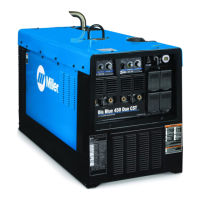
Miller Big Blue 302D - User Manual

Miller Big Blue 302D
78 pages
Print Icon
To Next Page IconTo Next Page
Loading...
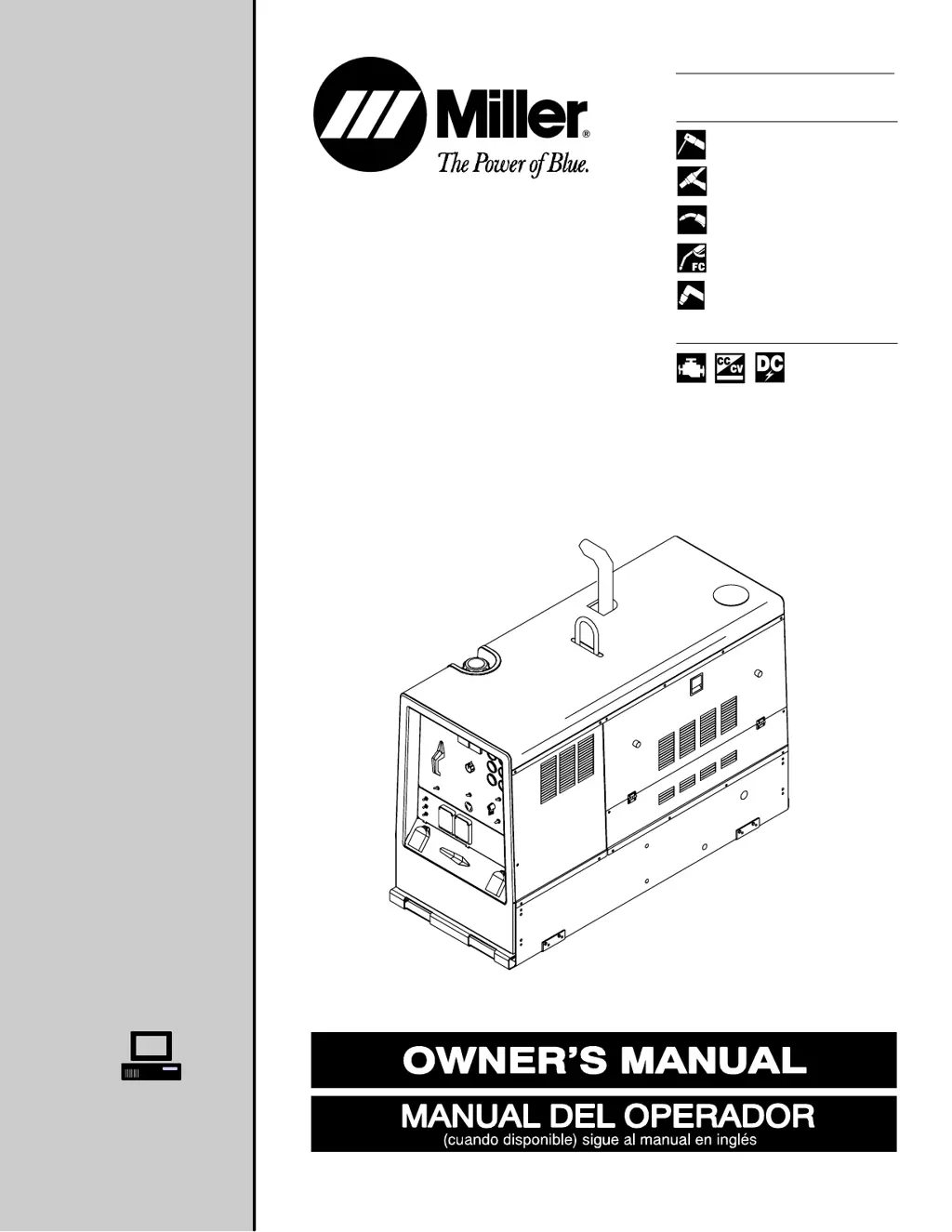
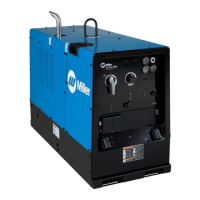
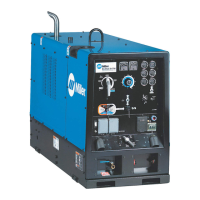
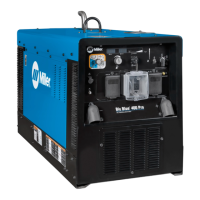
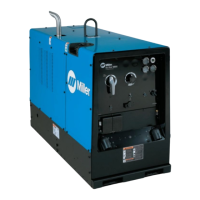
Big Blue 302D
OM-497 197 760A
March 2000
Visit our website at
www.Miller Weld s.com
Processes
Description
Air Carbon Arc (CAC-A)
Cutting and Gouging
Stick (SMAW) Welding
Engine Driven Welding Generator
TIG (GTAW) Welding
MIG (GMAW) Welding
Flux Cored (FCAW) Welding

Questions and Answers

  • J
    jaymedinaAug 20, 2025
    Why is the output at the auxiliary power receptacles so high on my Miller Welding System?
    • R
      richardssamuelAug 20, 2025
      High output at the auxiliary power receptacles may be due to the engine weld/power speed. Check and adjust it if necessary. If the problem continues, have a Factory Authorized Service Agent adjust auxiliary power field current resistor R3.
  • T
    Tonya PowersAug 22, 2025
    Why is the weld output so low on my Miller Big Blue 302D?
    • T
      Terry CaseAug 22, 2025
      Low weld output could be related to the engine weld/power speed. Check and adjust it as needed. Also, inspect fuses F1 and F2, and replace them if they're open. If these steps don't resolve the issue, have a Factory Authorized Service Agent check integrated rectifier SR1, capacitor C9, integrated rectifier SR2, and the rotor.
  • C
    Courtney Travis MDAug 25, 2025
    What causes high weld output on a Miller Welding System?
    • T
      Timothy GomezAug 25, 2025
      High weld output can occur if the engine weld/power speed is not correctly set. Check and adjust it if necessary. If the issue persists, have a Factory Authorized Service Agent check the OCV control circuit.
  • A
    Aimee Smith MDAug 26, 2025
    Why is the output at the auxiliary power receptacles low on my Miller Welding System?
    • J
      Juan PerezAug 27, 2025
      Low output at the auxiliary power receptacles can be caused by incorrect engine weld/power speed. Check and adjust if necessary. Additionally, check fuse F1 and replace it if open. If the issue remains, have a Factory Authorized Service Agent check integrated rectifier SR1, resistor R3, and capacitor C9.
  • C
    cordovakaitlinAug 27, 2025
    How to fix no remote fine amperage control on my Miller Welding System?
    • B
      Brian CampbellAug 28, 2025
      First, ensure the Amperage Adjust switch is in the correct position. Check and secure the connections to the Remote Amperage Adjust receptacle RC13. If you're still experiencing issues, try repairing or replacing the remote control device. Also, reset circuit breaker CB11. If none of these steps work, have a Factory Authorized Service Agent check OCV control circuit and control relay CR7.
  • S
    Sarah NealAug 30, 2025
    What causes low open-circuit voltage in my Miller Welding System?
    • J
      jeffreystevensonAug 30, 2025
      Low open-circuit voltage can be caused by incorrect engine weld/power speed. Check and adjust it if necessary.
  • A
    April GarzaSep 1, 2025
    What causes low CV weld output on my Miller Big Blue 302D Welding System?
    • D
      Dr. Caitlin HubbardSep 1, 2025
      To address low CV weld output, set the Ampere Range switch to the highest range.
  • P
    Paul GatesSep 3, 2025
    What to do if my Miller Big Blue 302D Welding System has no weld output but auxiliary power is okay?
    • S
      Stephanie Martin DDSSep 3, 2025
      First, check the position of the Ampere Range switch and the optional polarity switch. Ensure the Amperage Adjust switch is in the Panel position, or in the Remote position with a remote control connected to the Remote Amperage Adjust receptacle RC13. Also, check and secure connections to the Remote Amperage Adjust receptacle RC13. Finally, inspect fuse F2 and replace it if it's open. If problems persist, have a Factory Authorized Service Agent check integrated rectifier SR2 and the rotor, as well as the brushes, slip rings, and field excitation circuit.
  • M
    Matthew SpencerSep 5, 2025
    Why does my Miller Welding System have erratic weld output?
    • M
      Mary ComptonSep 5, 2025
      Erratic weld output can be caused by several factors. Begin by checking and tightening all connections inside and outside the unit. Ensure the connection to the workpiece is clean and tight. Use dry, properly stored electrodes, and remove excessive coils from the weld cables.
  • E
    Emily CaseSep 7, 2025
    What to do if my Miller Big Blue 302D Welding System has no weld output or auxiliary power output?
    • D
      Donald ReynoldsSep 7, 2025
      First, disconnect the equipment from auxiliary power receptacles during start-up. Then, check fuses F1 and F2, replacing them if they are open. If the issue persists, reset circuit breaker CB12. For more complex issues, have a Factory Authorized Service Agent check integrated rectifier SR1, capacitor C9, integrated rectifier SR2, the rotor, diode D1, brushes and slip rings, and the field excitation circuit.

Summary

Safety Precautions

Symbol Usage

Explains symbols used in the manual for safety warnings and notes.

Arc Welding Hazards

Details dangers of electric shock, arc rays, fumes, sparks, hot parts, noise, magnetic fields, and cylinders.

Engine Hazards

Outlines dangers related to fuel, steam, hot coolant, and exhaust gases.

Principal Safety Standards and EMF Information

Principal Safety Standards

Lists key safety standards and codes relevant to welding and cutting operations.

EMF Information

Discusses the effects of electromagnetic fields on health and pacemakers.

Definitions

Symbols and Definitions

Defines various symbols and terms used throughout the manual for clarity.

Specifications

Weld, Power, and Engine Specifications

Provides detailed specifications for welding, power output, and engine features of the generator.

Dimensions, Weights, and Operating Angles

Lists the physical dimensions, weight, and safe operating angles for the welding generator.

Volt-Ampere Curves

Displays graphical representations of voltage and amperage output capabilities for CC and CC/CV welding modes.

Fuel Consumption

Details the typical fuel usage rate under various welding and power load conditions.

Duty Cycle and Overheating

Explains duty cycle percentages and potential overheating issues to prevent equipment damage.

Installation

Installing the Welding Generator

Provides instructions for safely installing the welding generator, including movement and grounding.

Using the Lifting Eye

Details the proper procedure for using the lifting eye to safely move the welding generator.

Mounting the Welding Generator

Explains methods for securely mounting the welding generator onto a truck or trailer.

Installing the Exhaust Pipe

Guides on the correct installation of the exhaust pipe, ensuring safe exhaust routing.

Activating the Dry Charge Battery

Step-by-step instructions for activating a dry charge battery before installation and use.

Connecting the Battery

Outlines the correct procedure for connecting the battery, emphasizing the negative cable last.

Engine Prestart Checks

Lists essential checks to perform on the engine before starting, including fluid levels and fuel.

Connecting to Weld Output Terminals

Explains how to connect weld cables to the output terminals for various welding processes.

Selecting Weld Cable Sizes

Provides a guide for selecting appropriate weld cable sizes based on amperage and cable length.

Remote Amperage Control Connections

Details how to connect remote controls to RC13 and RC14 receptacles for amperage and output control.

Operating Welding Generator - CC Models

Front Panel Controls (CC Models)

Identifies and illustrates the front panel controls specific to CC welding models.

Description of Front Panel Controls (CC Models)

Provides detailed descriptions of each front panel control for CC welding models.

Remote Amperage Control (CC Models)

Explains how to set up and use the optional remote amperage control for CC models.

Operating Welding Generator - CC;CV Models

Front Panel Controls (CC;CV Models)

Details the front panel controls for CC/CV welding models, including process selection.

Description of Front Panel Controls (CC;CV Models)

Provides a comprehensive description of each control on the front panel for CC/CV models.

Process;Contactor Switch (CC;CV Models)

Explains the function and settings of the Process/Contactor switch for various welding processes.

Remote Voltage;Amperage Control (CC;CV Models)

Guides on using the optional remote voltage/amperage control with CC/CV models.

Operating Auxiliary Equipment

120 Volt and 240 Volt Duplex Receptacles

Describes the auxiliary power receptacles, circuit protection, and their usage.

Connecting Optional Auxiliary Power Plant

Details how to connect optional auxiliary power plants for single-phase and three-phase configurations.

Maintenance

Maintenance Label

Details maintenance information provided on the unit's label, including fluid types and service intervals.

Routine Maintenance Schedule

Outlines the schedule for routine maintenance tasks based on operating hours.

Servicing Air Cleaner

Provides instructions for cleaning or replacing the air cleaner element to ensure engine performance.

Inspecting Spark Arrestor Muffler

Describes how to inspect and clean the spark arrestor muffler for safety and performance.

Adjusting Engine Speed

Explains how to adjust engine speed settings for optimal performance, including idle and weld speeds.

Servicing Fuel and Lubrication Systems

Details procedures for servicing the fuel tank, filters, and oil system for proper engine operation.

Overload Protection

Explains the function of circuit breakers and fuses for overload protection and troubleshooting.

Diagnosing Engine Fault Shutdowns

Guides on identifying and troubleshooting engine shutdown causes using indicator lights and diagnostic checks.

Troubleshooting Welding Issues (CC Models)

Provides a table to diagnose and resolve common welding output problems specific to CC models.

Troubleshooting Welding Issues (CC;CV Models)

Offers a table for diagnosing and resolving welding output problems in CC/CV models.

Troubleshooting Auxiliary Power and Engine Issues

Addresses troubleshooting for auxiliary power, engine starting, and running problems.

Electrical Diagrams

Circuit Diagram for CC Welding Generator

Presents the detailed circuit diagram for CC welding generator configurations.

Circuit Diagram for CC;CV Welding Generator

Shows the circuit diagram applicable to CC/CV welding generator models.

Run-In Procedure

Wetstacking

Explains wetstacking in diesel engines and its prevention during run-in.

Run-In Procedure Using Load Bank

Details the process of running in the generator using a load bank to ensure proper seating of parts.

Run-In Procedure Using Resistance Grid

Describes the steps for performing a generator run-in procedure using a resistance grid.

Auxiliary Power Guidelines

Selecting Equipment for Auxiliary Power

Guides on selecting appropriate equipment for auxiliary power connections, including grounding.

Grounding the Generator

Provides instructions for grounding the generator to a vehicle frame or building system for safety.

Equipment Power Requirements

Helps calculate the power requirements (watts) for various types of equipment, including motors and contractor tools.

Generator Power Supply and Load Management

Provides guidance on generator load limits, starting non-resistive loads, and extension cord selection.

Supplying Standby Power

Illustrates typical connections for supplying standby power to a building using the generator.

Selecting Extension Cords

Offers guidelines for selecting appropriate extension cords based on current, load, and length.

Parts List

Main Assembly Parts

Lists all parts for the main assembly of the welding generator.

Control Box Assembly Parts (CC Models)

Details components and part numbers for the CC model control box.

Control Box Assembly Parts (CC;CV Models)

Lists parts for the CC/CV model control box assembly.

Front Panel Components (CC Models)

Identifies parts and components for the front panel of CC models.

Front Panel Components (CC;CV Models)

Lists parts and components for the front panel of CC/CV models.

Generator Components

Details parts and components specific to the generator assembly.

Main Rectifier Assembly Components

Lists the parts and components of the main rectifier assembly.

Warranty Information

Limited Warranty Terms

Outlines the terms, conditions, and duration of Miller's limited warranty for equipment.

Warranty Exclusions

Lists items and conditions not covered by the Miller warranty, including third-party components.

Warranty Claims and Remedies

Explains the process for making warranty claims and the available remedies such as repair or replacement.

Owners Record and Resources

Owners Record Section

Provides space to record personal information about the purchased equipment.

Available Resources

Lists various resources available from Miller and distributors, including service, parts, and training.

Miller Big Blue 302D Specifications

General IconGeneral
ModelBig Blue 302D
TypeEngine-Driven Welding Generator
Output Current Range30 - 300 A
Rated Output300 A at 28 V
Duty Cycle100% at 300 A
EngineKubota
Welding ProcessesStick, TIG, MIG
Open Circuit Voltage70 V
Fuel Tank Capacity12.5 gallons

Related product manuals