EasyManua.ls Logo

Monogram PHANTOM P-51D MUSTANG - User Manual

Monogram PHANTOM P-51D MUSTANG
33 pages
Print Icon
To Next Page IconTo Next Page
Loading...
CUSTOMER SERVICE
If you have questions, comments or problems
visit our website revell.com or write to us at:
Revell Inc. Consumer Service
1850 Howard St. Unit A
Elk Grove Village, IL 60007
Be sure to include this plan number
(85006700200), part number, description and
your return address and phone number.
SERVICIO AL CLIENTE
Si tiene preguntas, comentarios o problemas,
visite nuestro sitio web revell.com
o escríbanos a:
Revell Inc. Consumer Service
1850 Howard St. Unit A
Elk Grove Village, IL 60007
Asegúrese de incluir el número de plano
(85006700200), el número de parte, la
descripción y su dirección y número de
teléfono para responder.
SERVICE À LA CLIENTÈLE
Pour toute question, problème ou commentaire,
visitez-nous à l’adresse revell.com ou
écrivez-nous à :
Revell Inc. Consumer Service
1850 Howard St. Unit A
Elk Grove Village, IL 60007
Assurez-vous d’inclure ce numéro de plan
(85006700200), le numéro de pièce, une
description ainsi que votre adresse de retour
et numéro de téléphone.
KIT 0067 85006700200
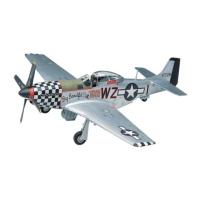
PHANTOM P-51D MUSTANG
It is considered, by historians and aircraft experts alike, to be the
best propeller driven fighter aircraft ever developed. The North
American P-51 Mustang changed the air war over Germany
during World War II. With the addition of disposable drop
tanks, the P-51 could escort the bombers all the way to the
target and back. The P-51 was such an effective fighter that it
was even used in the Korean War as a ground attack weapon.
The P-51 was originally developed in response to a purchase
order from the British during World War II. It was discovered in
the first flights, that more power was needed for it to be effective.
Switching to a British V-12 engine transformed the P-51 into
a magnificent fighter aircraft. It downed over 4,900 enemy
aircraft during World War II, in every different theater of the war.
Il est considéré par les historiens et les experts en aviation
comme le meilleur chasseur à hélice de tous les temps. Le
Mustang P-51 nord-américain a changé la guerre aérienne dans
le ciel d’Allemagne pendant la seconde guerre mondiale. En
plus de ses réservoirs de carburant largables, le P-51 pouvait
escorter les bombardiers jusqu’à leur cible puis en revenir. Le
P-51 était un chasseur tellement efficace qu’il a même été
utilisé dans la guerre de Corée comme arme d’attaque terrestre.
Le P-51 a été développé à l’origine en réponse à une commande
d’achat placée par les Britanniques pendant la seconde guerre
mondiale. On a découvert lors des premiers vols qu’il avait
besoin de plus de puissance pour être efficace. Un changement
pour des moteurs britanniques V-12 a transformé le P-51 en un
magnifique chasseur. Il a abattu plus de 4 900 ennemis pendant
la seconde guerre mondiale, sur tous les théâtres de bataille.
Los historiadores y los expertos en aviones consideran que es
el mejor avión de caza impulsado por hélice jamás desarrollado.
El Mustang P-51 de Norteamérica cambió la guerra aérea sobre
Alemania durante la Segunda Guerra Mundial. Con la adición
de tanques cisternas desechables, el P-51 podía acompañar
a los bombarderos en todo el camino hasta el objetivo y de
regreso. El P-51 fue un avión de caza tan eficaz que incluso se
utilizó en la Guerra de Corea como un arma de ataque en tierra.
El P-51 fue desarrollado originalmente en respuesta a
una orden de compra de los británicos durante la Segunda
Guerra Mundial. Se descubrió en los primeros vuelos, que se
necesitaba más potencia para que fuera eficaz. Al cambiar al
motor V-12 británico, se transformó el P-51 en un magnífico
avión de combate. Derribó 4.900 aviones enemigos durante la
Segunda Guerra Mundial, en los diferentes escenarios de la guerra.
READ THIS BEFORE YOU BEGIN
* Study the assembly drawings.
* Each plastic part is identified by a number.
* In the assembly drawings, some parts will
be marked by a star
to indicate chrome
plated plastic.
* For better paint and decal adhesion,
wash the plastic parts in a mild detergent
solution. Rinse and let air dry.
* Check the fit of each piece before
cementing in place.
* Use only cement for polystyrene plastic.
* Scrape plating and paint from areas to
be cemented.
* Allow paint to dry thoroughly before
handling parts.
* Any unused parts may be discarded.
LISEZ CECI AVANT DE COMMENCER
* Étudiez les plans d’assemblage.
* Chaque pièce de plastique est identifiée
par un numéro.
* Dans les plans d’assemblage, certaines
pièces seront marquées d’une étoile
pour indiquer des pièces en plastique
plaquées chrome.
* Pour une meilleure adhésion de la peinture
et de la décalcomanie, lavez les pièces en
plastique dans une solution de détergent
doux. Rincez et laissez sécher à l’air.
* Vérifiez l’ajustement de chaque pièce avant
de la coller en place.
* Utilisez uniquement de la colle pour
plastique au polystyrène.
* Grattez toute peinture et le placage sur les
régions à coller.
* Laissez sécher la peinture complètement
avant de manipuler des pièces.
* Toute pièce non-utilisée peut être jetée.
LEA ESTO ANTES DE EMPEZAR
* Estudie los dibujos de ensamblaje.
* Cada parte plástica está identificada con
un número.
* En los dibujos de ensamblaje, algunas
partes aparecerán marcadas con una
estrella
para indicar plástico enchapado
en cromo.
* Para mejor adhesión de pintura y
calcomanías, lave las partes plásticas
en una solución de detergente suave.
Enjuague y deje secar al aire.
* Verifique el encastre de cada pieza antes
de cementar en su lugar.
* Use sólo cemento para plástico de
poliestireno.
* Raspe las placas y la pintura de las áreas
a cementar.
* Deje secar la pintura totalmente antes
de manipular las partes.
* Cualesquiera partes sin usar se
pueden descartar.
Kit 0067 - Page 32
Revell Inc Elk Grove Village, IL. Copyright © 2014. All rights reserved.
39

Question and Answer IconNeed help?

Do you have a question about the Monogram PHANTOM P-51D MUSTANG and is the answer not in the manual?

Summary

Getting Started

Assembly Preparation Guide

General advice for model assembly and preparation before starting.

Customer Support Information

Contact details for product assistance and inquiries.

Essential Safety Warnings

Critical safety guidelines to follow before starting assembly.

Proper Cement Application

Best practices for using adhesive on plastic parts.

Wire Insulation Techniques

Procedures for preparing electrical wires for connections.

Operational Precautions

Important advice regarding model operation after completion.

Painting and Decals

Model Paint Color Guide

Recommended paints and colors for model finishing.

Decal Application Instructions

Step-by-step guide for applying decals to the model.

Step-by-Step Assembly

Step 2: Review Assembly Drawings

Initial study of assembly diagrams and part identification.

Step 3: Electric Motor Setup

Installing and preparing the electric motor for use.

Step 4: Initial Component Assembly

Connecting small parts and routing wires.

Step 5: Securing Model Parts

Fastening components using screws and tape.

Step 6: Wire Management

Organizing and securing electrical wires.

Step 7: Gear and Motor Installation

Installing gears and motor for operational function.

Step 8: Battery and Housing Assembly

Securing batteries and related housing components.

Step 9: Battery Contact Wiring

Connecting battery contacts and electrical leads.

Step 10: Sponge and Battery Lead Routing

Installing sponges and routing battery wires.

Step 11: Battery Installation and Motor Test

Inserting batteries and testing motor function.

Step 12: Fuselage and Landing Gear Assembly

Joining fuselage halves and attaching landing gear.

Step 13: Landing Gear Mechanism

Installing and testing landing gear components.

Step 14: Wheel and Linkage Assembly

Attaching wheels and landing gear linkages.

Step 15: Wing and Landing Gear Integration

Securing wing parts and landing gear.

Step 17: Hairpin Spring and Door Installation

Installing springs and small doors.

Step 18: Cockpit Interior Detailing

Adding components to the cockpit interior.

Step 19: Pilot Figure Assembly

Assembling and positioning the pilot figure.

Step 20: Internal Fuselage Detailing

Adding details to the cockpit and engine bay.

Step 21: Engine and Gearbox Assembly

Building the engine and gearbox units.

Step 22: Engine Component Mounting

Attaching specific engine parts.

Step 23: Fuselage Halves Joining

Cementing the main fuselage sections together.

Step 24: Landing Gear Door Mechanism

Assembling and wiring landing gear doors.

Step 25: Landing Gear Operation Test

Testing the functionality of the landing gear.

Step 26: Coil Spring Installation

Fitting the coil spring component.

Step 27: Bomb Bay Components

Installing parts within the bomb bay.

Step 28: Bomb Assembly

Constructing the individual bombs.

Step 29: Bomb Release Mechanism Test

Testing the bomb release system.

Step 30: Wing Edge Assembly

Applying cement to wing edges for secure joining.

Step 31: Wing Component Attachment

Attaching various parts to the wings.

Step 32: Main Wing Assembly

Connecting the wings to the fuselage.

Step 33: Wiring and Base Connection

Connecting electrical wires to the model base.

Step 34: Tail Wheel and Fuselage Finalization

Attaching the tail wheel and finishing fuselage details.

Step 35: Wing Bottom Detailing

Adding components to the underside of the wings.

Step 36: Wheel and Air Scoop Installation

Fitting landing gear wheels and the air scoop.

Step 37: Propeller Assembly

Building and attaching the propeller.

Step 38: Final Operation Checks

Testing all moving parts and controls.

Decal Placement Guide

Marking Placement Diagram

Visual reference for applying decals and markings to the model.

Summary

Getting Started

Assembly Preparation Guide

General advice for model assembly and preparation before starting.

Customer Support Information

Contact details for product assistance and inquiries.

Essential Safety Warnings

Critical safety guidelines to follow before starting assembly.

Proper Cement Application

Best practices for using adhesive on plastic parts.

Wire Insulation Techniques

Procedures for preparing electrical wires for connections.

Operational Precautions

Important advice regarding model operation after completion.

Painting and Decals

Model Paint Color Guide

Recommended paints and colors for model finishing.

Decal Application Instructions

Step-by-step guide for applying decals to the model.

Step-by-Step Assembly

Step 2: Review Assembly Drawings

Initial study of assembly diagrams and part identification.

Step 3: Electric Motor Setup

Installing and preparing the electric motor for use.

Step 4: Initial Component Assembly

Connecting small parts and routing wires.

Step 5: Securing Model Parts

Fastening components using screws and tape.

Step 6: Wire Management

Organizing and securing electrical wires.

Step 7: Gear and Motor Installation

Installing gears and motor for operational function.

Step 8: Battery and Housing Assembly

Securing batteries and related housing components.

Step 9: Battery Contact Wiring

Connecting battery contacts and electrical leads.

Step 10: Sponge and Battery Lead Routing

Installing sponges and routing battery wires.

Step 11: Battery Installation and Motor Test

Inserting batteries and testing motor function.

Step 12: Fuselage and Landing Gear Assembly

Joining fuselage halves and attaching landing gear.

Step 13: Landing Gear Mechanism

Installing and testing landing gear components.

Step 14: Wheel and Linkage Assembly

Attaching wheels and landing gear linkages.

Step 15: Wing and Landing Gear Integration

Securing wing parts and landing gear.

Step 17: Hairpin Spring and Door Installation

Installing springs and small doors.

Step 18: Cockpit Interior Detailing

Adding components to the cockpit interior.

Step 19: Pilot Figure Assembly

Assembling and positioning the pilot figure.

Step 20: Internal Fuselage Detailing

Adding details to the cockpit and engine bay.

Step 21: Engine and Gearbox Assembly

Building the engine and gearbox units.

Step 22: Engine Component Mounting

Attaching specific engine parts.

Step 23: Fuselage Halves Joining

Cementing the main fuselage sections together.

Step 24: Landing Gear Door Mechanism

Assembling and wiring landing gear doors.

Step 25: Landing Gear Operation Test

Testing the functionality of the landing gear.

Step 26: Coil Spring Installation

Fitting the coil spring component.

Step 27: Bomb Bay Components

Installing parts within the bomb bay.

Step 28: Bomb Assembly

Constructing the individual bombs.

Step 29: Bomb Release Mechanism Test

Testing the bomb release system.

Step 30: Wing Edge Assembly

Applying cement to wing edges for secure joining.

Step 31: Wing Component Attachment

Attaching various parts to the wings.

Step 32: Main Wing Assembly

Connecting the wings to the fuselage.

Step 33: Wiring and Base Connection

Connecting electrical wires to the model base.

Step 34: Tail Wheel and Fuselage Finalization

Attaching the tail wheel and finishing fuselage details.

Step 35: Wing Bottom Detailing

Adding components to the underside of the wings.

Step 36: Wheel and Air Scoop Installation

Fitting landing gear wheels and the air scoop.

Step 37: Propeller Assembly

Building and attaching the propeller.

Step 38: Final Operation Checks

Testing all moving parts and controls.

Decal Placement Guide

Marking Placement Diagram

Visual reference for applying decals and markings to the model.

Monogram PHANTOM P-51D MUSTANG Specifications

General IconGeneral
Skill levelIntermediate
MaterialPlastic
Paint RequiredYes
Glue RequiredYes
Length7.5 inches

Related product manuals